Drum and vessel liners
Reactor, Vessel and Tank Liners: Flexible Liners Made to the Vessel, 6 to 100 Inches
Flexible liners for open-top reactors, process vessels and tanks, made to the vessel from 6 to 100 inches in PE, conductive, PVC or barrier film.
Key takeaways
- A vessel liner turns a cleaning and validation job between batches into a liner change.
- It must be made to the vessel's measured diameter and height, including any internal fittings.
- Film choice follows the product — PE, conductive film where solvents are present, PVC for aggressive chemistry, barrier films for sensitive products.
- Flexible liners are for open-top, non-pressurised duty within the film's temperature range; they do not replace a vessel's lining for pressure or reaction service.
- Charging powders into a vessel with solvent present is a static hazard that needs conductive packaging as part of the process safety design.
What a vessel liner does
Open-top process equipment — mixing tanks, kettles, blending vessels, storage bins, open reactors, holding tanks — spends a large share of its life being cleaned. Every product change means scraping residue, washing, sometimes solvent cleaning and, in regulated plants, validating that the vessel is clean before the next batch goes in.
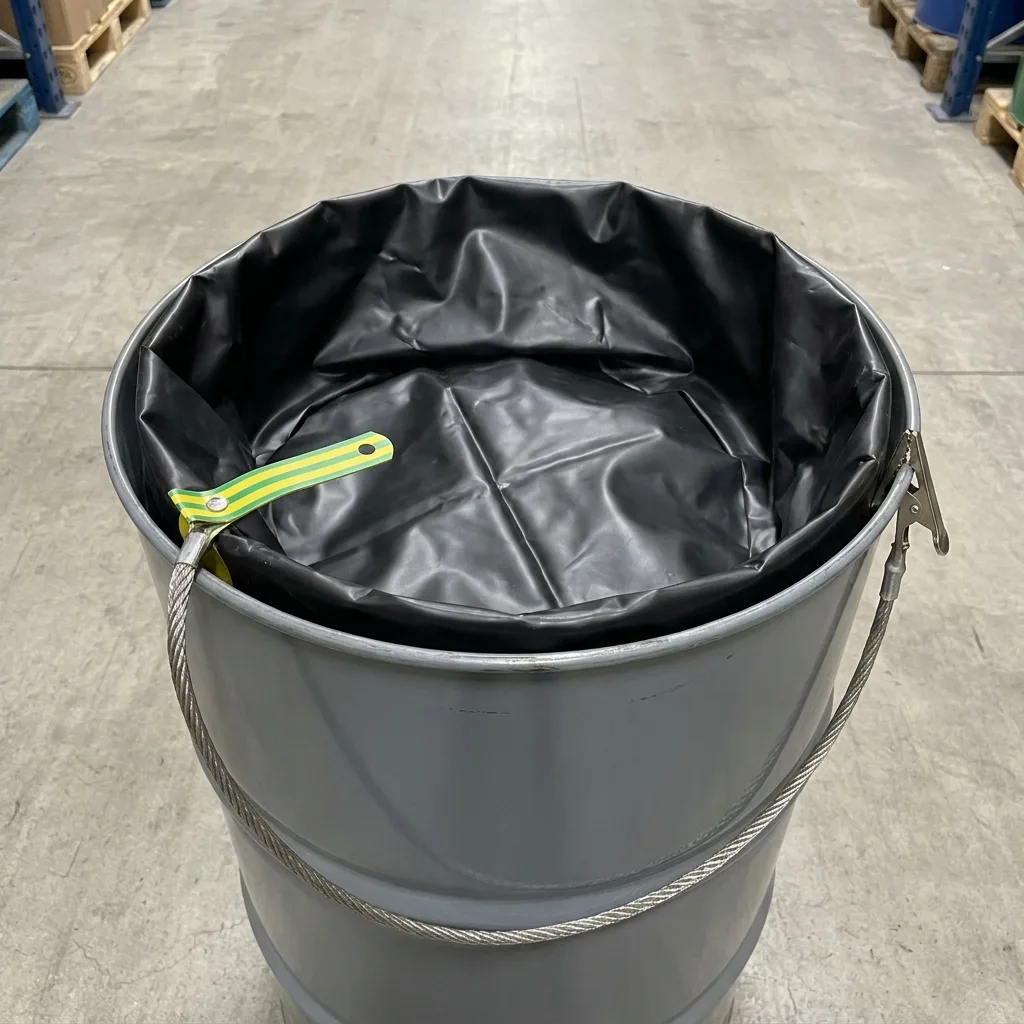
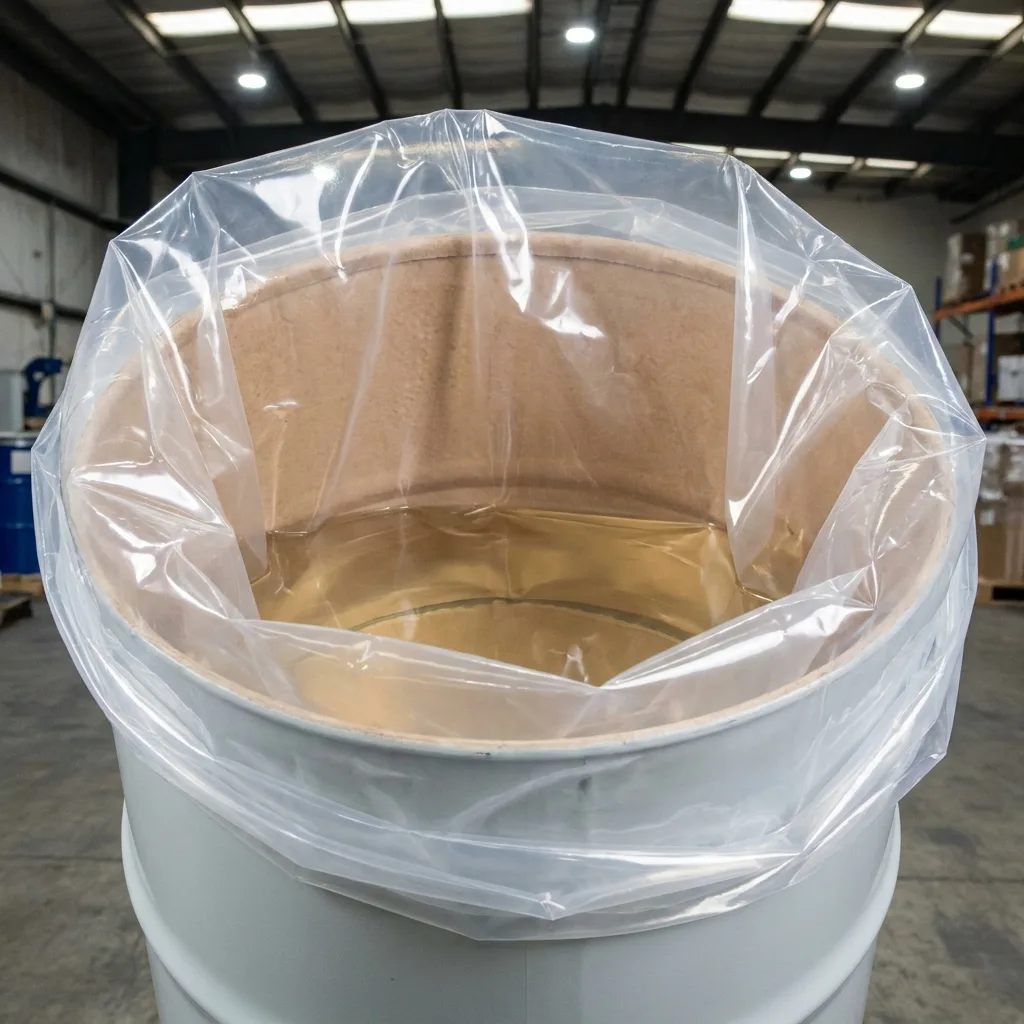
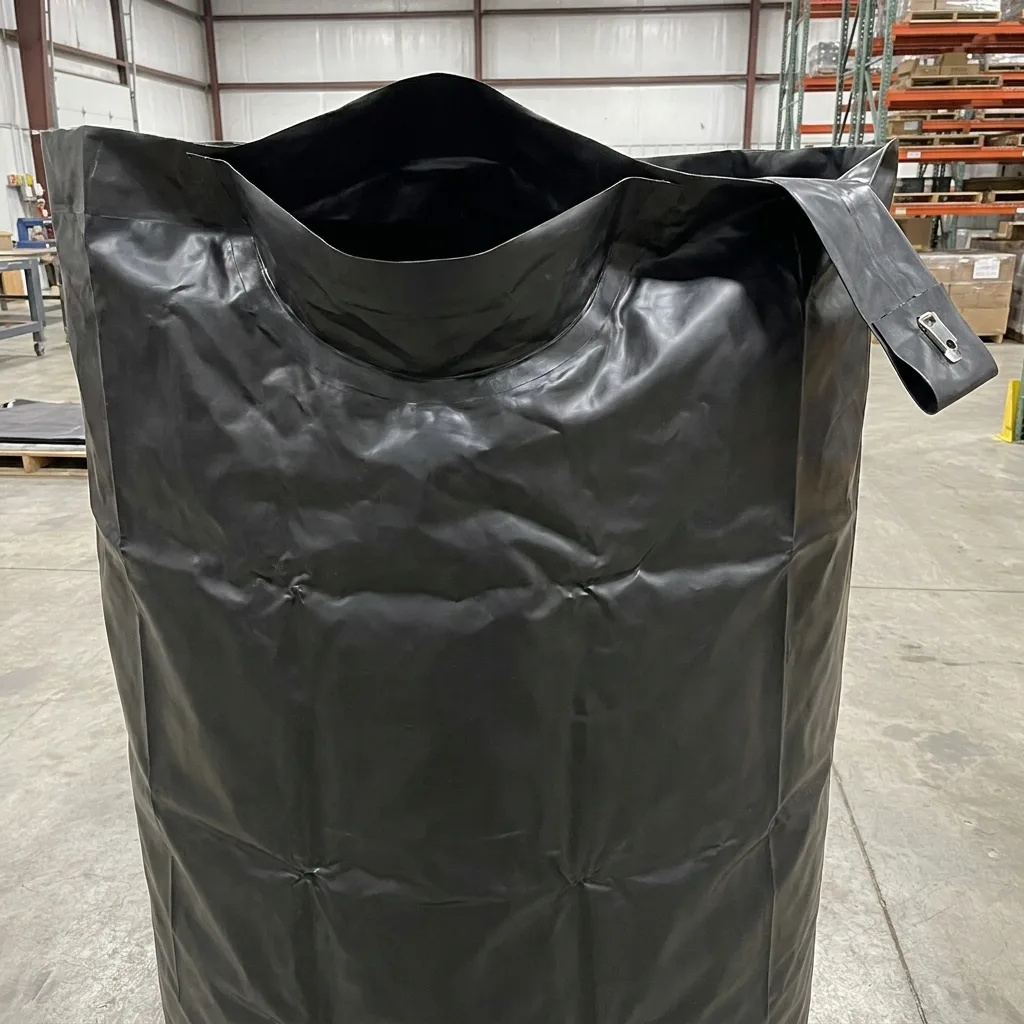
A vessel liner removes most of that work. It is a flexible film liner made to the vessel's internal diameter and height. The batch sits in the liner, not against the vessel wall. When the batch is done, the liner comes out with the residue in it, and the vessel needs a fraction of the cleaning it would otherwise.
The benefits follow directly:
- Shorter changeovers — a liner change instead of a wash and dry.
- Less cross-contamination — the next product never meets the last one's residue on the wall.
- Less cleaning solvent and effluent — the residue leaves in the liner.
- Less product lost — residue that would have been washed away can often be recovered from the liner.
- Longer vessel life — the wall is not attacked or scoured on every batch.
Why it has to be made to the vessel
A liner that is too small strains at the seams under the weight of the batch. One that is too large folds into creases where product is trapped — and in a mixing vessel, loose film near an agitator is a hazard of its own. A vessel liner therefore has to be made to the measured vessel: internal diameter, internal height, and the position of anything inside it — agitator shafts, baffles, nozzles, sample points.
GI PackTech makes round liners in any internal diameter from 6 to 100 inches, at any height. That range — from laboratory containers to large open-top vessels — is unusual, and it exists because the company runs its own extrusion, lamination, cutting and heat-sealing lines. See the round liner made to any diameter and how to measure.
Choosing the film
| Process condition | Film |
|---|---|
| General products, food ingredients, aqueous batches | Multilayer polyethylene |
| Solvents present, flammable powders, alcohol | Conductive film with a defined grounding arrangement |
| Products polyethylene cannot hold | PVC, after compatibility is checked |
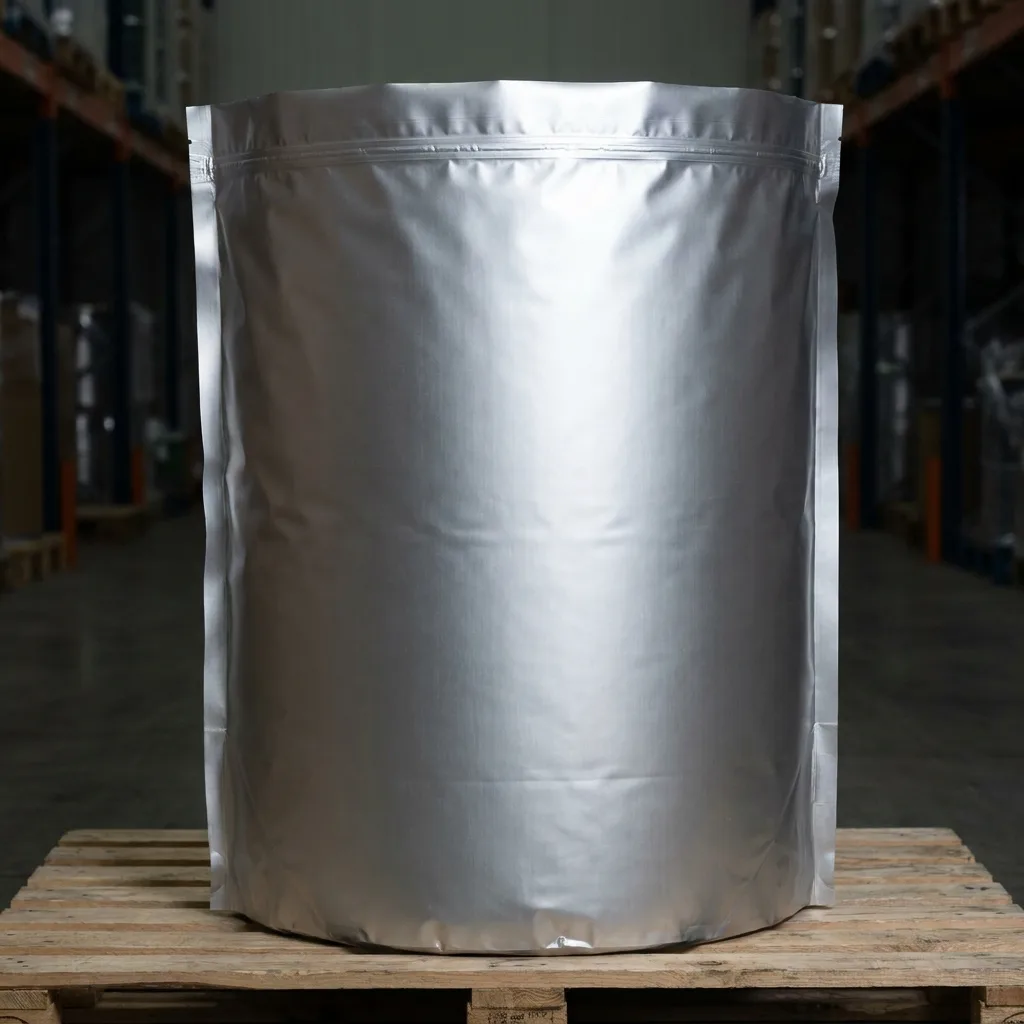
| Moisture- or oxygen-sensitive product held for a period | Aluminium barrier or EVOH laminate |
| Elevated temperature | Film specified against the actual temperature — send it |
The limits of a flexible liner
A flexible liner is for open-top, non-pressurised vessels, operating within the temperature range of its film. It does not replace a reactor's permanent lining — glass, PTFE or alloy — for pressure, vacuum or reaction service, and it should not be used where an agitator or heating element would contact or damage it. The film sets the temperature limit; hot charging is a different question from storage.
Send the operating conditions with the enquiry. Where a flexible liner is the right tool, it is specified against them. Where it is not, GI PackTech says so — the company's standing position is that it would rather refuse a job than supply a film that will fail.
Charging powders into a vessel: the static question
Tipping or discharging a powder into a vessel that contains, or has recently contained, flammable solvent is one of the classic static ignition scenarios in chemical and pharmaceutical plants. The packaging the powder arrives in is part of that hazard:
- A plain plastic bag or liner can carry enough charge to ignite solvent vapour at the vessel opening.
- Type C FIBCs must be earthed throughout the discharge; Type D FIBCs dissipate charge without an earth connection — see FIBC types A, B, C and D.
- The liner inside the bag must be compatible with the bag's static protection — a conductive liner rather than plain polyethylene.
Packaging is one control among several — inerting, earthing, charging systems and procedures — and the process safety assessment decides the whole set. The static safety guide covers the packaging side.
Related applications
The same large-diameter capability supplies liners for nuclear waste drums and containment in the diameters and materials a site specifies, and for open-top bulk bins used for catalysts, metal scrap and alloys. The nuclear and hazardous waste site enclosure page covers containment built to an issued specification.
What to send
- Vessel internal diameter and height, and a sketch or drawing showing internal fittings
- The product, its data sheet and the operating temperature
- Whether solvent or flammable vapour is present
- How the vessel is charged and emptied
- Batch frequency and annual quantity
A trial liner is made to the vessel and supplied for fitment before bulk production.
Frequently asked questions
What is a reactor or vessel liner?
It is a flexible film liner made to fit inside an open-top reactor, process vessel, mixing tank, kettle or bin, so the product sits in the liner rather than against the vessel wall. When the batch is finished, the liner is removed with the residue, and the vessel needs far less cleaning before the next product goes in.
What is the largest diameter liner you can make?
GI PackTech makes round liners in any internal diameter from 6 inches to 100 inches, at any height. That range comes from the company's own lamination, extrusion, cutting and heat-sealing lines and tooling built up over years of one-off jobs, so large open-top vessels and tanks are a production question rather than a special order.
Can a flexible liner be used inside a pressurised reactor?
No. A flexible film liner is for open-top, non-pressurised vessels, at temperatures within the film's working range. It is not a substitute for a reactor's permanent lining for pressure, vacuum or reaction service. Send the operating temperature and conditions, and the right film is specified, or you are told plainly when a flexible liner is the wrong answer.
How do I reduce cleaning time between batches in a mixing vessel?
Line the vessel. A liner made to the vessel's internal diameter and height holds the batch, and is lifted out with the residue at the end, so the vessel wall is never contaminated. Cleaning, solvent use and changeover time fall, and cross-contamination between products is far less likely. The liner film is chosen for the product and any static risk.