Static safety
FIBC Type A, B, C and D Explained: Which Antistatic Bulk Bag Do You Need?
The four electrostatic types of FIBC under IEC 61340-4-4, how each controls static, and how to choose Type C or Type D for flammable products.
Key takeaways
- The type is about static, not strength — every type can be built to the same safe working load.
- Type A and Type B must never be used where flammable vapour or solvent is present.
- Type C is only safe while it is earthed; an unearthed Type C bag is more dangerous than a plain one.
- Type D needs no earthing, which is why it suits export and multi-site handling chains.
- A liner inside the bag is part of the static system and has to be specified with it.
What the four FIBC types are
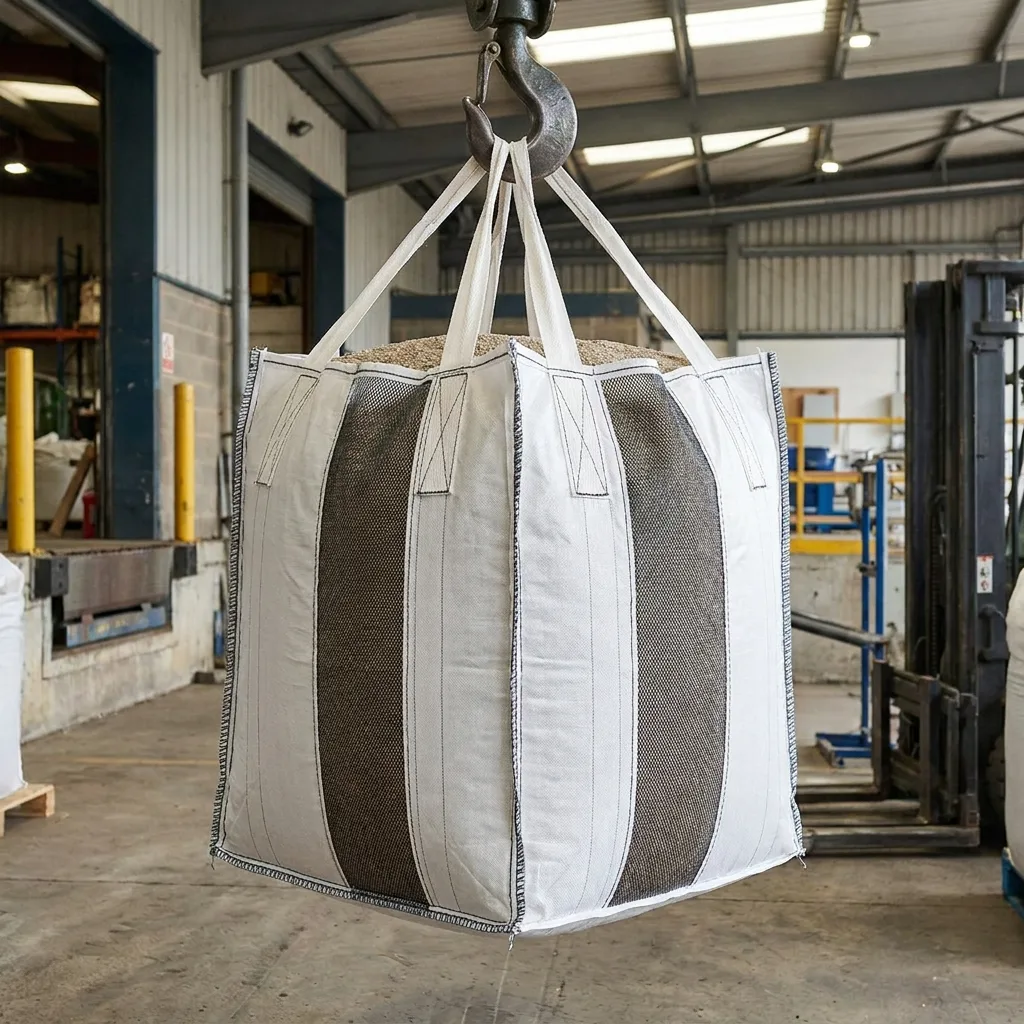
A flexible intermediate bulk container — an FIBC, jumbo bag or bulk bag — generates static electricity every time product flows into or out of it. Powder sliding over woven polypropylene separates charge, and a tonne of product can carry a great deal of it. Whether that charge is harmless or an ignition source depends on how the bag's fabric deals with it.
IEC 61340-4-4, the international standard for the electrostatic classification of FIBCs, sorts bags into four types according to exactly that.
| Type | How it is built | Static protection | Earthing needed |
|---|---|---|---|
| Type A | Plain woven polypropylene | None | No — and it offers no protection |
| Type B | Fabric with a low breakdown voltage (below 6 kV) | Prevents propagating brush discharges | No |
| Type C | Conductive threads woven in and interconnected | Charge is drained to earth | Yes, at every fill and discharge |
| Type D | Static-dissipative fabric | Charge is dissipated safely into the air | No |
Every type can be built to the same safe working load, loop arrangement and discharge spout. The type changes how the bag behaves electrically, not how much it carries.
Why static in a bulk bag is a real hazard
Static matters because of the energy a discharge releases compared with the energy needed to ignite what is nearby. Many common solvent vapours ignite at a fraction of a millijoule. A brush discharge from a charged plastic surface can release several millijoules, and a propagating brush discharge — the kind that forms when a thin insulating layer is charged heavily on both sides — can release energy in the order of joules.
That is why the type of bag is a process safety decision, not a purchasing one. The cost of a fire or a dust explosion during discharge into a reactor or a mixer is out of all proportion to the price difference between bag types.
Type A and Type B: where they stop
Type A has no static protection at all. It is suitable only for non-flammable products handled where there is no flammable dust cloud or vapour around the bag.
Type B is made from fabric with a breakdown voltage below 6 kV, which prevents the propagating brush discharge. It does not prevent ordinary brush discharges, so it must not be used where flammable vapour or gas is present — including powders still wet with solvent — and it is suitable only for dusts that are not easily ignited.
Type C: conductive and earthed
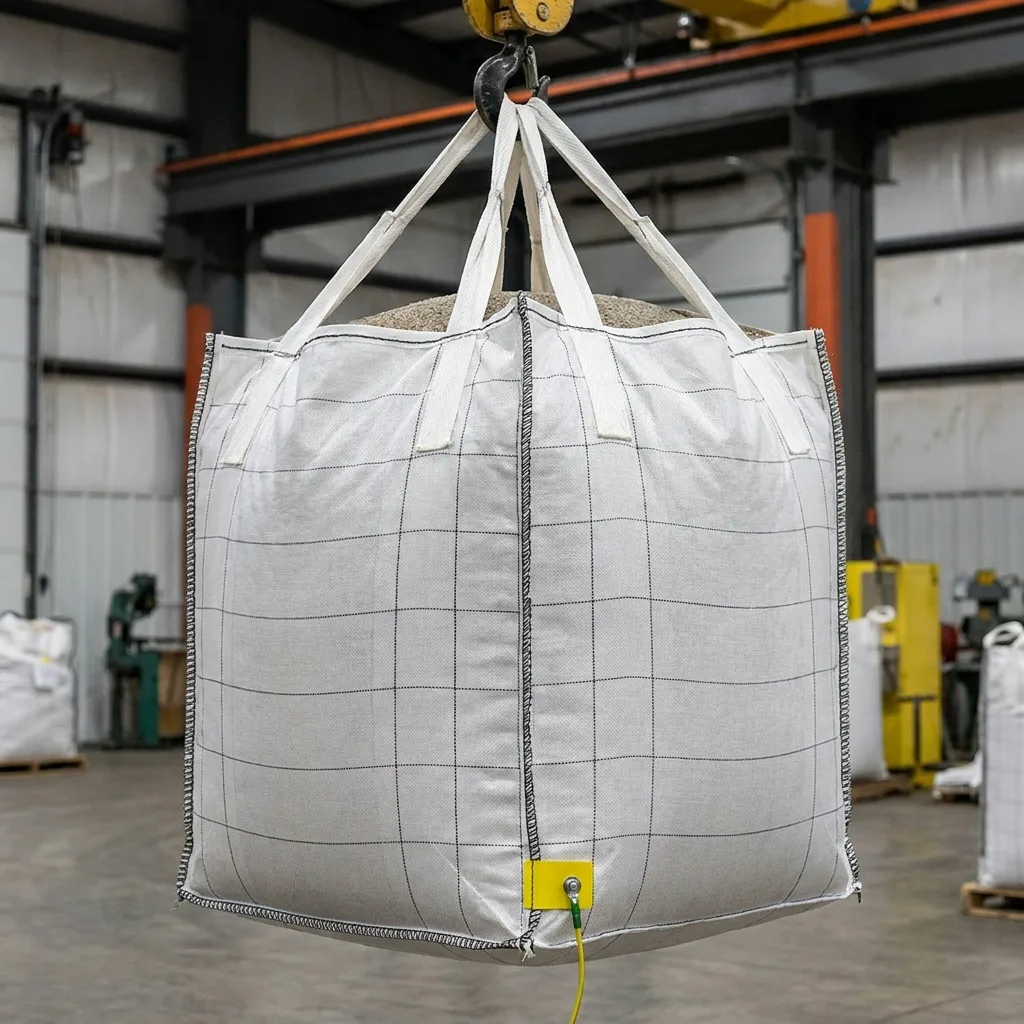
A Type C FIBC, also called a groundable or conductive bag, has conductive threads woven through the fabric and joined to each other and to an earth tab. Connected to a verified earth point, it carries charge away as fast as it is generated.
Type C works well in a controlled filling station where the same trained team fills every bag, the earth clamp is part of the procedure and the connection is checked. Its weakness is that its protection depends entirely on that connection. An unearthed Type C bag behaves like a large insulated conductor, which can store and release a spark more energetic than a plain bag would.
Type D: no earthing step to forget
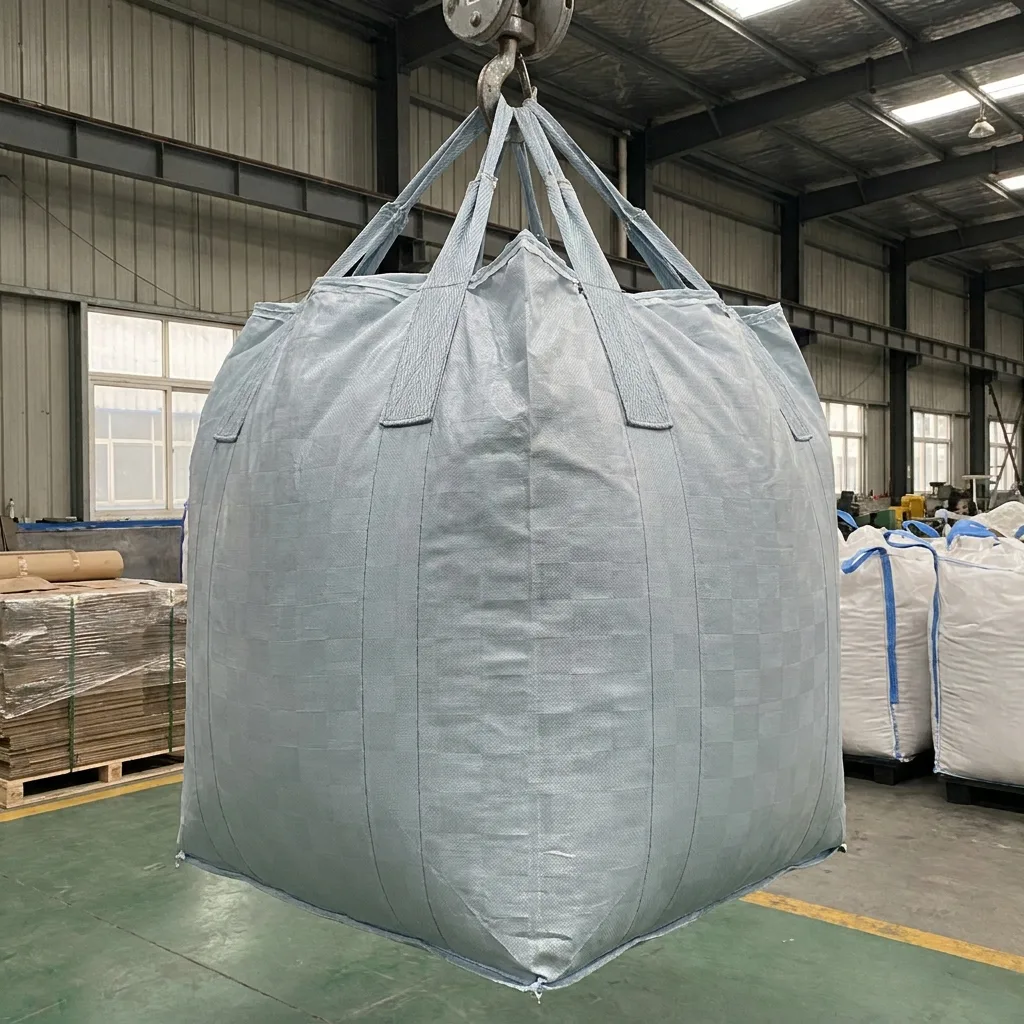
A Type D FIBC is woven from static-dissipative fabric that bleeds charge away through low-energy discharges too weak to ignite the atmospheres it is rated for. It needs no earth connection.
That makes Type D the safer default wherever a bag will be handled by more than one party: shipped to a customer, unloaded at a port, emptied at a site whose procedures you do not control. GI PackTech's position, stated on our Type D bag page, is that operator-independent safety is worth paying for. Where a process cannot guarantee earthing at every transfer, we recommend Type D even when it changes the order.
How to choose: a working guide
The standard's guidance on use sets the bag type against two things: how easily the product ignites (its minimum ignition energy, MIE) and what is in the air around the bag.
| Product's minimum ignition energy | No flammable atmosphere around the bag | Flammable dust around the bag | Flammable gas or vapour around the bag |
|---|---|---|---|
| Above 1,000 mJ | A, B, C or D | B, C or D | C or D |
| 3 to 1,000 mJ | B, C or D | B, C or D | C or D |
| 3 mJ or below | C or D | C or D | C or D |
Treat this as a starting point. The final choice belongs to your process safety assessment, which should also consider IEC TS 60079-32-1, the technical specification on electrostatic hazards, and any zone classification on your site.
Three questions decide most cases:
- Is solvent or flammable vapour present at filling or discharge? If yes, only Type C or Type D.
- Can you guarantee earthing at every transfer, at every site the bag will reach? If not, Type D.
- Does the bag need a liner? If yes, the liner has to be specified with the bag — see below.
The liner is part of the system
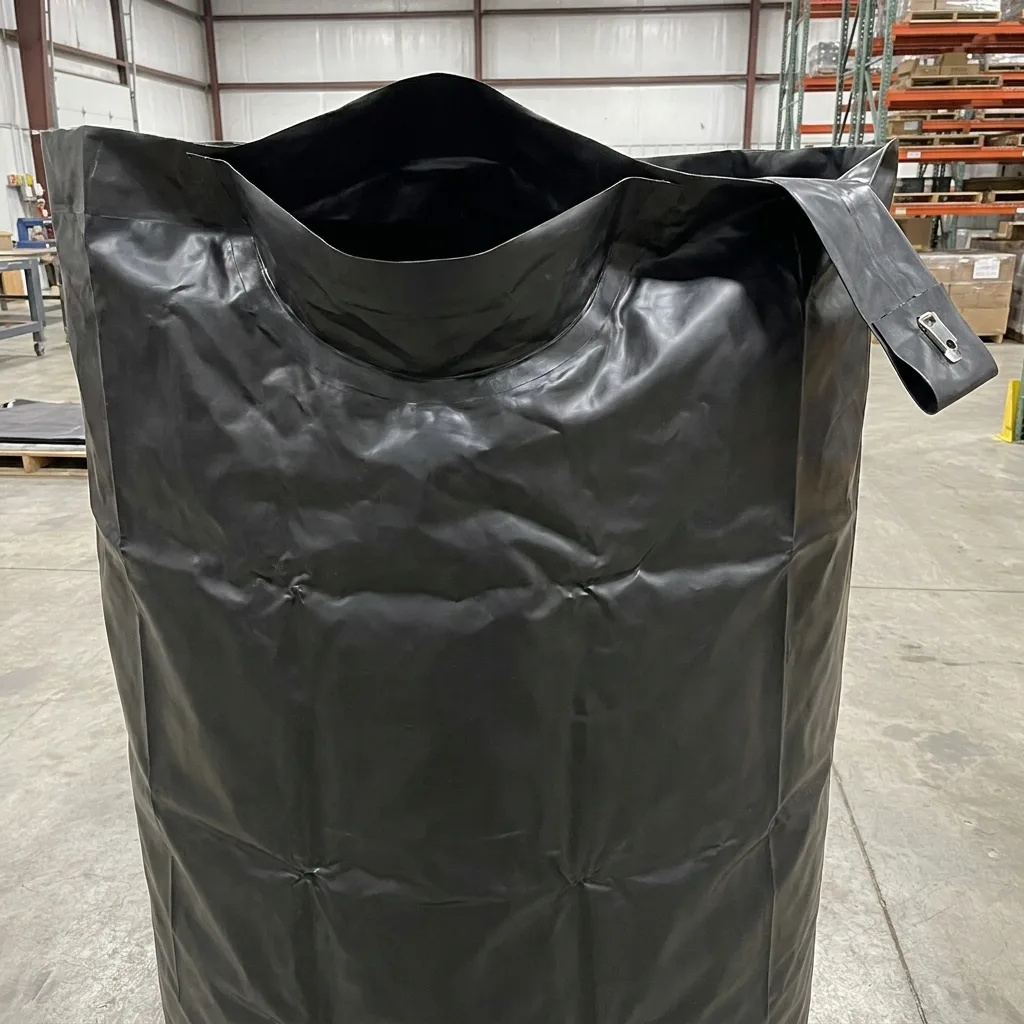
A liner fitted inside an FIBC sits between the product and the fabric, which means it sits exactly where the charge is generated. A plain polyethylene liner inside a Type C bag can hold charge on its own surface and defeat the bag's protection.
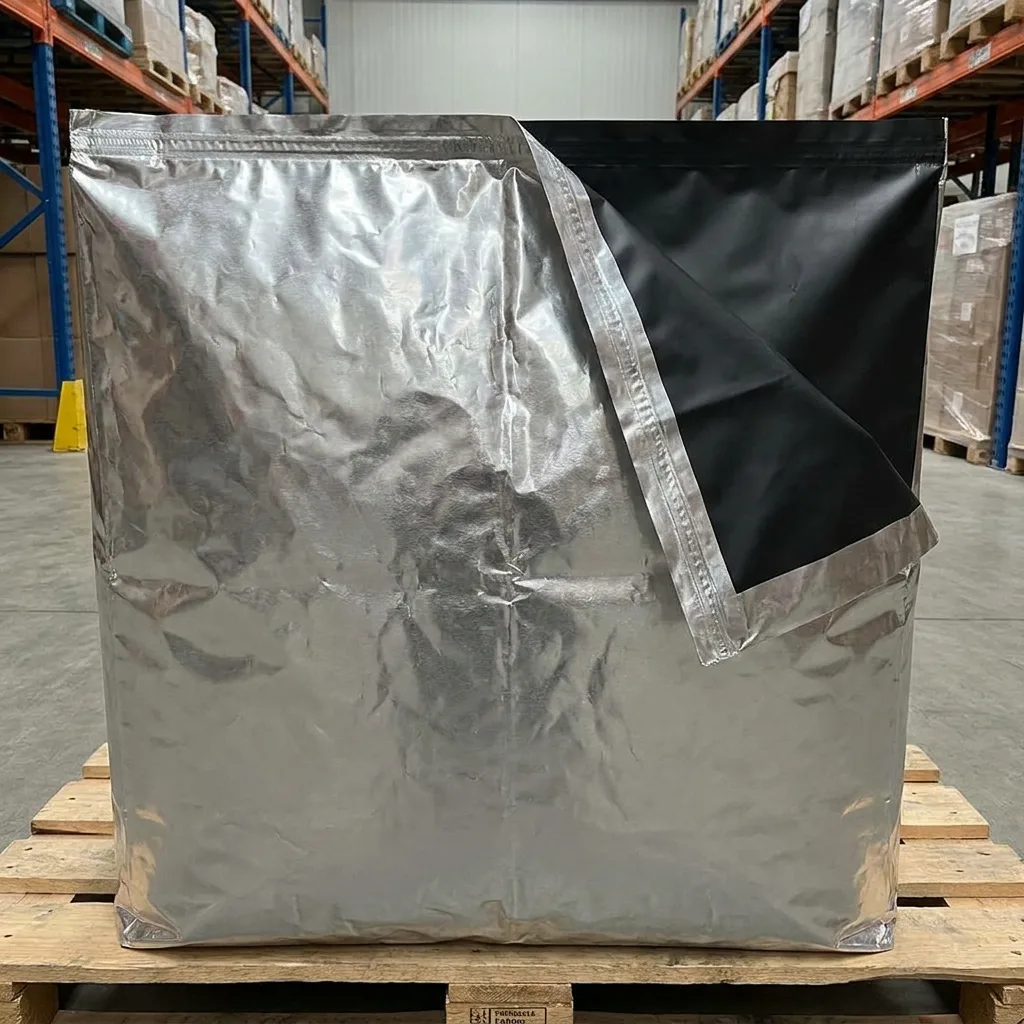
So the bag and liner have to be specified as one system. GI PackTech makes conductive liners for this, and a conductive aluminium liner where the product also needs a moisture or oxygen barrier — one liner doing both jobs instead of a double-lining arrangement. Where your existing bag is Type C, we check that the liner and the earth path actually work together.
What to send for a quotation
- The product, its data sheet and, if known, its minimum ignition energy
- Whether solvent or flammable vapour is present at filling or discharge, and the site's zone classification
- Safe working load, fill volume and the filling and discharge arrangement
- Whether the bag travels beyond your own site
- Any liner or barrier requirement
With those, the bag type, fabric, liner and earthing arrangement are specified together, and a sample is supplied for trial before bulk production.
Standards referred to
- IEC 61340-4-4 — Electrostatics: electrostatic classification of flexible intermediate bulk containers (FIBC)
- IEC TS 60079-32-1 — Explosive atmospheres: electrostatic hazards, guidance
- ISO 21898 — Flexible intermediate bulk containers for non-dangerous goods
Frequently asked questions
Is a Type D FIBC better than a Type C?
Neither is better in every case, but Type D removes the one step Type C depends on. A Type C bag is safe only while it is connected to a verified earth point during filling and emptying. Type D dissipates charge without any connection, so it stays safe when the bag is handled by a customer, a warehouse or a port you do not control. Where earthing cannot be guaranteed at every transfer, choose Type D.
Can a Type B bag be used for flammable powders?
Only for dusts that are not easily ignited and only where no flammable vapour or gas is present. Type B prevents propagating brush discharges, the most energetic kind, but it does not stop ordinary brush discharges, which can ignite solvent vapour. For solvent-wet powders, or powders with a low minimum ignition energy, use Type C or Type D.
What does the standard IEC 61340-4-4 cover?
IEC 61340-4-4 is the international standard for the electrostatic classification of flexible intermediate bulk containers. It defines Types A, B, C and D, sets the test methods each type must pass, and gives guidance on where each may be used according to the ignition sensitivity of the product and the atmosphere around the bag.
Do I need a conductive liner inside a Type C or Type D bag?
If the bag needs a liner, the liner must be compatible with the bag's static protection. A plain polyethylene liner can hold charge on its surface even inside a Type C bag, defeating the point of the bag. GI PackTech specifies the bag and liner together as one system, using conductive or conductive aluminium liners where both static control and a barrier are needed.