Drum and vessel liners
Drum Liner Materials Compared: PE, EVOH, Aluminium, Conductive and PVC
Polyethylene, EVOH, aluminium foil, conductive or PVC: which drum liner material your product needs, and when each is the wrong choice.
Key takeaways
- Start from what spoils or endangers the product — contamination, oxygen, moisture, static or chemical attack.
- Thickness is not barrier; a thicker PE liner is still permeable to moisture and oxygen.
- Aluminium laminates fail at the seal, not through the foil, so the seal specification matters most.
- Conductive and barrier properties can be combined in one conductive aluminium liner.
- Compatibility should be checked against the product data sheet before any material is quoted.
Start from what threatens the product
Every drum liner keeps the product off the drum wall. The material decides what else it does. So the first question is not "which liner?" but "what spoils, contaminates or endangers this product?"
| What threatens the product | Material to specify |
|---|---|
| Contamination from the drum; drum reuse | Multilayer polyethylene |
| Oxygen — colour drift, rancidity, loss of aroma or activity | EVOH barrier film |
| Moisture and gas over a long storage or voyage | Aluminium foil laminate, 5 or 6 layer |
| Static ignition — flammable powders, solvents, alcohol | Conductive film, with grounding |
| Static and moisture together | Conductive aluminium laminate |
| Chemical attack on polyethylene; need to see the contents | PVC |
Multilayer polyethylene
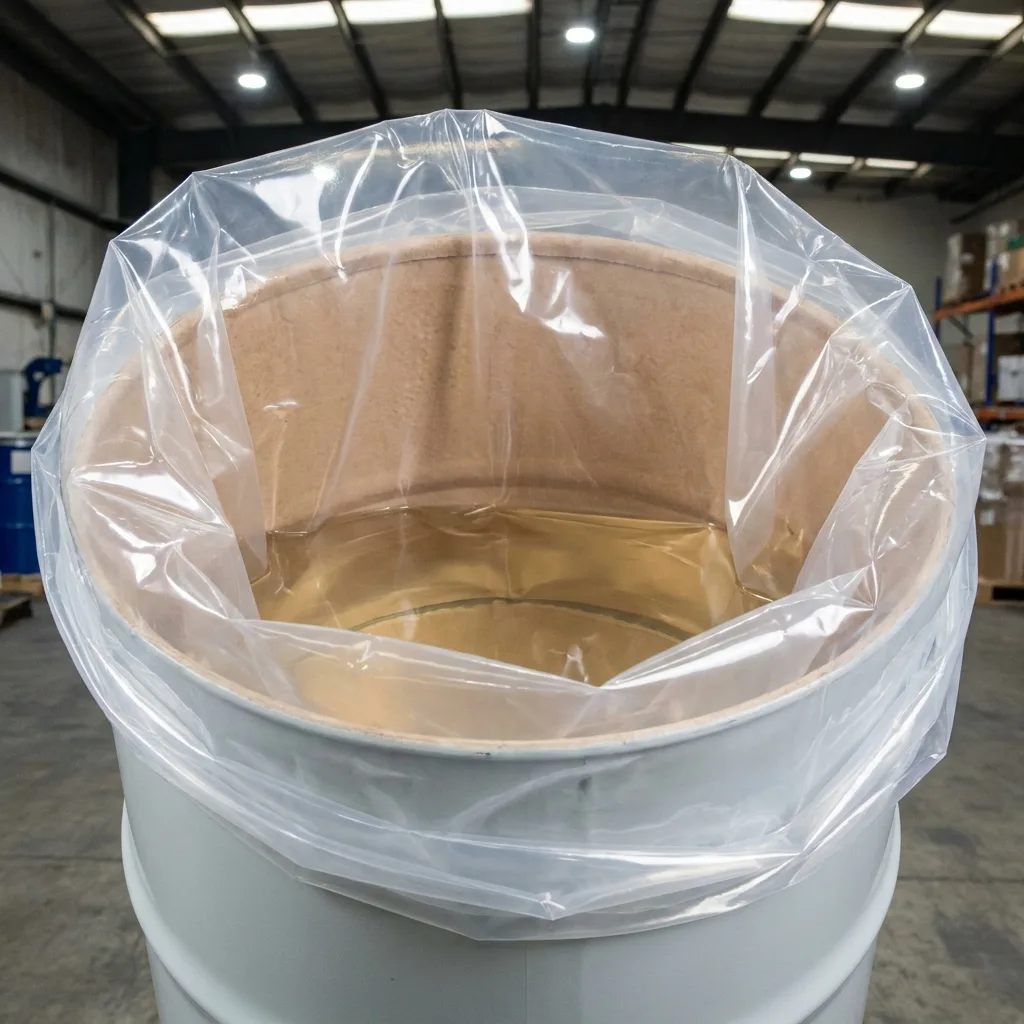
The default, and the right answer more often than buyers expect. A co-extruded multilayer PE film puts different grades of polyethylene in different layers, which gives more strength and puncture resistance from less material than a single-layer film. It resists most aqueous products, acids and alkalis, seals reliably and stays flexible.
What polyethylene does not do is stop moisture and oxygen. It slows them, and a thicker film slows them a little more, but over months the product equalises with the air around the drum.
EVOH barrier film
EVOH (ethylene vinyl alcohol) is one of the most effective oxygen barriers among polymers — its oxygen transmission is orders of magnitude lower than polyethylene's. Its barrier weakens when it gets wet, which is why it is always co-extruded between polyethylene skins that keep moisture away from it.
The result is a liner with a strong oxygen barrier that handles, seals and flexes like an ordinary PE liner. It is specified for food ingredients, oils and fats, resins, and flavour and fragrance products — anything that degrades through oxidation. See the EVOH barrier liner.
Aluminium foil laminate
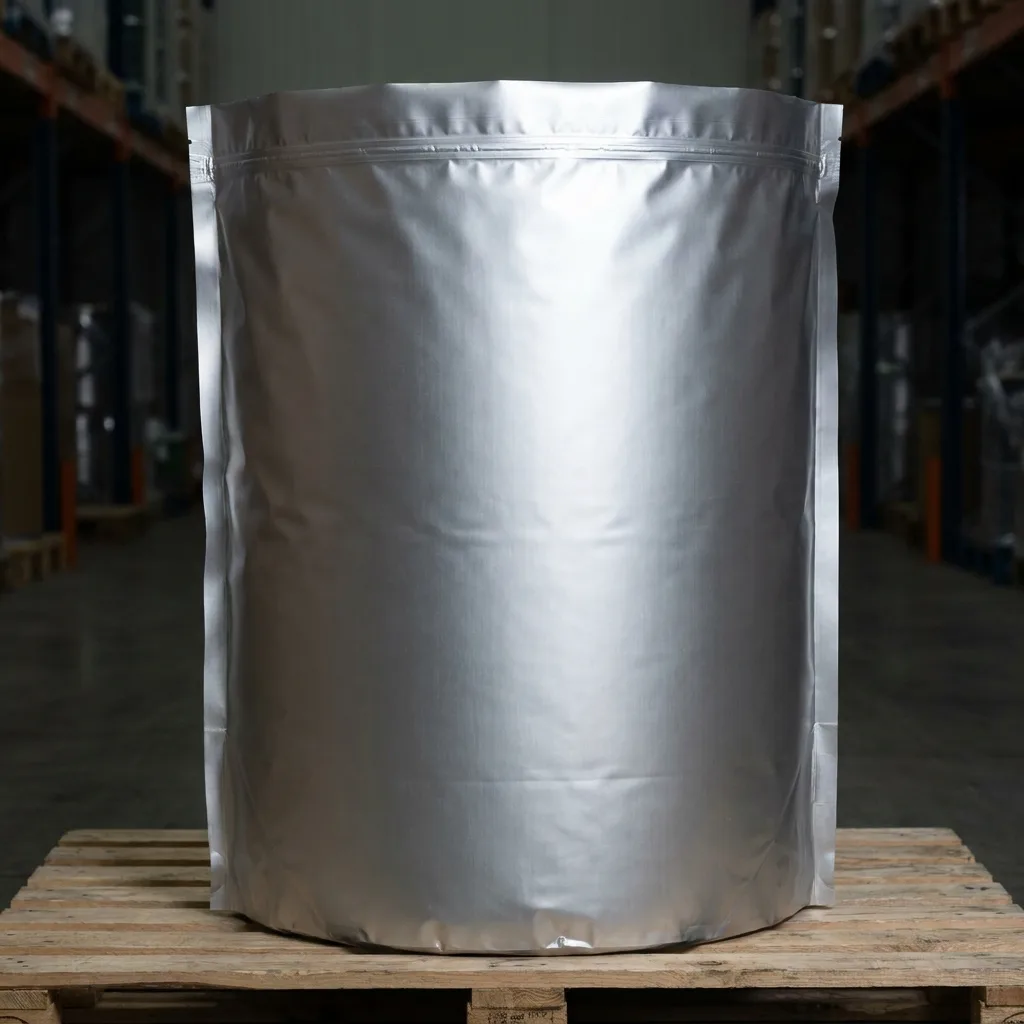
An aluminium barrier drum liner laminates a layer of aluminium foil between polymer layers — typically polyester, nylon and polyethylene, in 5- or 6-layer constructions. Intact foil is effectively impermeable to moisture and gas, and it blocks light as well.
That makes the foil itself the easy part. The hard parts are the seal, where the foil is interrupted, and flex cracking from rough handling. Most barrier failures happen at the seal rather than through the film, which is where GI PackTech's development work on these liners has gone.
Specify aluminium for catalysts, hygroscopic powders, pharmaceutical intermediates and moisture-sensitive additives, and for any product that must arrive after a long voyage in exactly the condition it left.
Conductive film
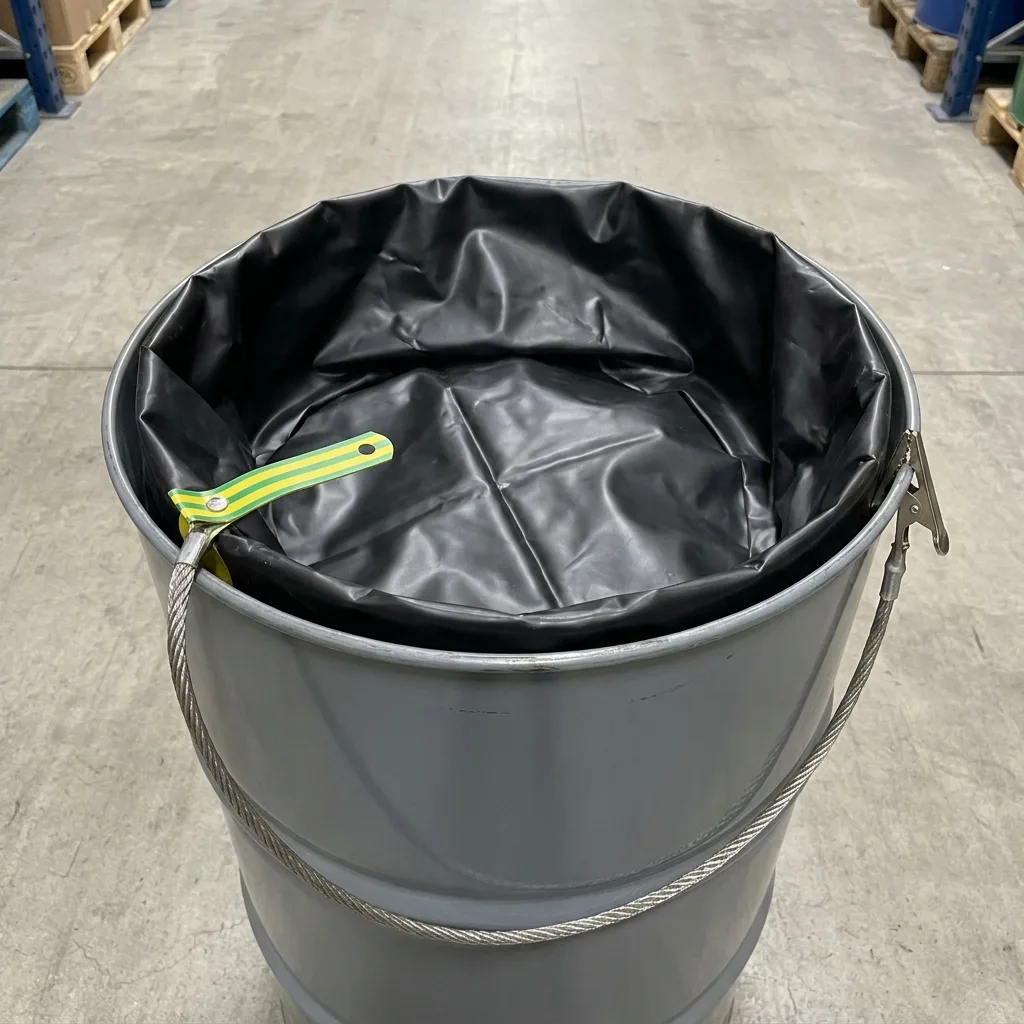
A conductive drum liner is made from film that carries static charge away instead of holding it, with a grounding arrangement that clips to the drum or an earth point. It is specified for solvents, alcohol, flammable chemicals and fine combustible powders, where a static discharge at filling or discharge could be an ignition source. The static safety guide explains when it is needed.
Where a product needs static control and a moisture barrier, a conductive aluminium construction does both in one liner rather than double lining.
PVC
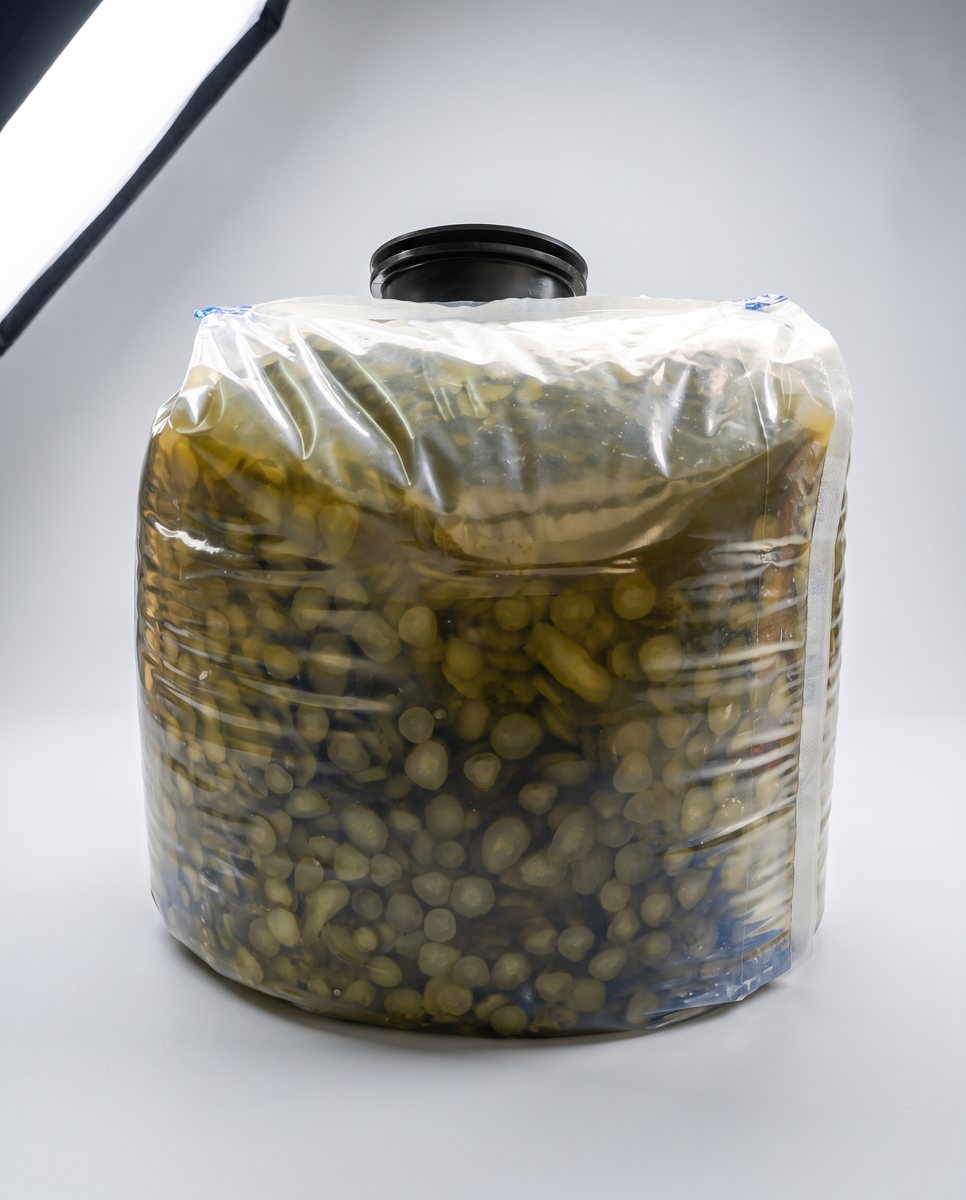
A PVC drum liner is specified where a product will not sit safely against polyethylene, where the contents need to be visible through a clear liner, or where the liner must shape itself to an irregular drum. PVC stays soft over a wide temperature range.
It is not a universal upgrade. Some products interact with PVC's plasticisers, and PVC has its own temperature and disposal considerations. Compatibility is checked against the product data sheet first — and where PVC is not the right answer, the honest reply is to say so.
Comparison at a glance
| Property | Multilayer PE | EVOH | Aluminium laminate | Conductive | PVC |
|---|---|---|---|---|---|
| Keeps product off the drum wall | Yes | Yes | Yes | Yes | Yes |
| Oxygen barrier | Low | High | Very high | Low (unless laminated) | Low |
| Moisture barrier | Low | Low to moderate | Very high | Low (unless laminated) | Low |
| Static control | No | No | No (unless conductive) | Yes | No |
| Transparency | Translucent | Translucent | Opaque | Usually opaque | Can be clear |
| Typical use | General purpose | Oxidising products | Hygroscopic, high value | Flammable products | Aggressive chemicals |
Construction details that matter as much as the material
- Diameter and height made to the measured drum, so the liner neither creases nor strains — how to measure.
- Bottom shape — flat, gusseted, conical or shaped to suit how the drum is discharged.
- Spout — an integrated dispensing spout where the drum is drawn from repeatedly.
- Printing — identification, batch coding or grade marking.
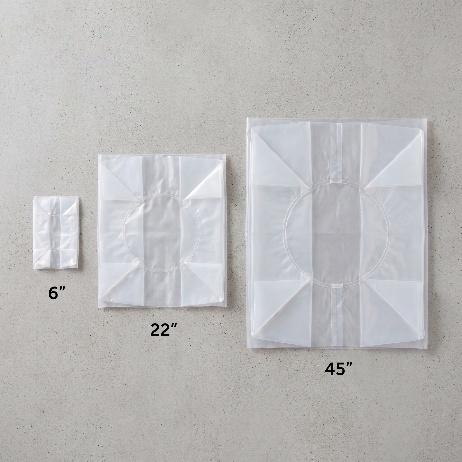
GI PackTech makes every one of these materials in any internal diameter from 6 to 100 inches, on its own extrusion, lamination, cutting and sealing lines. Send the product data sheet and the drum dimensions; the material is specified against them and a trial liner is supplied before bulk production.
Frequently asked questions
What is the most common drum liner material?
Polyethylene, usually as a multilayer co-extruded film. It keeps the product off the drum wall, resists most aqueous products, acids and alkalis, and is strong and flexible. It is the right choice whenever the job is to keep a product clean and the drum reusable, and nothing more demanding — a barrier, static control, aggressive chemistry — is needed.
When should I use an aluminium foil drum liner?
When moisture or oxygen is what spoils the product over its storage or shipping period — hygroscopic powders, catalysts, pharmaceutical intermediates, moisture-sensitive additives. A 5- or 6-layer aluminium laminate is close to a total barrier, and with a well-made seal it keeps the product in the same condition through a long, humid voyage.
Is a thicker polyethylene liner a moisture barrier?
Not in any useful sense. Polyethylene of any practical thickness lets water vapour and oxygen through slowly, so a thicker liner is stronger but only slightly slower to let moisture in. Where moisture or oxygen ingress is the problem, specify a barrier layer — aluminium foil or EVOH — rather than more polyethylene.