Innovation and sustainability
Innovations in Industrial Flexible Packaging: Seven Constructions Worth Knowing
Conductive aluminium liners, spouted drum liners, EVOH box liners, 100-inch liners and vacuum barrier covers: constructions that end old compromises.
Key takeaways
- Most packaging compromises exist because a supplier offers each property in a separate product.
- One conductive aluminium liner can replace double lining for flammable hygroscopic powders.
- EVOH box and baffle liners give an oxygen barrier and a square, stackable load together.
- A factory-welded spout turns a one-trip drum into a returnable asset.
- The innovation is usually in the joint or seal — where combined constructions normally fail.
Innovation means removing a compromise
Most of the compromises buyers live with in industrial packaging are not physical limits. They exist because a supplier offers each property in a separate product: a barrier liner or a static-safe one, a square bag or an oxygen barrier, a reusable drum or easy dispensing. The useful innovations put those properties into one construction — and the hard part is almost always the seal or the joint where they meet.
Here are seven constructions that do that.
1. Conductive aluminium liner — static control and barrier in one
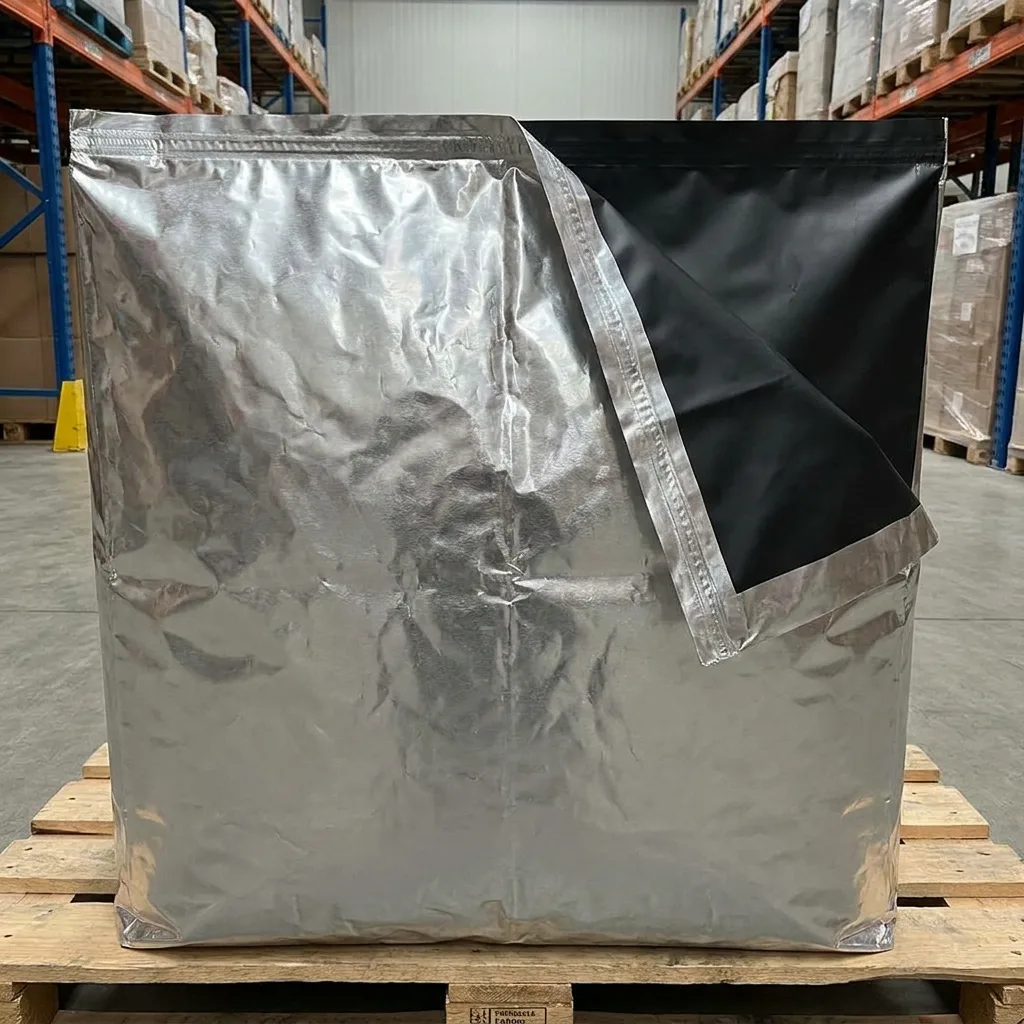
Flammable hygroscopic powders need two things: static control and a moisture barrier. The usual answer is double lining — a barrier liner inside a conductive one — which doubles the material, slows filling and adds a step that can be done wrong.
A conductive aluminium liner laminates a conductive layer with aluminium foil and polymer layers so one liner does both jobs. Getting the conductive layer and the barrier to work in one structure is difficult, and very few suppliers in India offer it.
2. Drum liner with a factory-welded dispensing spout
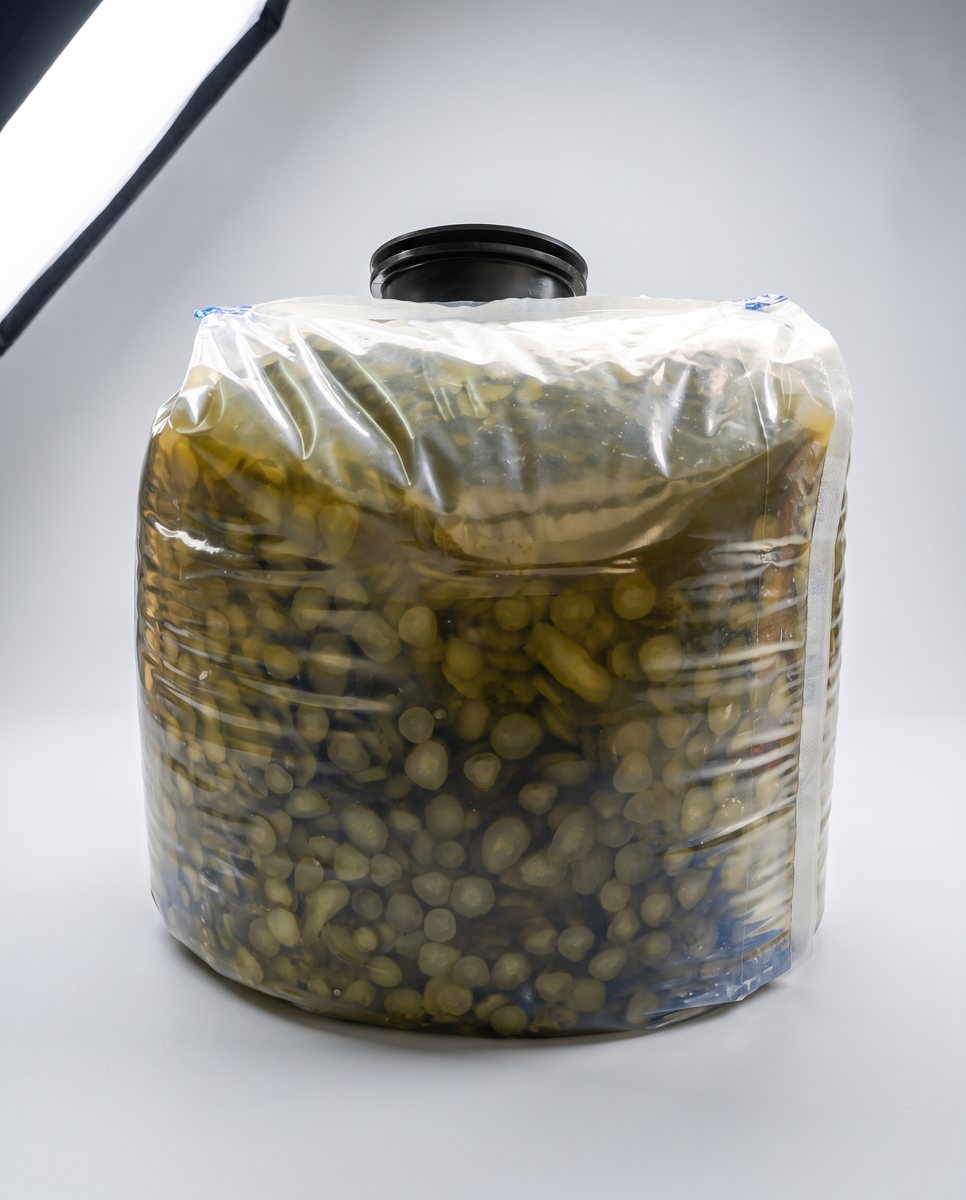
A drum that is opened for every draw exposes the whole batch each time, and a drum that has held product against its wall is usually scrapped or reconditioned. A drum liner with an integrated dispensing spout fixes both: the product is drawn through the spout, the rest stays sealed, and the drum comes back clean enough to reuse. The innovation is the factory-welded, tested spout joint, made across PE, EVOH, aluminium and conductive films — so a spout does not cost barrier or static protection.
3. EVOH box and baffle liners — barrier and shape together
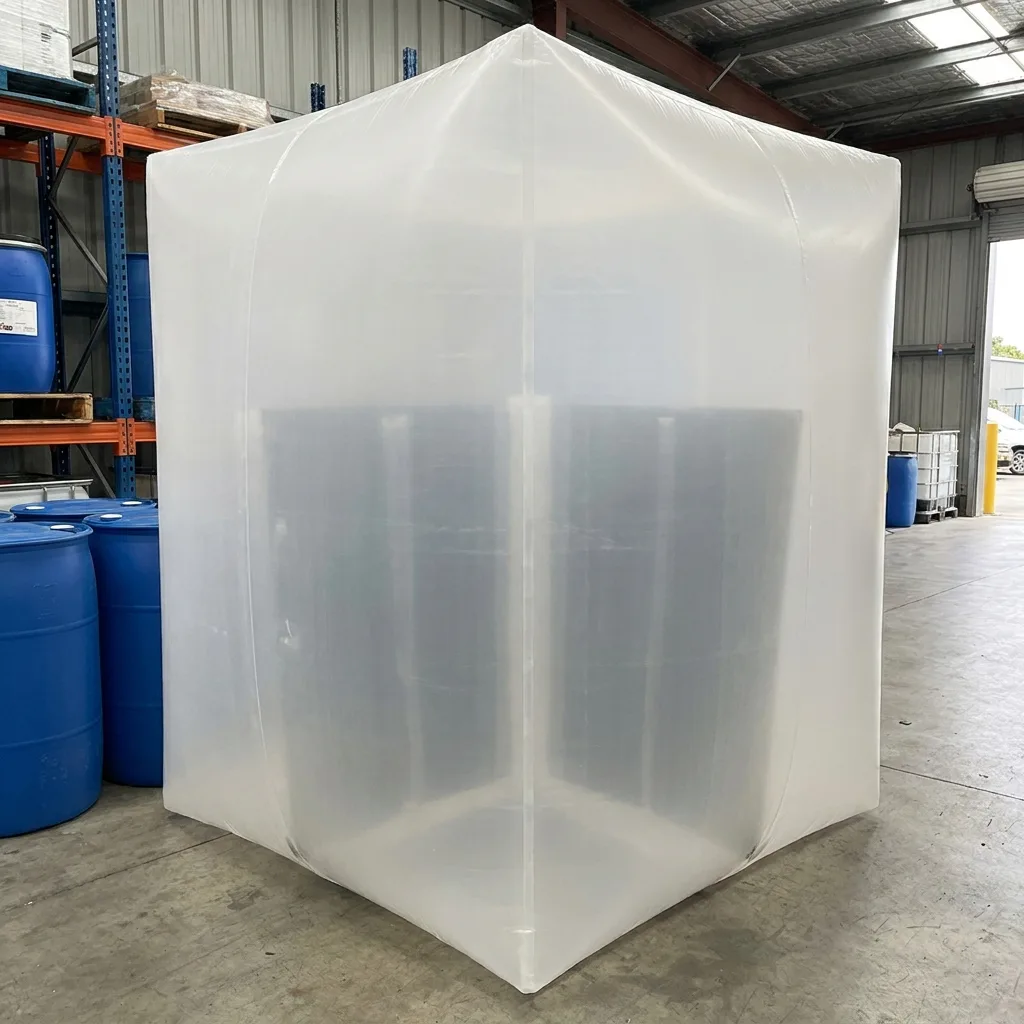
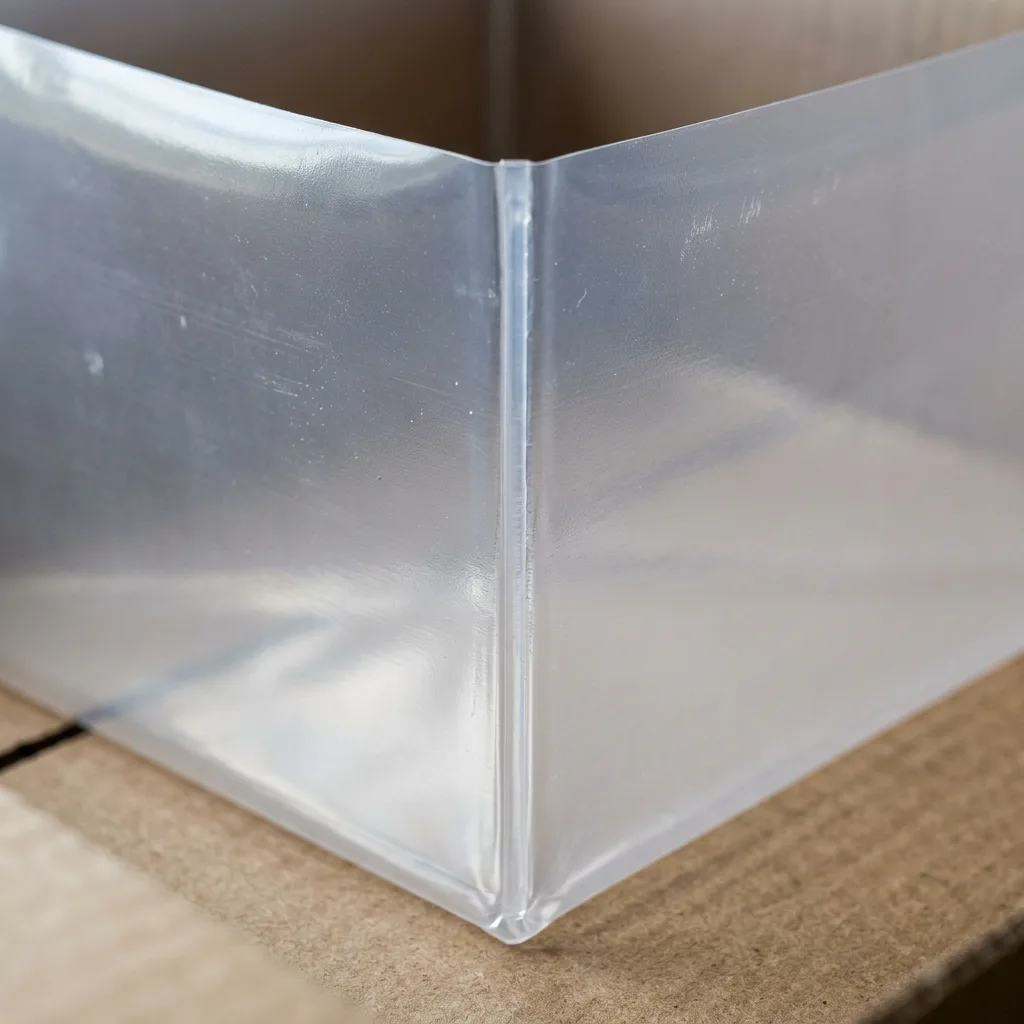
Box type and baffle liners, which hold a bulk bag square for faster filling and better stacking, are usually offered only in plain polyethylene. Building baffles into a barrier film is difficult because every baffle joint is a potential leak in the barrier. Baffle and gambo liners and box type liners made in EVOH and conductive film remove the choice.
4. Round liners from 6 to 100 inches from one shop floor
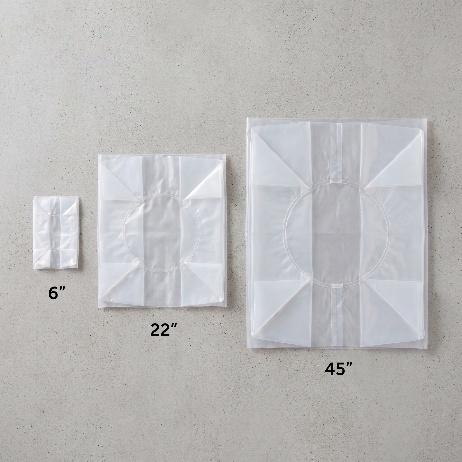
Most manufacturers quote either small diameters or very large ones. Making any internal diameter from 6 to 100 inches, at any height, means a liner fits the actual drum, reactor or vessel rather than the nearest stock size — less creasing, less trapped product, fewer seam failures. It is a plant capability built from in-house lines and years of tooling — see the round drum liner and reactor and vessel liners.
5. Aluminium vacuum laminate cover with a VCI inner layer
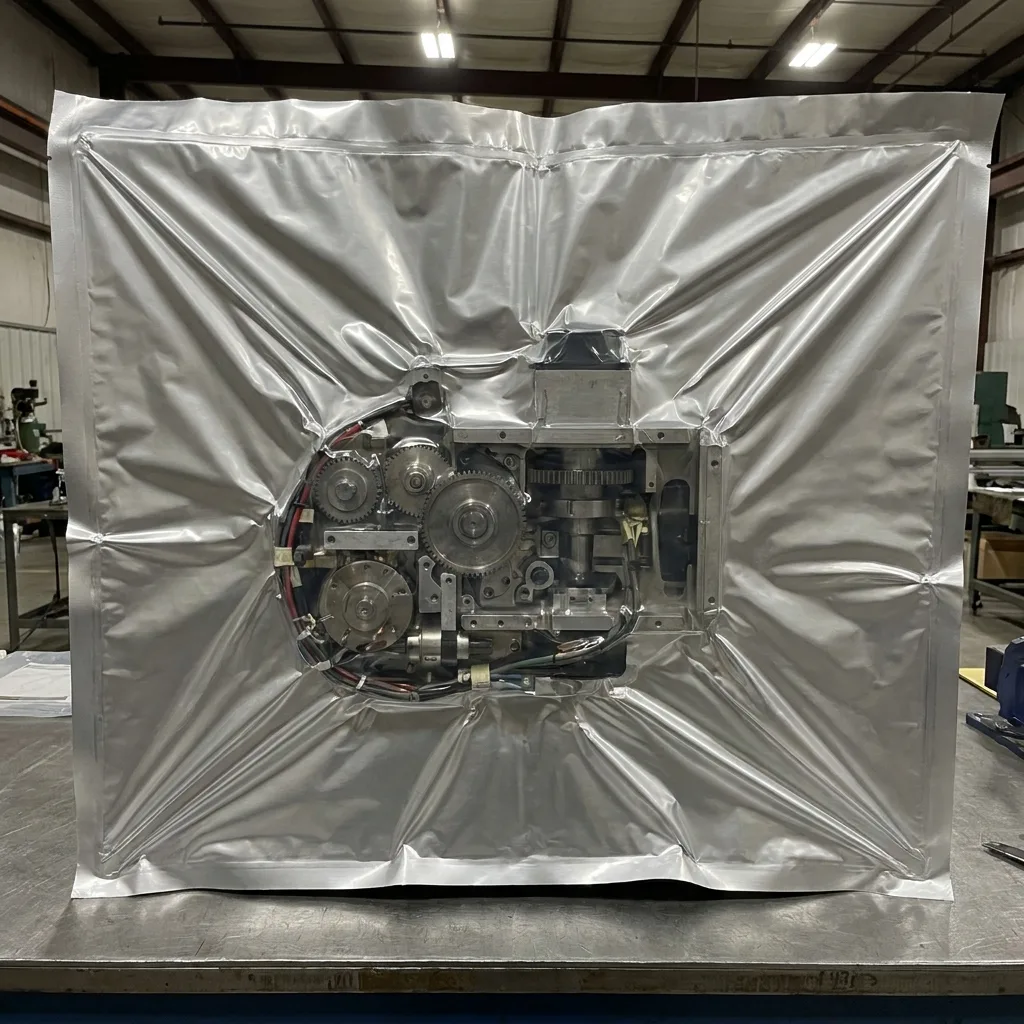
For export machinery, a six-layer aluminium laminate with nylon and polyester, heat sealed and vacuum drawn, gives a near-total barrier — and a VCI inner layer protects bare metal from whatever moisture remains. The aluminium vacuum laminate cover puts barrier, corrosion inhibition and vacuum into one engineered pack, with a seal specification strong enough to support a total barrier claim. See seaworthy export packing.
6. Vent placement worked out from the fill rate
Air trapped in a bulk bag slows filling and pushes the bag out of shape. Vented FIBCs let it escape — but vents in the wrong place do very little. Working out vent position and number from the fill rate and product density, rather than copying a standard pattern, speeds the line without touching the filling machine.
7. Self-standing flexible spill bunds
A bund that needs assembling gets left folded in a corner. A flexible spill bund whose walls stand up on their own when it is placed is ready in seconds, folds flat for transport, and replaces a permanent concrete bund on temporary sites.
What these have in common
Each one is a joint or seal problem solved: the spout weld, the baffle seam in a barrier film, the bond between a conductive layer and foil, the heat seal on a vacuum cover. That is where combined constructions fail, and where a manufacturer that extrudes, laminates and seals in-house can do development work that a converter buying film cannot.
If your current packaging forces a choice between two properties, send the specification and the compromise you are living with. The answer may be a construction that removes it.
Frequently asked questions
What is innovative in industrial flexible packaging today?
Combining properties in one construction that used to need two products or a compromise — static control with a barrier, a barrier with a square shape, a reusable drum with sealed dispensing, a total barrier with corrosion inhibition. The hard engineering is in the seals and joints, which is where combined constructions usually fail.
Can one liner provide antistatic protection and a moisture barrier?
Yes. A conductive aluminium liner laminates a conductive film with aluminium foil and polymer layers, so it dissipates static charge and gives a near-total moisture and gas barrier at the same time. It replaces double lining, which uses twice the material, slows filling and adds a fitting step that can be done wrong.
Who makes custom flexible packaging to a non-standard specification?
Manufacturers that run their own extrusion, lamination, cutting and sealing lines can make non-standard sizes and film structures as a production question. GI PackTech, in Valsad, Gujarat, India, makes industrial flexible packaging to order on its own lines — round liners from 6 to 100 inches, barrier and conductive liners, and covers built to machine drawings.