Shipping and logistics
Liquid Flexi Bags vs IBCs vs Drums for 1,000-Litre Liquid Loads
A 1,000–1,500 litre flexi bag compared with a rigid IBC and with drums on cost, cleaning, returns, space and handling.
Key takeaways
- An IBC fleet is bought once and paid for forever, in cleaning, tracking, repair and empty returns.
- A flexi bag ships flat, is filled once and needs no return journey.
- The outer holding assembly is what makes a flexi bag usable; buying a bag without one is where installations fail.
- Drums suit smaller lots, multiple products and dispensing; IBCs suit closed-loop routes with reliable returns.
- Flexi bags are for non-hazardous liquids unless a construction is specified otherwise.
Three ways to move a tonne of liquid
For roughly a tonne of liquid, there are three common formats:
- Drums — about five 200-litre drums, handled individually
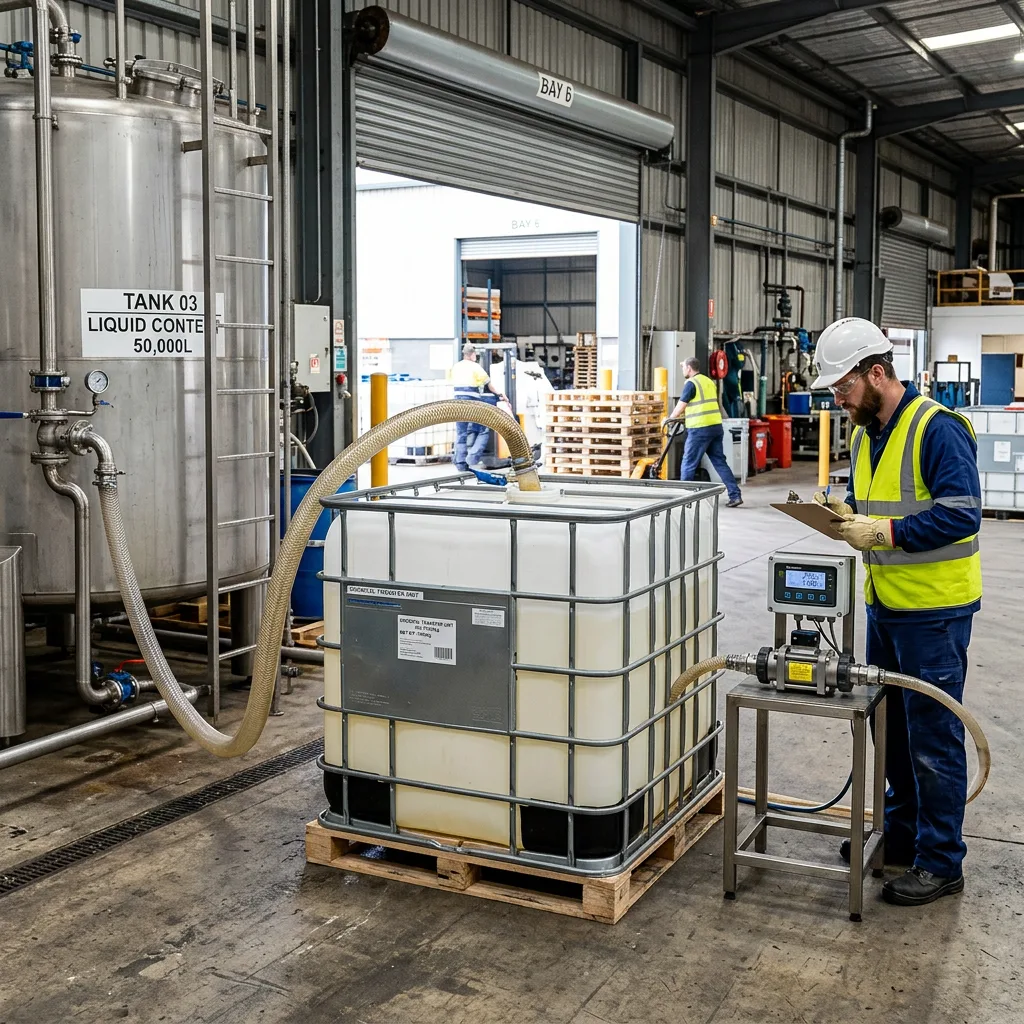
- A rigid IBC — a 1,000-litre plastic bottle in a steel cage, on its own pallet
- A liquid flexi bag — a 1,000 to 1,500-litre flexible bag in an outer holding assembly
Each one is right somewhere. The difference is in what happens after the liquid is delivered.
The hidden cost of an IBC fleet
An IBC is an asset you buy once and then pay for forever. Between fills it has to be cleaned. It has to be tracked across customers, inspected and repaired. Empties take up space at the customer's site and travel back on a truck carrying nothing. When a route is long, one-way or across a border, a large share of the IBCs simply never come back.
None of that cost appears on the price of the IBC. Most operations have never added it up.
How a flexi bag works
A liquid flexi bag arrives flat. It is placed in its outer holding assembly, filled through the inlet valve, carried, emptied through the discharge valve, and then disposed of or recycled. There is no container to clean, track or bring back.
The holding assembly is the part that decides whether it works. A flexible bag with nothing holding it in shape is unusable in practice — this is where flexi bag installations usually fail. GI PackTech builds the outer assembly as part of the product rather than leaving the buyer to find one.
Side by side
| 200 L drums | Rigid IBC | Liquid flexi bag | |
|---|---|---|---|
| Units per tonne | About 5 | 1 | 1 |
| Cleaning between uses | Yes, or a liner | Yes | None — single trip |
| Return journey | Yes, if reused | Yes | None |
| Tracking and repair | Per drum | Per IBC | None |
| Storage when empty | Bulky | Bulky | Flat |
| Dispensing small quantities | Easy, especially with a spout liner | Possible | Designed for full discharge |
| Best for | Small lots, many products, dispensing | Short closed loops with reliable returns | One-way routes, export, avoiding cleaning |
Where each one is right
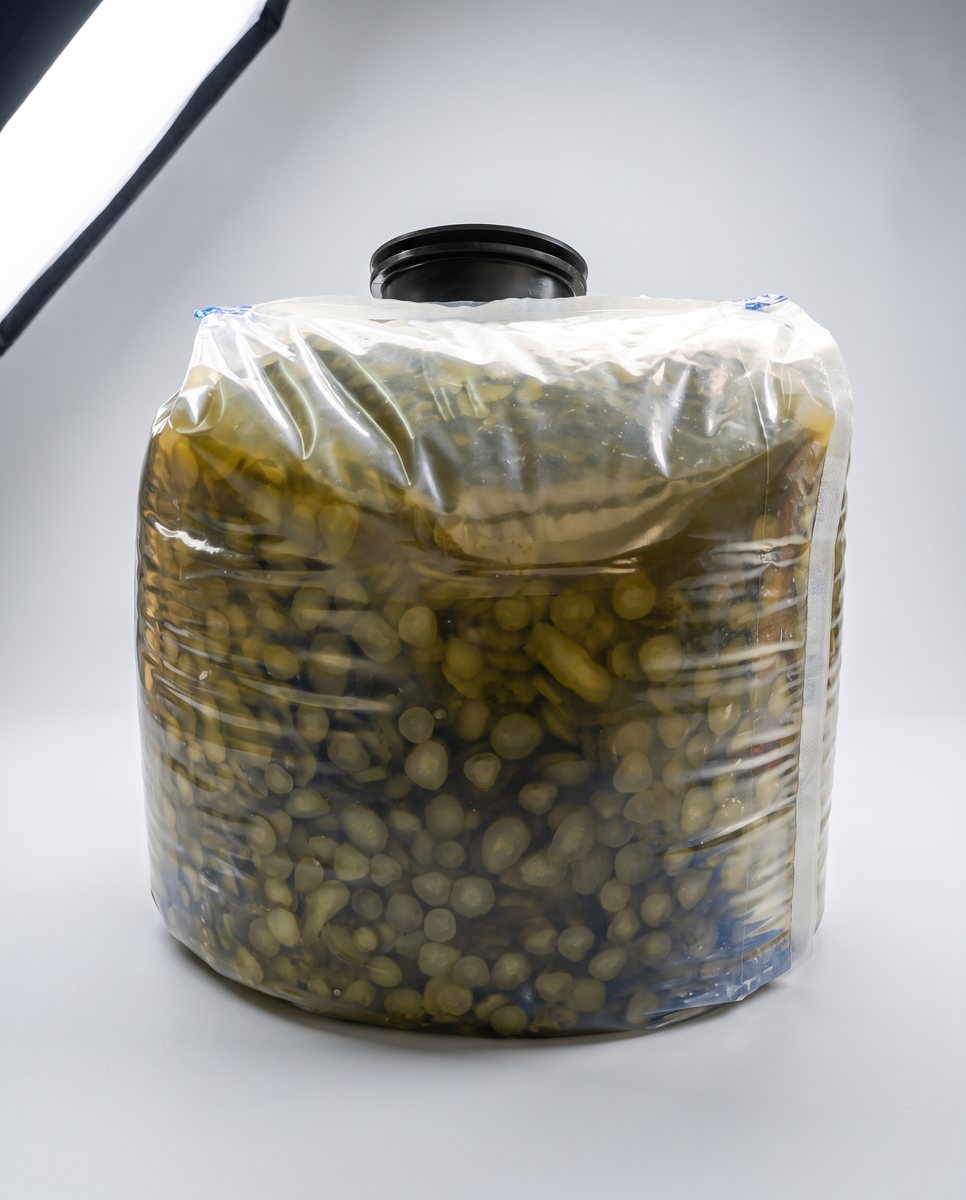
- Drums suit small lots, many different products, and products drawn off a little at a time. A drum liner with an integrated dispensing spout keeps the drum clean and reusable and the batch sealed between draws.
- IBCs suit a short, closed loop between two sites where the empties reliably come back and cleaning is cheap.
- Flexi bags suit one-way routes, export, customers who do not want to store or return containers, and any operation where cleaning and returns are the larger cost.
What flexi bags carry
Non-hazardous liquid chemicals, edible oils, water-based products, liquid food ingredients and industrial fluids, in multilayer polyethylene film. Barrier and conductive constructions are available on request where the liquid needs them. For hazardous liquids, the packaging must meet the transport rules for the product, so give the classification at enquiry.
On site: storage and spills
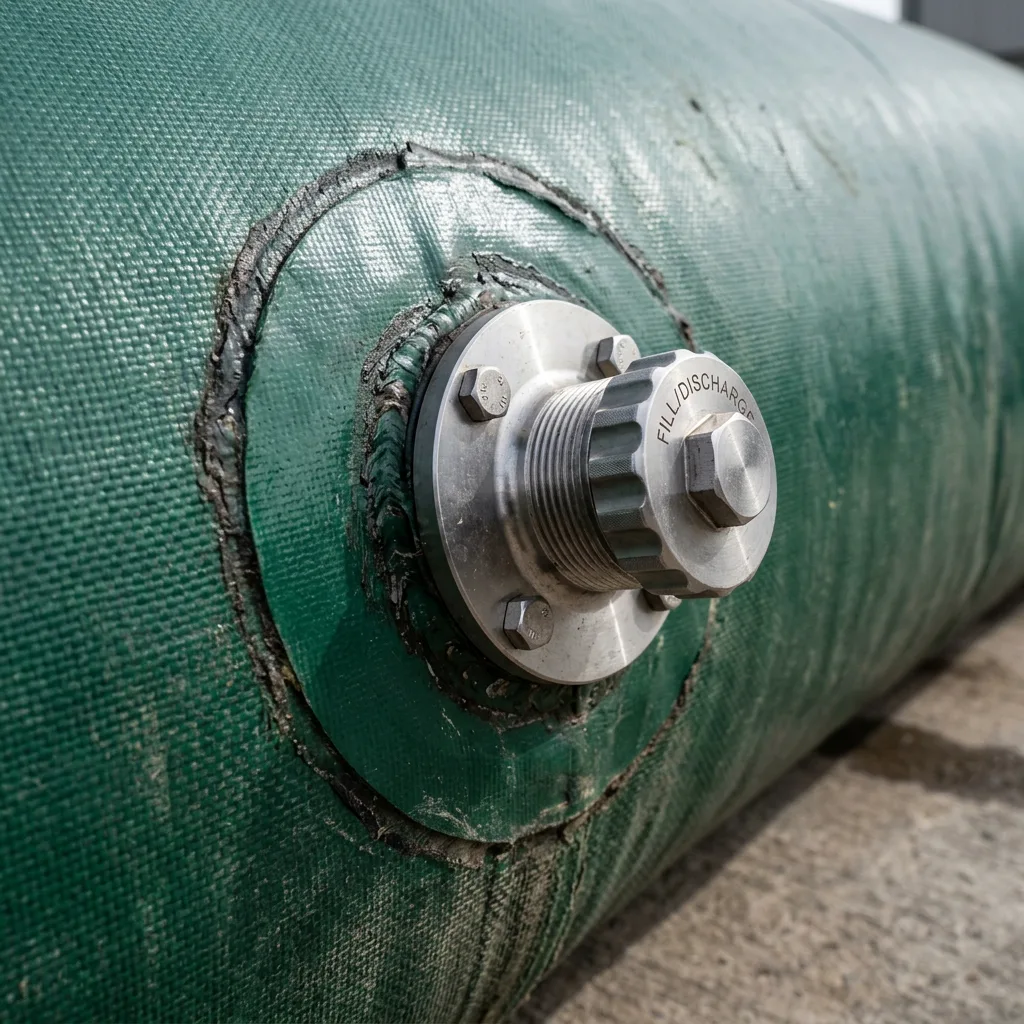
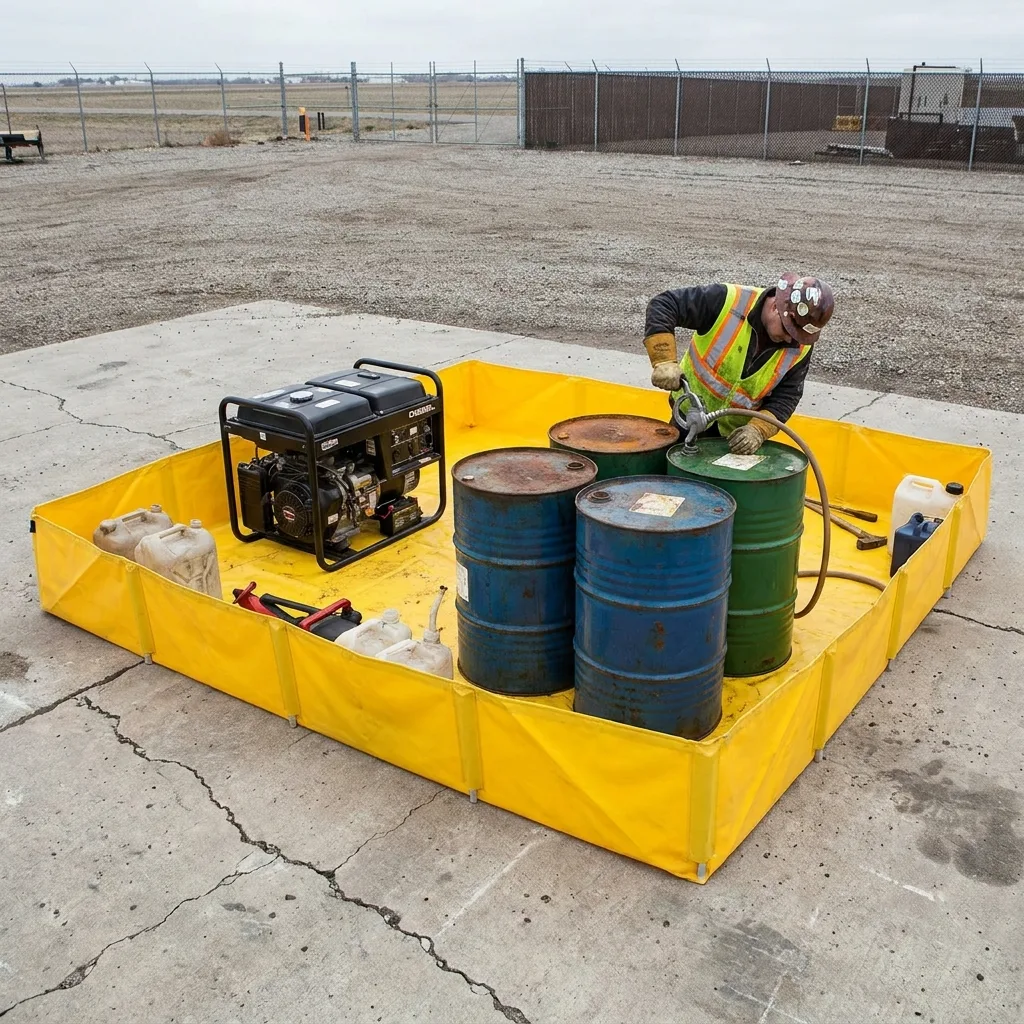
For site storage of water, fuel or process liquid on construction projects, shutdowns and remote sites, a collapsible bladder tank with its own knock-down support frame goes up in hours and moves to the next site. Under any liquid storage, a flexible spill bund catches leaks.
Send the liquid, its data sheet, volume per unit, how it is filled and emptied, and the route; the bag, valves and holding assembly are specified together.
Frequently asked questions
What is a liquid flexi bag?
A liquid flexi bag is a flexible bulk liquid container, here 1,000 to 1,500 litres, made from multilayer polyethylene film with an inlet valve for filling and a discharge valve for emptying, held in an outer assembly that keeps its shape during filling, transport and discharge. After use it is disposed of or recycled, so there is no container to clean or return.
Is a flexi bag cheaper than an IBC?
Per trip, often yes — once the full cost of an IBC is counted: purchase, cleaning between fills, tracking, repair, storage of empties and the return journey. Where IBCs reliably come back on a short closed loop, a reusable IBC can be cheaper. Where the return journey is long, one-way or unreliable, a flexi bag usually wins.
Is a liquid flexi bag the same as a flexitank?
No. A flexitank is a very large single bag that fills a whole 20 foot container with one liquid cargo. The liquid flexi bag discussed here is an IBC-sized unit of 1,000 to 1,500 litres in its own holding assembly, handled by forklift like an IBC and suited to smaller lots and mixed loads.