Machinery and export packing
Protective Covers for Generators, Transformers, Panels and Wind Turbine Components
Fitted covers for generator sets, transformers, panels and turbine components, with desiccant, humidity indicators and VCI.
Key takeaways
- Electrical damage from moisture is usually invisible until power is applied — by then the unit is installed.
- A loose cover tears at bushings, radiators and exhausts and collects water in its folds.
- Desiccant must be matched to the enclosed volume and transit time, or the humidity inside rises anyway.
- A humidity indicator turns an invisible benefit into something the receiving engineer can check.
- Transformers and turbine components often wait outdoors for months, so UV and tear grades matter.
Why electrical equipment needs its own approach
Generators, transformers, switchgear and control panels combine three things that fail differently under moisture and salt air: machined metal, electrical terminations and windings, and painted enclosures. Rust on a canopy is visible. Moisture on a busbar, a terminal block or a circuit board is not — until the unit is energised, by which time the site is live and the panel is installed.
So the protection is not just a cover. It is a sealed environment with controlled humidity, built to the unit's shape.
Generator sets
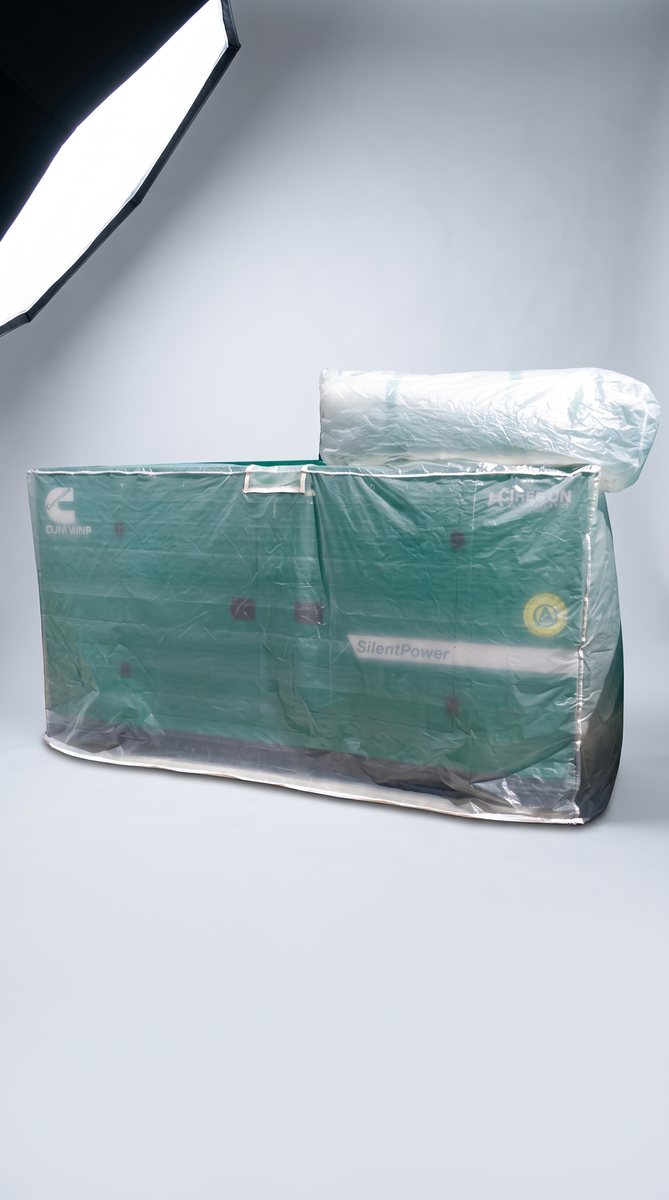
A rust streak on a brand-new set is an argument the dealer cannot win. A generator protective cover is made to the set's dimensions — from small standby units to large silent canopy sets — including the exhaust and control panel projections, and seals around the base. It can be supplied with VCI treatment for exposed metal and desiccant for long journeys, in multilayer film, aluminium laminate or aluminium vacuum laminate. GI PackTech designs around the canopy shape, the exhaust and the base, so the cover seals instead of sitting loose.
Transformers
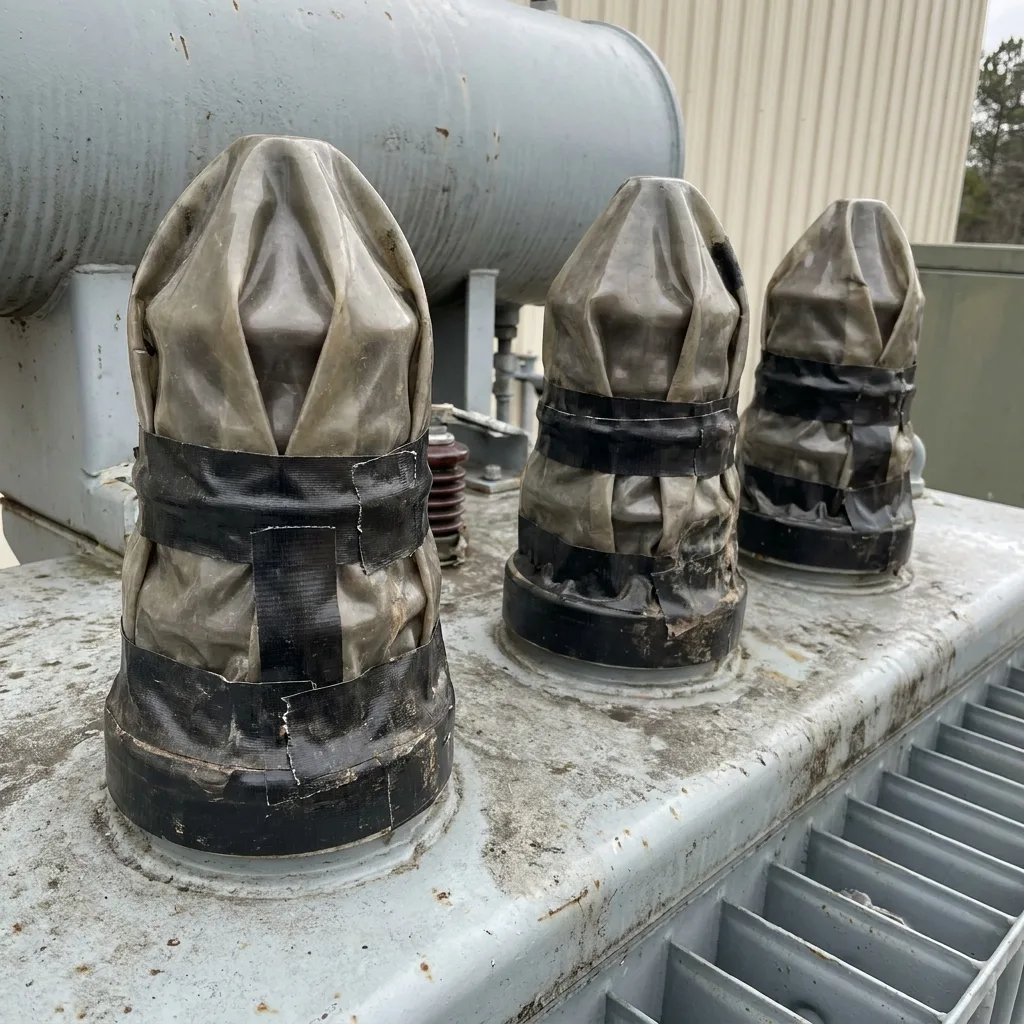
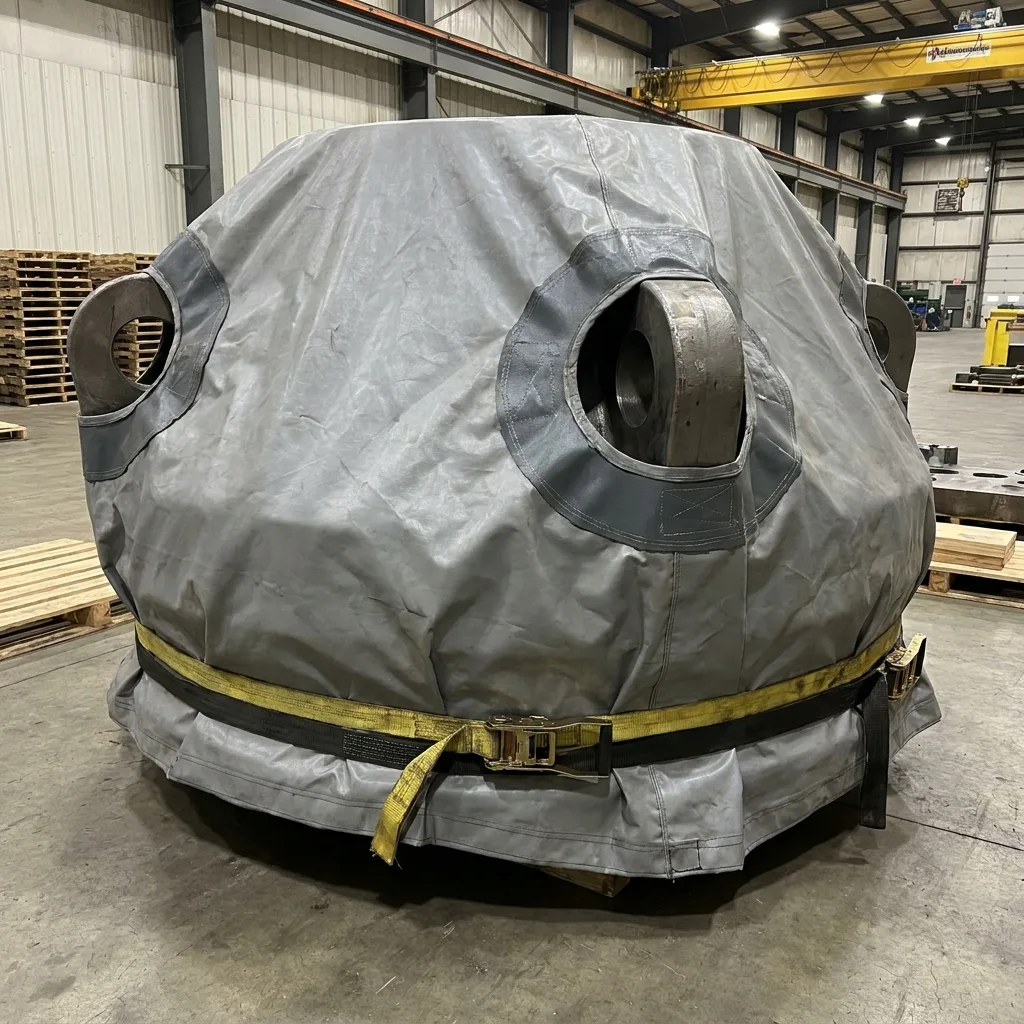
Transformers are heavy, awkwardly shaped, and often wait outdoors for months for a substation to be ready. Bushings and radiators are exactly where a loose cover tears and where water collects. A transformer protective cover is built around those projections, in heavy duty multilayer film or aluminium laminate chosen for the storage time, with reinforcement where crane slings and forks make contact.
Control panels, switchgear and distribution boards
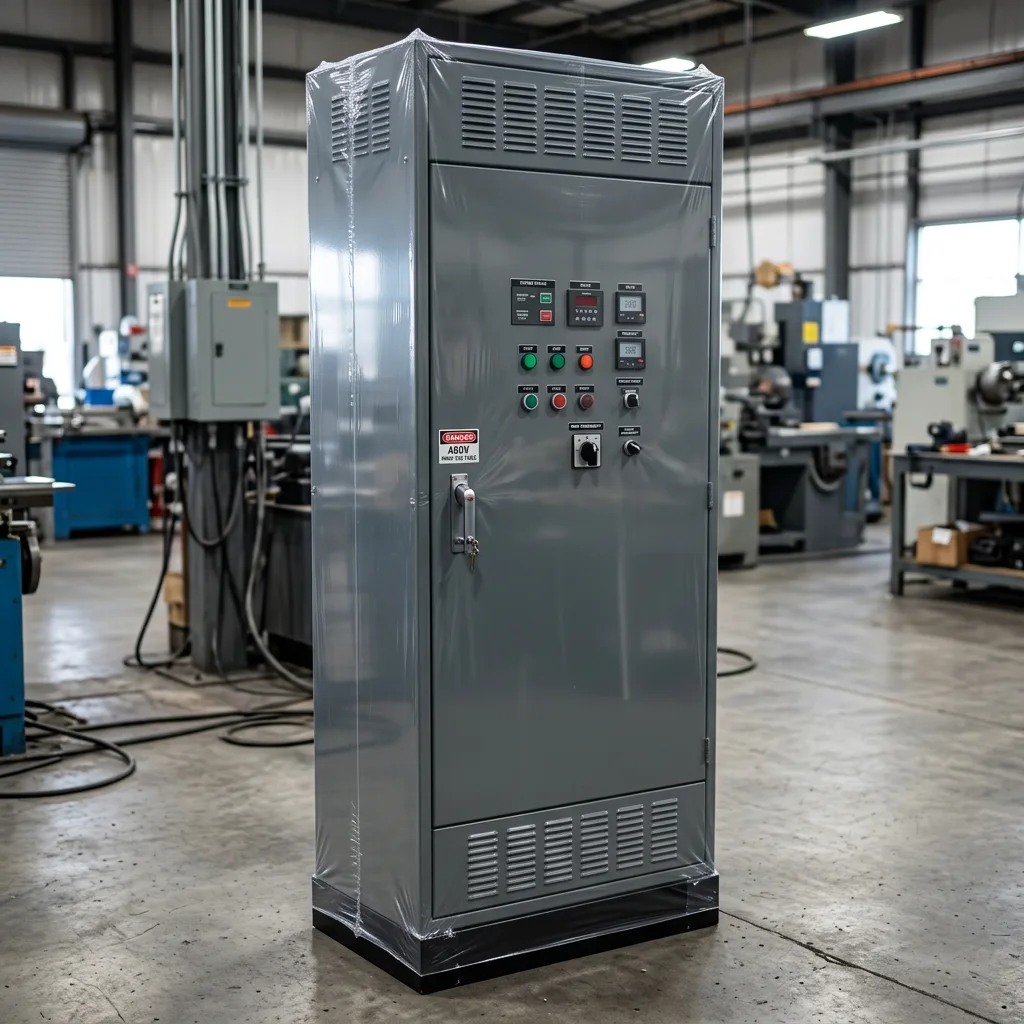
For an electrical panel packaging cover, humidity control is the design problem, not just sealing:
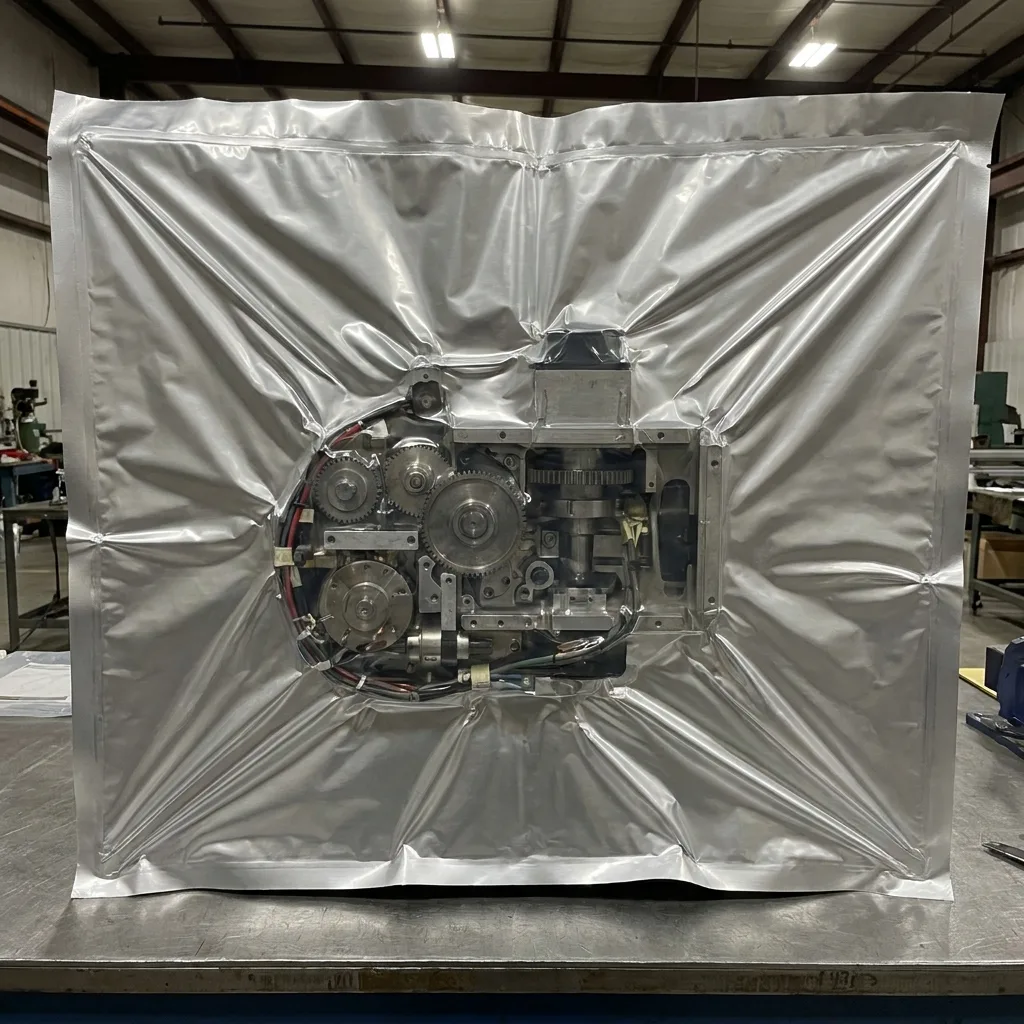
- A sealed barrier cover — multilayer film, aluminium laminate or aluminium vacuum laminate.
- Desiccant matched to the enclosed volume and the expected transit time, so the humidity actually stays where it should for the whole journey.
- An optional humidity indicator that turns an invisible benefit into something the receiving engineer can check before energising.
Chargers, drives and loose components
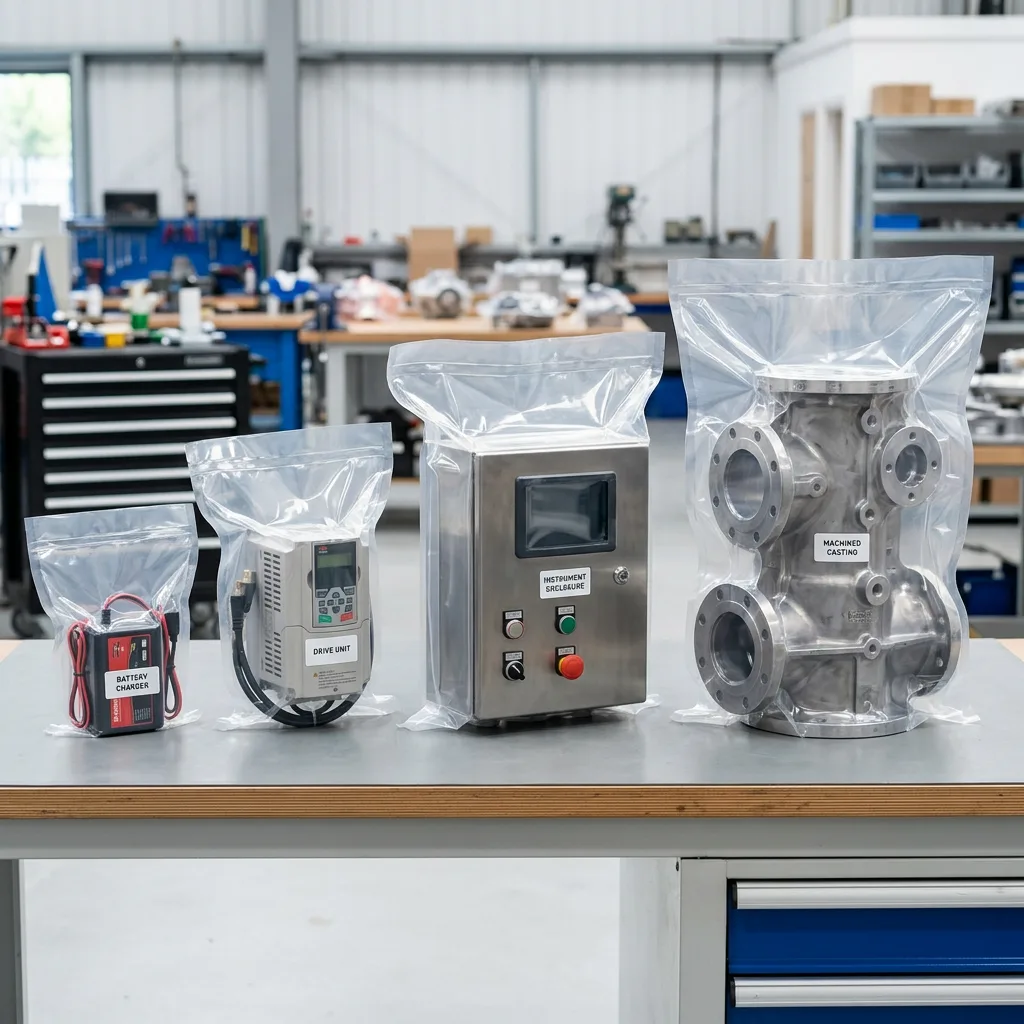
Small items shipped alongside the main assembly — battery chargers, drives, instruments, spares — are often the ones that arrive damaged, because they travel with no protection of their own, and a small item can hold up a very large installation. Individually sized covers keep each one sealed and identified by print or label, so the part is found without opening it.
Wind turbine and turbine components
Turbine assemblies and components are high value, take months to replace, and are often stored at site for long periods before erection. Wind turbine component covers are fabricated to very large and irregular profiles in heavy duty barrier materials, with UV and tear grades specified for the actual storage period rather than for a short transit. The same applies to steam and gas turbine assemblies and other rotating equipment.
Choosing the material
| Situation | Material |
|---|---|
| Domestic dispatch, short storage | Multilayer film |
| Export by sea, medium storage | Aluminium laminate, with desiccant and VCI |
| Long voyage, long site storage, high value | Aluminium vacuum laminate, vacuum drawn, desiccant, VCI, humidity indicator |
| Outdoor yard storage | Heavy duty UV-resistant multilayer film or aluminium laminate, reinforced at contact points |
The seaworthy export packing guide explains how barrier, desiccant, VCI and vacuum work together.
For OEMs and EPC contractors
Manufacturers shipping a product range can fix one cover specification per model, built once from the drawing and repeated on every order. EPC contractors can specify covers for the storage period at site, not just for the voyage. Either way, a trial cover on one unit proves the fit.
What to send
- The unit's general arrangement drawing, with projections and lifting points
- The route, voyage length and expected storage before installation, indoor or outdoor
- Metals and electrical components exposed
- Whether a humidity indicator or printed identification is wanted
Frequently asked questions
How do you protect a generator set during export shipping?
With a cover made to the set's dimensions — canopy, exhaust and control panel projections included — that seals around the base, in multilayer film or aluminium barrier laminate for long voyages, with VCI for exposed metal and desiccant sized to the voyage. A cover built to the canopy seals properly; a loose bag thrown over the top lets water in and tears.
How are electrical panels protected from humidity in transit?
By sealing the panel inside a barrier cover and controlling the humidity inside it: desiccant matched to the enclosed volume and transit time, and a humidity indicator so the receiving engineer can confirm the air stayed dry. Moisture on terminations, busbars and electronics is invisible until power is applied, so control at source is the only reliable protection.
How should a transformer be covered for outdoor storage?
With a heavy duty cover made to the unit's profile, including bushings and radiators, in a material chosen for the storage period and exposure — UV-resistant multilayer film or aluminium laminate — and reinforced where crane slings and forklift forks make contact. A loose cover tears at the bushings and collects water around the radiators.