Shipping and logistics
Container Rain and Cargo Sweat: Protecting Goods from Moisture on a Sea Voyage
Why condensation forms in shipping containers and how barrier covers, desiccant, VCI and the right liner keep machinery and powders dry.
Key takeaways
- The moisture usually comes from inside the container — the cargo, wooden pallets and dunnage — not from leaks.
- Container sweat forms on the steel when the outside cools; cargo sweat forms on cold goods in warm air.
- Ventilation and container desiccants help, but goods that must stay dry need their own sealed barrier.
- Machinery is protected by a sealed barrier cover with desiccant and VCI; powders by a barrier liner.
- Respiring agricultural cargo needs a breathable liner, not an airtight one.
Where the water comes from
A sealed steel container can arrive with water dripping from the roof, rust on machined surfaces and caked powder at the top of the load — without ever having leaked. The water was already inside.
Air holds more moisture when it is warm. A container loaded in a warm, humid place carries that moisture with it, and the cargo adds more: wooden pallets and dunnage, cartons, and agricultural products that give off moisture as they respire. When the air inside cools below its dew point, the moisture condenses.
Container sweat and cargo sweat
| Container sweat (container rain) | Cargo sweat | |
|---|---|---|
| Where it forms | On the inside of the container's walls and roof | On the surface of the cargo |
| When | The outside cools — night, colder sea areas, winter ports | Cold cargo meets warm, humid air |
| Typical damage | Drips onto the top of the load: wet cartons, caked powder, rust | Wet machined surfaces, rust, mould, label damage |
| Typical route | Warm and humid origin, cooler route or destination | Cold origin, warm and humid destination |
Both can happen on the same voyage. Day-night cycling can repeat the process many times.
The controls, from the container to the product
At container level, ventilation, dry pallets and container desiccants reduce the amount of moisture in the air. They help, but they act on the whole container's air, which the cargo keeps replenishing.
At product level, the reliable control is to put the goods that must stay dry inside their own sealed environment, so it does not matter what the container's air is doing.
Machinery and equipment
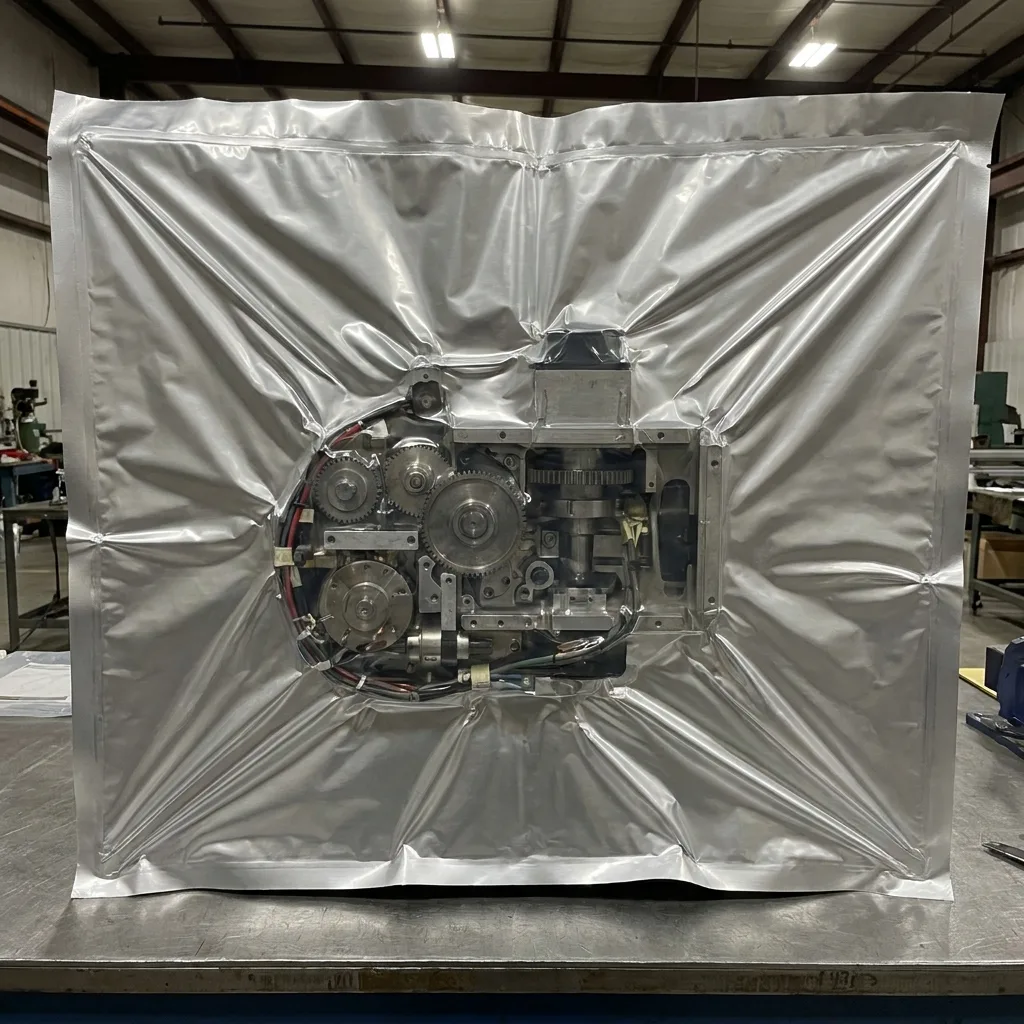
For a machine tool, generator, panel or compressor, the standard protection is a sealed barrier enclosure:
- An aluminium vacuum laminate cover — close to a total barrier to moisture and gas — fabricated to the machine and heat sealed around it, often on a sealed base sheet.
- Desiccant inside, calculated against the enclosed volume, the barrier and the transit time, to absorb the moisture trapped at sealing.
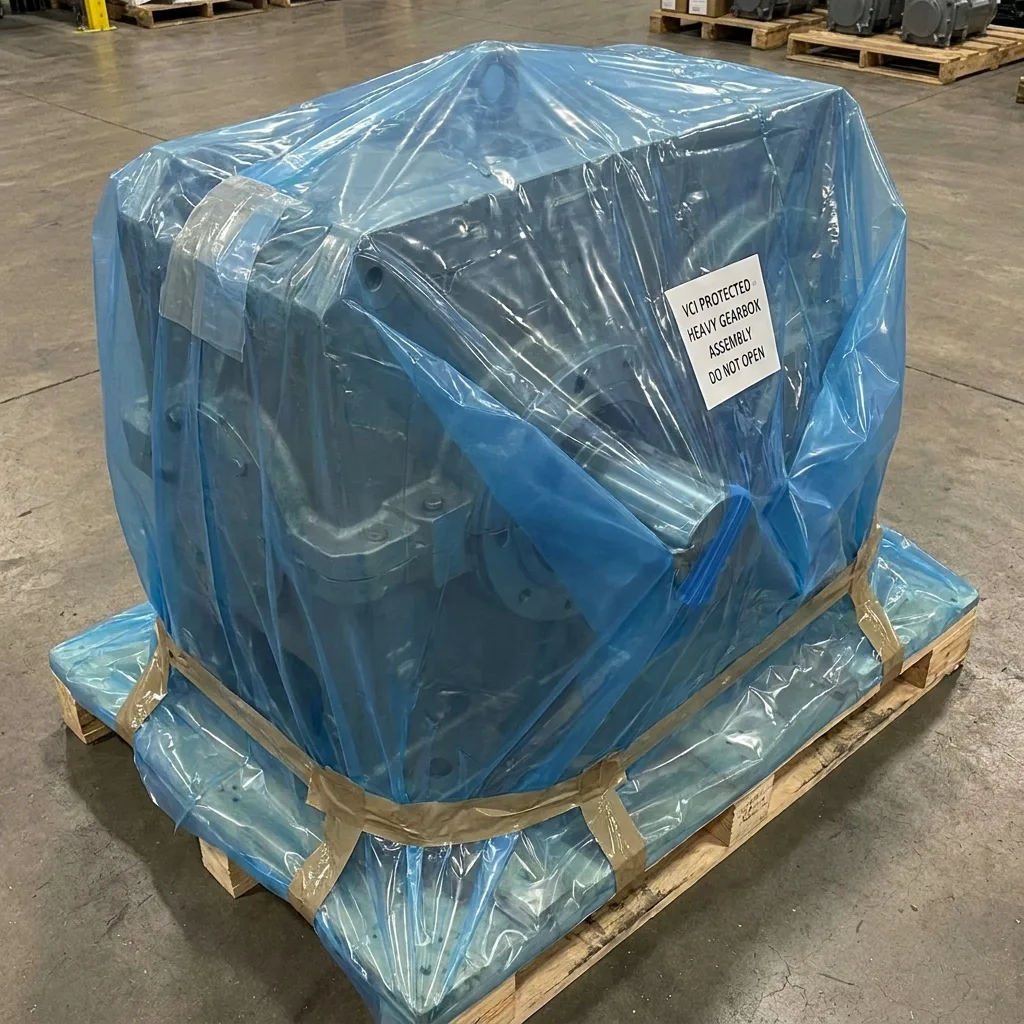
- VCI protection for bare metal — see what is VCI packaging.
- Optionally, the air is drawn down by vacuum before sealing, which removes most of the moisture with it.
The container can sweat around the enclosure; the air next to the machine stays dry. The seaworthy export packing guide sets out the full method.
Powders and chemicals
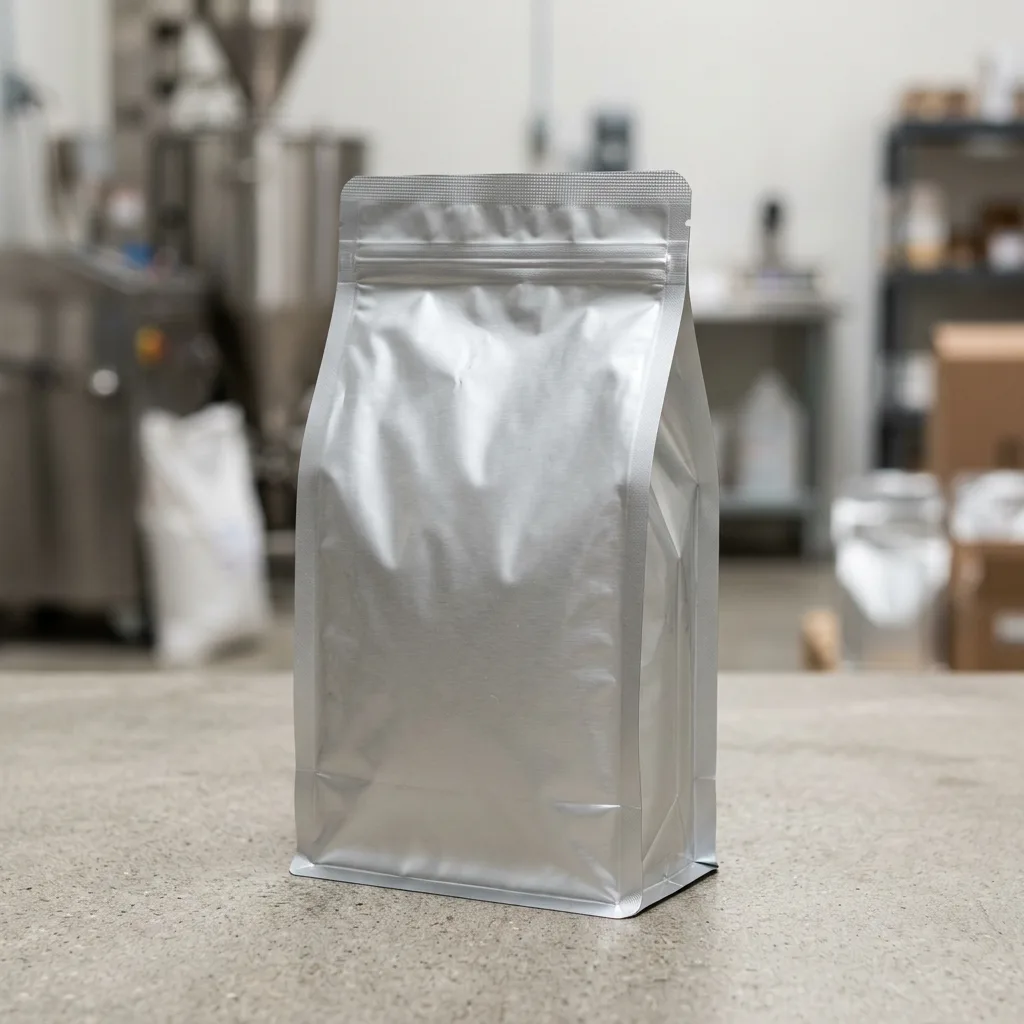
For hygroscopic powders, the protection is a barrier liner inside the drum or FIBC — an aluminium multilayer liner — sealed after filling. Container rain landing on the top of an FIBC then wets the woven bag, not the product.
Pallets of cartons and parts
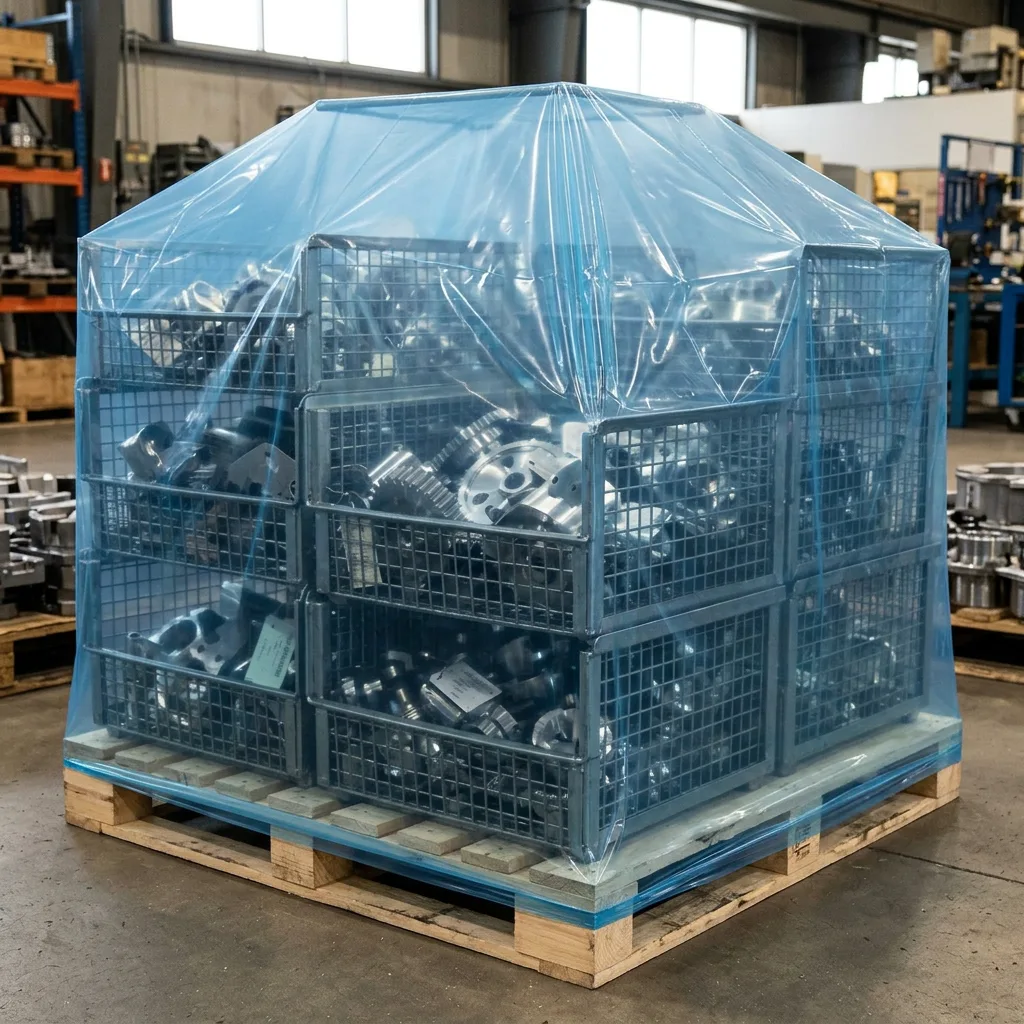
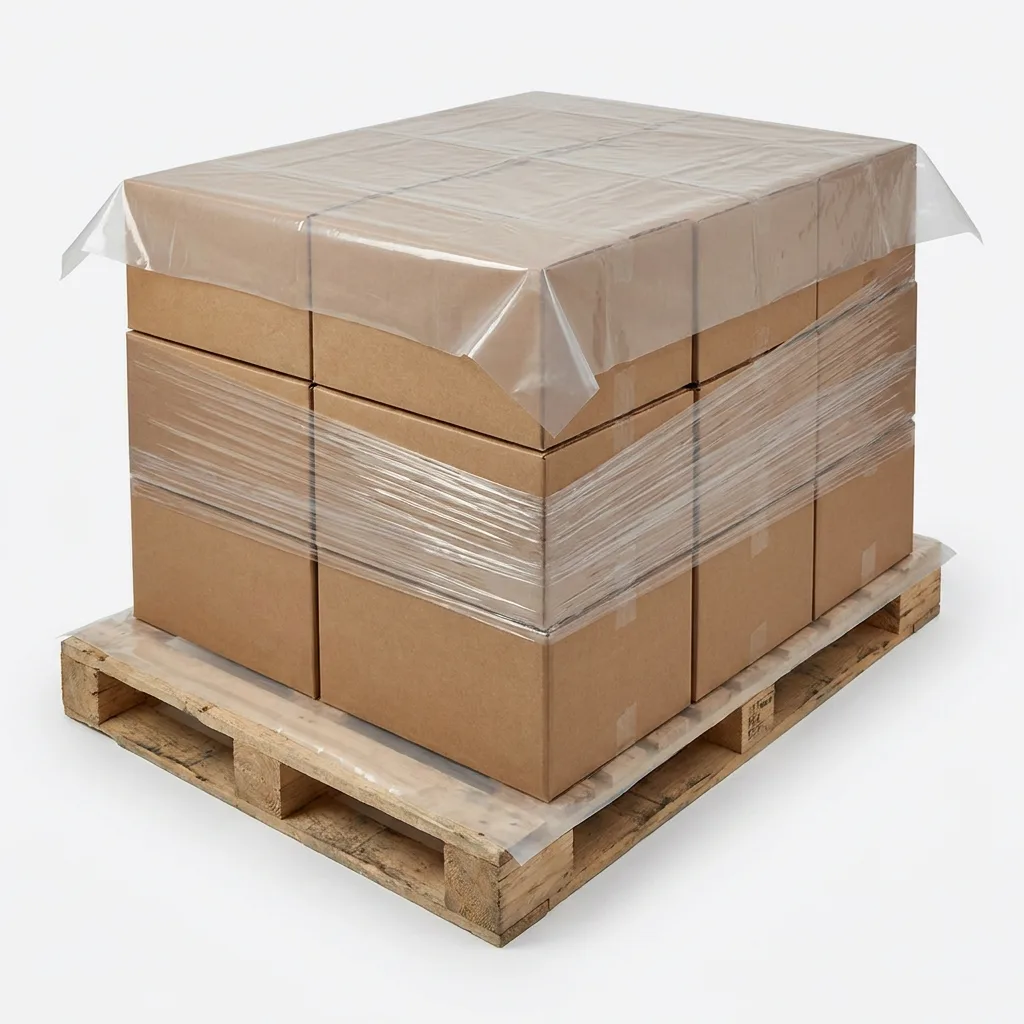
- A pallet top sheet closes the open top that stretch wrap leaves — exactly where drips land — and a pallet liner protects the bottom layer from the pallet itself.
- A VCI pallet cover protects a whole pallet of metal parts against corrosion in one operation.
Bulk agricultural cargo
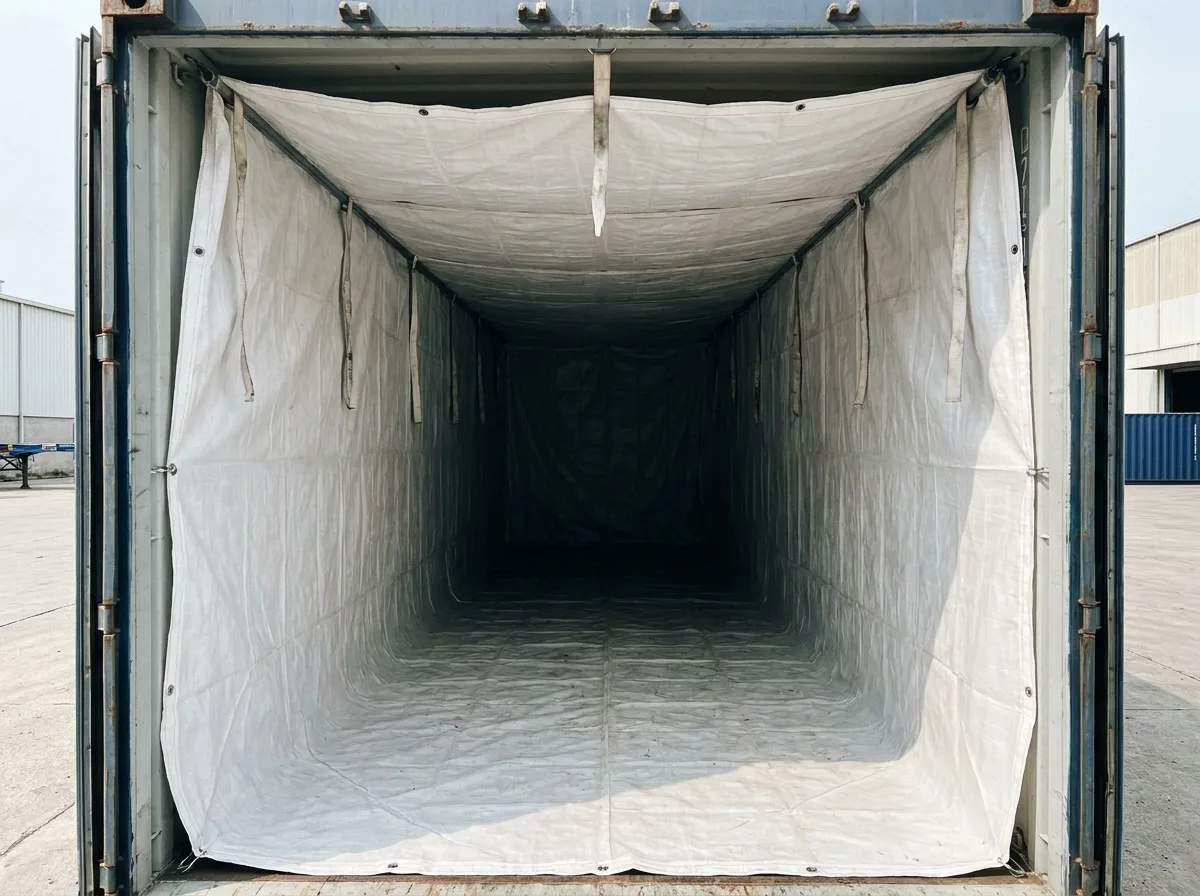
Respiring cargo — grain, coffee, cocoa, seeds — must not be sealed airtight, or it will sweat inside its own packaging. An unlaminated, breathable container liner lets heat and moisture escape while still keeping the cargo off the container walls. See container liners for dry bulk.
A checklist for a moisture-safe shipment
- Know the route: where it is warm and humid, where it is cold, how long it takes.
- Load dry: kiln-dried pallets and dunnage, cargo at a stable temperature.
- Seal what must stay dry inside its own barrier, with enough desiccant.
- Protect bare metal with VCI rather than relying on dryness alone.
- Keep respiring cargo in breathable packaging.
- Open containers at destination in a way that limits warm, humid air rushing over cold cargo.
GI PackTech makes the barrier covers, VCI films, pallet covers and container liners that do this, built to the machine, pallet or container. Send the route and the goods, and the protection is specified for the voyage.
Frequently asked questions
What causes container rain?
Moisture in the container's air — mostly given off by the cargo, wooden pallets and dunnage — condenses on the inside of the steel walls and roof when the outside temperature falls, for example at night or when the ship moves into a colder region. The droplets gather and drip onto the cargo below. It is called container rain or container sweat.
What is the difference between container sweat and cargo sweat?
Container sweat is condensation on the container's own walls and ceiling, which then drips onto the cargo. Cargo sweat is condensation directly on the goods, which happens when cold cargo meets warmer, more humid air — for instance when a container loaded in a cold climate is opened in a warm, humid one. Both wet the goods; they form in different places.
How do you protect machinery from condensation during shipping?
Seal it inside its own barrier. An aluminium barrier cover, heat sealed around the machine with enough desiccant to absorb the moisture trapped inside, keeps the air around the machine dry for the whole voyage. A VCI layer protects bare metal surfaces. The container can sweat around it; the machine stays dry.