Shipping and logistics
Container Liners for Dry Bulk: Laminated, Unlaminated or PE Film?
How a dry bulk liner turns a 20 or 40 ft container into a bulk vessel, and how to choose laminated, breathable or PE film for your cargo.
Key takeaways
- A container liner replaces sacks, pallets and most filling and emptying labour for single-product shipments.
- Laminated woven liners are airtight; unlaminated woven liners breathe; welded PE film is the tightest.
- A warm or respiring cargo sealed in an airtight liner sweats — breathable fabric exists for that reason.
- The bulkhead at the door end takes the cargo's weight when the doors open, so it must be specified, not improvised.
- Filling and discharge spouts are positioned to suit the loading and tipping equipment at both ends.
Turning a box into a bulk vessel
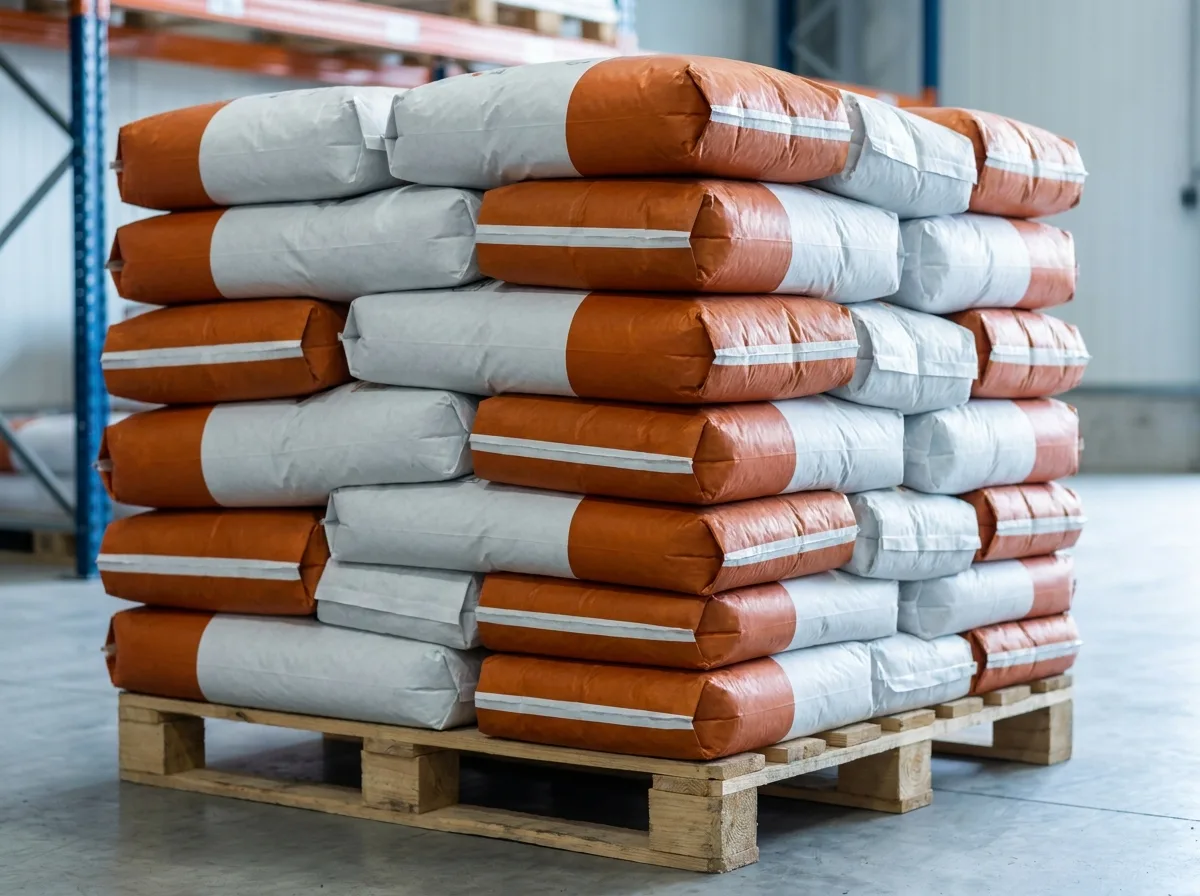
A 20 foot container filled with 25 kg sacks carries the sacks, the pallets, the stretch wrap and the gaps between them. Somebody filled every sack, and somebody will empty every one at the other end.
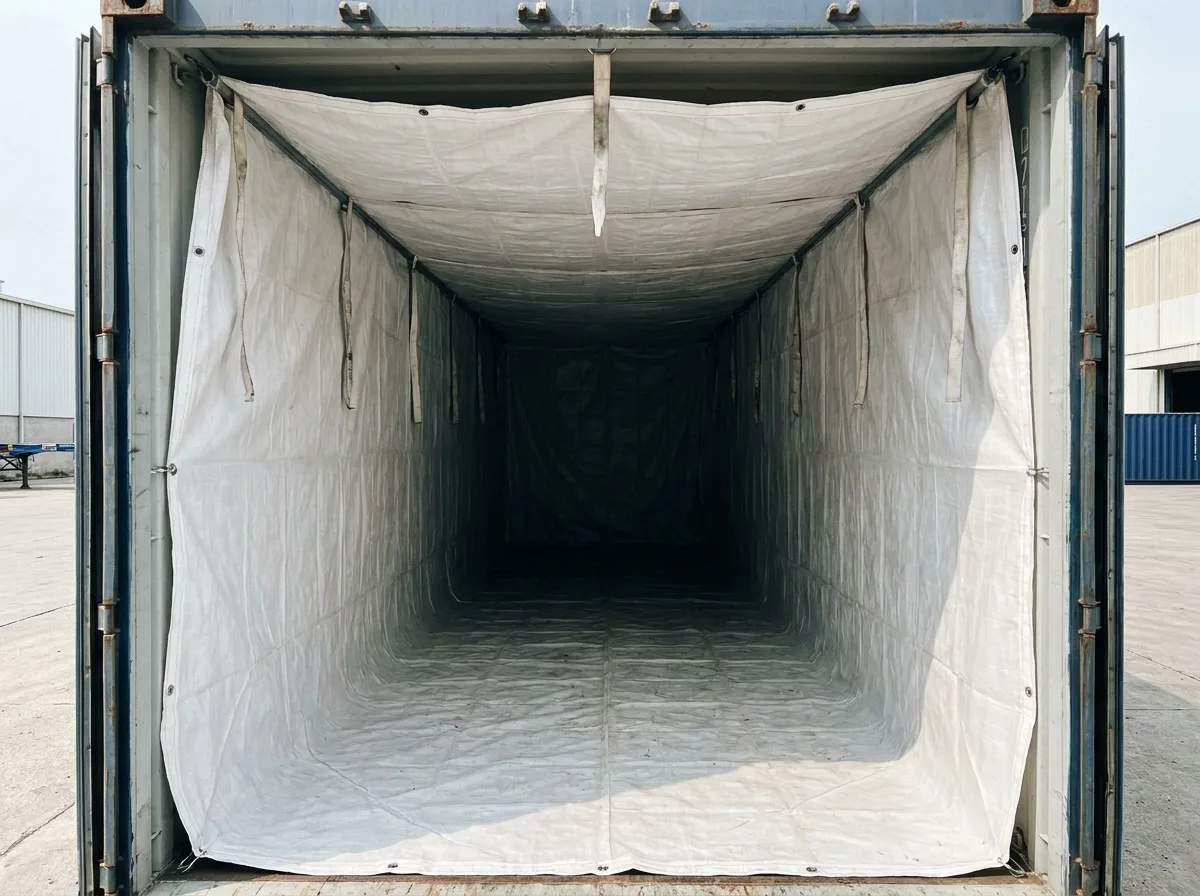
A dry bulk container liner removes almost all of it. It is a single large bag fabricated to the inside of a standard ISO container, hung from the container's lashing rings and roof structure, filled through spouts at the top or an opening at the door end. The cargo travels loose. At destination the container is tipped and the product flows out through a discharge spout.
The container provides the strength. The liner holds the product and keeps it away from a steel box that has carried something else before, and that will sweat on a long voyage.
What changes when you ship loose
| Sacks or bags | Container liner | |
|---|---|---|
| Packaging per container | Hundreds of sacks, plus pallets and wrap | One liner |
| Filling | Sack by sack, then palletised | Blown or conveyed in through a spout |
| Emptying | Sack by sack | Container tipped, product flows out |
| Product per container | Limited by pallet and sack geometry | Typically around 20 per cent more |
| Contamination from the container | Sacks protect the product | Liner protects the product |
The gain depends on bulk density: a light product fills the container's volume before its weight limit, and a dense one reaches the weight limit first.
Container sizes
For planning, the usual internal dimensions of standard containers are approximately:
| Container | Internal length | Internal width | Internal height | Volume |
|---|---|---|---|---|
| 20 ft standard | 5.90 m | 2.35 m | 2.39 m | About 33 m³ |
| 40 ft standard | 12.03 m | 2.35 m | 2.39 m | About 67 m³ |
| 40 ft high cube | 12.03 m | 2.35 m | 2.69 m | About 76 m³ |
GI PackTech makes liners for 20 and 40 foot ISO containers and for other box sizes on request.
Three constructions — the cargo decides
Which material you need is the whole decision, and it is the part most suppliers skip.
| Construction | Behaviour | Right for | Wrong for |
|---|---|---|---|
| Laminated woven PP/PE | Airtight, moisture and dust barrier | Polymers, PVC and polymer powders, soda ash, chemicals, malt | Warm or respiring cargo |
| Unlaminated woven PP/PE | Breathable — lets heat and moisture out | Grain, rice, coffee, seeds, oilseeds, pulses, warm cargo | Fine powders, moisture-sensitive chemicals |
| Welded PE film | Tightest seal of the three | Fine powders and strict contamination limits | Respiring cargo |
The trap is sealing a warm agricultural product into an airtight liner. The moisture it gives off has nowhere to go, condenses on the liner as the container cools, and wets the top of the load — see container rain and cargo sweat. Breathable fabric exists for exactly that reason. Fabric GSM, film thickness and lamination are specified against the cargo.
The bulkhead and the spouts
At the door end, the liner carries a woven bulkhead with pockets for steel bars fitted across the door frame. When the doors are opened at destination, the bulkhead takes the weight of the cargo pressing against it. It has to be specified for the product's weight, not improvised.
Filling spouts — at the top or door end — and discharge spouts are positioned to suit the filling equipment at origin and the tipping and discharge equipment at destination. Tell the supplier what both ends use.
Commodities shipped in container liners
Petrochemical granules and resins, PVC and polymer powders, soda ash, fly ash, urea and fertilisers, malt, wheat, rice, sugar, coffee, oilseeds, pulses, minerals and ores are all routinely shipped this way.
What to send
- The cargo, its bulk density and whether it is loaded warm or respires
- Container size and type, and target payload
- Filling method at origin and discharge method at destination
- Route and transit time
- Shipments per year
The container liner is made to the container and the cargo, with a sample for a trial shipment.
Frequently asked questions
What is a dry bulk container liner?
It is a single large bag fabricated to the inside dimensions of a standard 20 or 40 foot shipping container. It hangs from the container's lashing points, is filled through spouts at the top or door end, and the cargo travels loose inside it. The container provides the strength; the liner holds the product and keeps it away from the steel walls.
How much more cargo fits in a container with a liner?
Shipping loose in a liner rather than in sacks or bags typically fits around 20 per cent more product in the same container, because there are no pallets, no gaps between sacks and no packaging weight. The exact gain depends on the product's bulk density and the container's weight limit, so it should be calculated for your cargo.
Should a container liner be breathable?
If the cargo respires or is loaded warm — grain, rice, coffee, cocoa, seeds — yes. An unlaminated woven liner lets heat and moisture escape. A laminated liner is effectively airtight and suits polymers, chemicals and malt. A welded PE film liner is the tightest of the three. The cargo decides it.