PackTech.
8.1 20ft & 40ft

Container Liner for Dry Bulk — PP Woven and PE Film

Turns a standard shipping container into a sealed bulk vessel

The problem it prevents

You pay to bag the product, pay to palletise it, and then pay to ship the bags.

A bagged cargo is handled several more times than a bulk one. It is filled into sacks, closed, stacked onto pallets, loaded, unloaded, de-palletised and emptied — and every one of those steps is labour paid for at both ends of the journey. The empty sacks are then a disposal problem at the destination, in somebody else’s waste stream.

The pallets and the shape of the stack also waste the corners of the container, so freight is being paid on air. Loading the same product loose into a lined container removes the sacks, most of the handling and about a fifth of the freight per tonne.

What it is

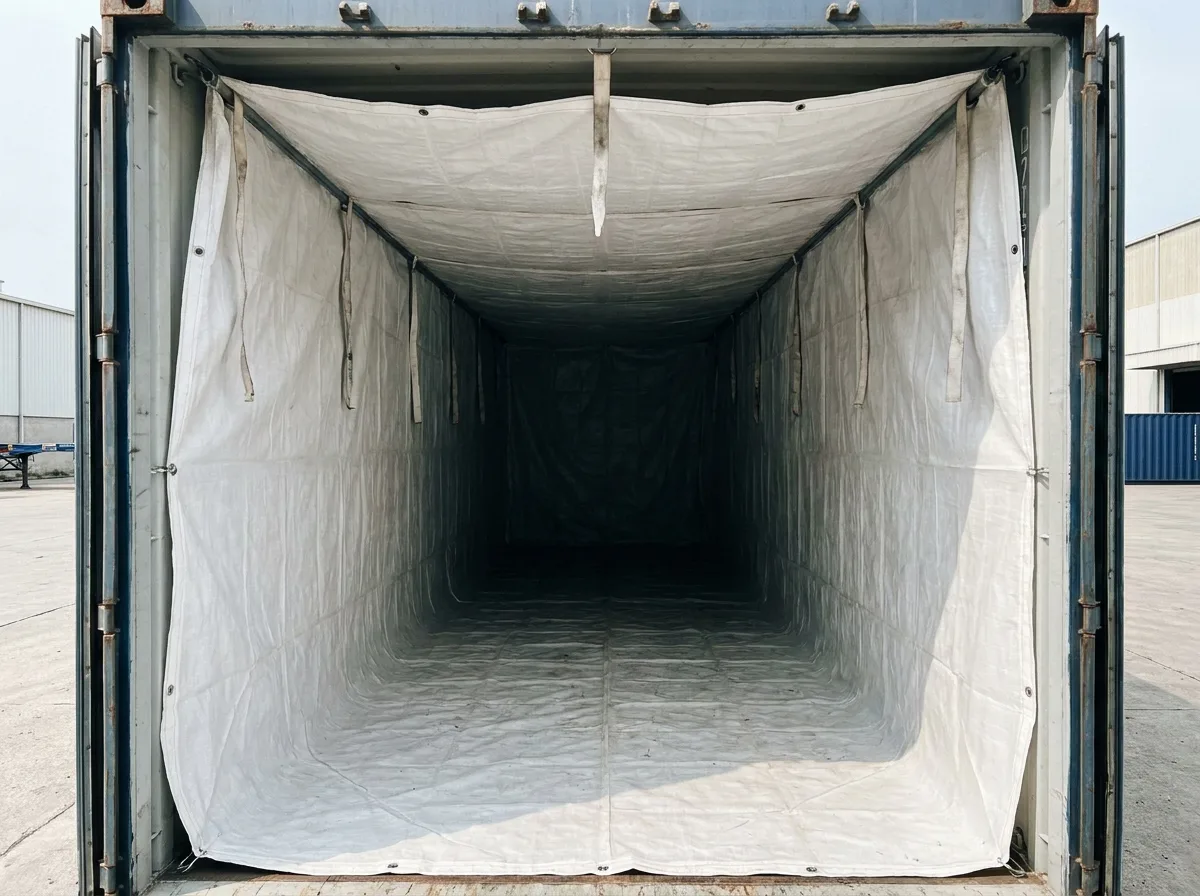
A container liner is a single large bag fabricated to the inside of a standard 20 or 40 foot ISO shipping container. It is hung from the container’s own lashing rings and roof structure, filled through spouts at the top or through an opening at the door end, and the cargo travels loose inside it. The container provides the strength; the liner holds the product and keeps it away from a steel box that has carried something else before it, and that will sweat on a long voyage.

At the door end the liner carries a woven bulkhead with pockets for steel bars. That bulkhead is what takes the weight of the cargo when the doors are opened at the far end, so the load does not come out with them. Discharge is by gravity, by tilting the container, or through a bottom spout, depending on the product and the equipment waiting for it.

Key features

  • Fits standard 20 and 40 foot ISO containers with no modification to the box
  • Laminated, unlaminated breathable, or welded PE film construction
  • Woven bulkhead with steel bar pockets holds the load when the doors open
  • Top filling spouts, front loading opening, or both, positioned to your filling head
  • Gravity, tilt or bottom spout discharge to suit the receiving end
  • No container cleaning needed before loading or after unloading
  • Fitted by two people using the bars supplied, with no other equipment
  • Food grade and antistatic constructions available
  • One liner replaces several hundred sacks and the pallets under them

Specification

Materials
Three constructions. Laminated woven PP/PE fabric, coated one side or both, for a full moisture and dust barrier. Unlaminated woven PP/PE fabric, which is breathable and lets a warm or respiring cargo lose its heat. PE film, welded rather than stitched, where neither of the first two is tight enough. Fabric GSM, film thickness and lamination are all specified against the cargo.
Sizes
Made for 20 foot and 40 foot ISO containers, and for other box sizes on request. Spout count and position, bulkhead height and discharge arrangement are all built to your loading and discharge method.
Applications
Petrochemical granules and resins, PVC and polymer powders, soda ash, fly ash, urea and fertilisers, malt, wheat, rice, sugar, coffee, oilseeds, pulses, minerals and ores.
Where it is used
Exporters and bulk shippers moving a full container of a single dry product. It is strongest where the cargo is bagged only because that is how it has always moved — a plant filling soda ash or polymer granules into 25 and 50 kg sacks purely to get them into a container is buying packaging the liner removes entirely.

How we build it

Which of the three materials you need is the whole decision, and it is the part most suppliers skip. A laminated liner is airtight, which is right for petrochemicals and malt and wrong for a cargo that respires or ships warm: seal a warm agro product into a non-breathable liner and the moisture it gives off has nowhere to go. Unlaminated woven fabric is breathable for exactly that reason, and it is why coffee, rice, wheat and seed move in it. PE film, welded so that not even air passes at the joints, is for the sensitive petrochemical and chemical cargoes where neither of the others is enough.

We make all three on our own lines, so the recommendation is not steered by what we happen to run. Tell us the cargo, whether it ships warm, the length of the voyage and how it will be discharged, and we will tell you which one it should be — including when the answer is the cheapest of the three.

Built to your specification

Every one of these can be changed for your application, and a sample is supplied for trial fitment before bulk production.

  • Container size — 20 foot, 40 foot or other
  • Laminated, unlaminated or PE film construction
  • Fabric GSM and film thickness
  • Number and position of filling spouts
  • Front loading opening
  • Bulkhead height and bar arrangement
  • Discharge spout size and position
  • Antistatic or conductive construction
  • Food grade material
  • Printing and identification

Specified in

Questions

What buyers ask about this one.

What is a container liner and how does it work?

A container liner is a single large bag fabricated to the inside of a standard 20 or 40 foot shipping container, so dry bulk cargo travels loose instead of in sacks. It hangs from the container’s own lashing rings, is filled through top spouts or a door-end opening, and carries a woven bulkhead with steel bar pockets that holds the load when the doors are opened. GI PackTech makes them in laminated woven PP, breathable unlaminated fabric and welded PE film.
Should a container liner be laminated or unlaminated?

It depends entirely on whether the cargo breathes. A laminated liner is effectively airtight, which is right for petrochemicals, malt and moisture-sensitive chemicals. An unlaminated woven liner lets air through the weave, which is what grain, rice, coffee, seeds and any cargo loaded warm actually need — seal a respiring product into a non-breathable liner and the moisture it gives off has nowhere to go but back onto the cargo.

How much does a container liner save compared with shipping in bags?

The saving comes from three places at once: the sacks and pallets are removed, the filling and emptying labour at both ends largely disappears, and around 20 per cent more product fits into the same 20 foot container because nothing is being shipped as air between bags. The container also needs no cleaning before loading or after discharge — the liner is simply removed with the cargo residue in it.

Which cargoes can be shipped in a dry bulk container liner?

Free-flowing dry solids: petrochemical granules and resins, PVC and polymer powders, soda ash, fly ash, urea and fertilisers, malt, wheat, rice, sugar, coffee, oilseeds, pulses, minerals and ores. The cargo decides the construction rather than the other way round, and food grade and antistatic constructions are made where the product or the area classification requires one.

How is a container liner fitted and discharged?

Two people fit it using the steel bars supplied, with no other equipment and no modification to the container. Loading is through top filling spouts, a front loading opening, or both, positioned to suit your filling head. Discharge is by gravity, by tilting the container on a tipping chassis, or through a bottom spout — which one you use is agreed before the liner is made, because it changes the construction.

Who manufactures container liners for 20ft and 40ft containers in India?

GI PackTech manufactures dry bulk container liners at Gundlav, Valsad, in Gujarat, and has been making industrial flexible packaging there since 2006. The plant is ISO 9001:2015 certified, runs its own lamination, extrusion, cutting and heat-sealing lines, and supplies across India and for export. All three constructions — laminated woven, unlaminated woven and welded PE film — are made in-house, so the recommendation is not steered by what happens to be on the machine.

Commonly specified with

These are usually part of the same conversation.

25 & 50 kg Pallet of filled 25 kg sacks stacked six layers high and interlocked in a warehouse

Heavy Duty Bulk Bags — 25 kg and 50 kg

Built around the drop, not around the fill weight

8.2
Operator filling a liquid container from a bulk storage tank through a transfer hose

Liquid Flexi Bag, 1000 to 1500 Litres, with Inlet and Discharge Valves

No container to clean, track or bring back

4.1
Net baffle jumbo bag holding a square shape on a pallet

Net Baffle Jumbo Bag

Costs more per piece and less per tonne delivered

2.4

Send us the problem

Send the drawing, the drum, or the data sheet.

Every product we make is built to order, so the conversation starts with your specification rather than with our price list. Sample liners and trial covers are supplied for fitment before bulk production begins.