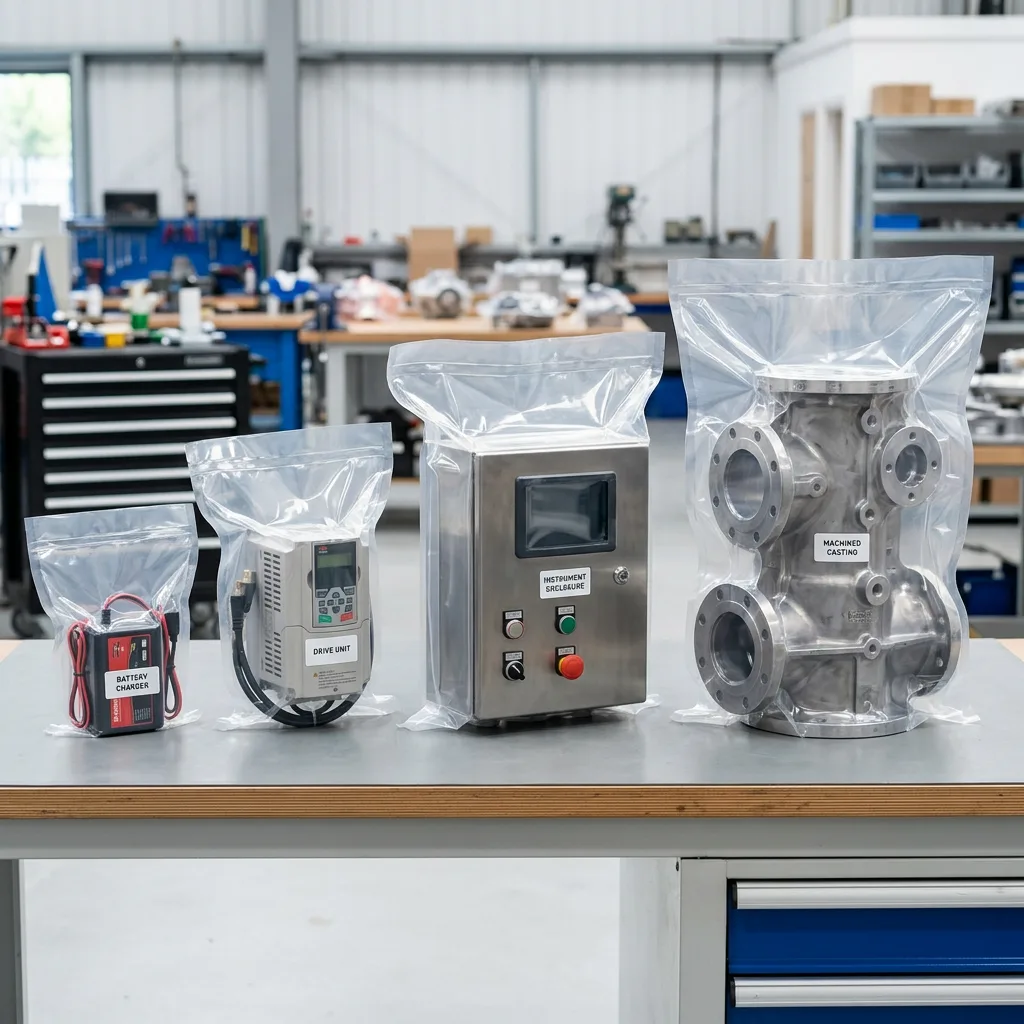
Machinery and export packing
What Is VCI Packaging? Corrosion Protection Without Oil or Grease
How volatile corrosion inhibitor film, bags and covers protect metal parts in storage and shipping, when VCI works and how to specify it.
Key takeaways
- VCI works by vapour, so it needs a closed enclosure that holds the vapour in.
- It protects surfaces the film never touches — internal bores, gear cases, threaded holes.
- The formulation must match the metal; a steel VCI is not the right one for copper alloys.
- VCI replaces oiling and degreasing for most machined parts in storage and transit.
- For long voyages, combine VCI with an aluminium barrier and desiccant.
The problem VCI solves
Machined steel starts to rust as soon as moisture and oxygen reach it. The traditional answer is to coat every surface in oil, grease or a rust-preventive compound — which works, but every gram has to be cleaned off before the part is used, usually with solvent, by someone on the customer's site. Coatings also miss what they cannot reach: internal bores, gear cases, blind threaded holes.
VCI — volatile corrosion inhibitor, sometimes called vapour corrosion inhibitor — protects without a coating.
How it works
- The VCI film, bag, cover or paper is loaded with an inhibitor compound that slowly vaporises at room temperature.
- Inside a closed enclosure, the vapour spreads through the air and reaches every metal surface — including surfaces the film never touches.
- It adsorbs onto the metal as an extremely thin layer that interferes with the corrosion reaction.
- When the part is unwrapped, the layer dissipates. There is nothing to clean off.
When VCI works — and when it does not
| VCI works well when | VCI struggles when |
|---|---|
| The enclosure is closed and holds the vapour | The cover is open, torn or loosely tied |
| The formulation matches the metal | A ferrous formulation is used on copper alloys |
| Parts go in clean and dry | Parts are wet, salty or carry fingerprints |
| The VCI quantity suits the enclosed volume | A small VCI bag is expected to protect a large space |
| The storage period is matched to the pack | Long, humid voyages rely on VCI film alone |
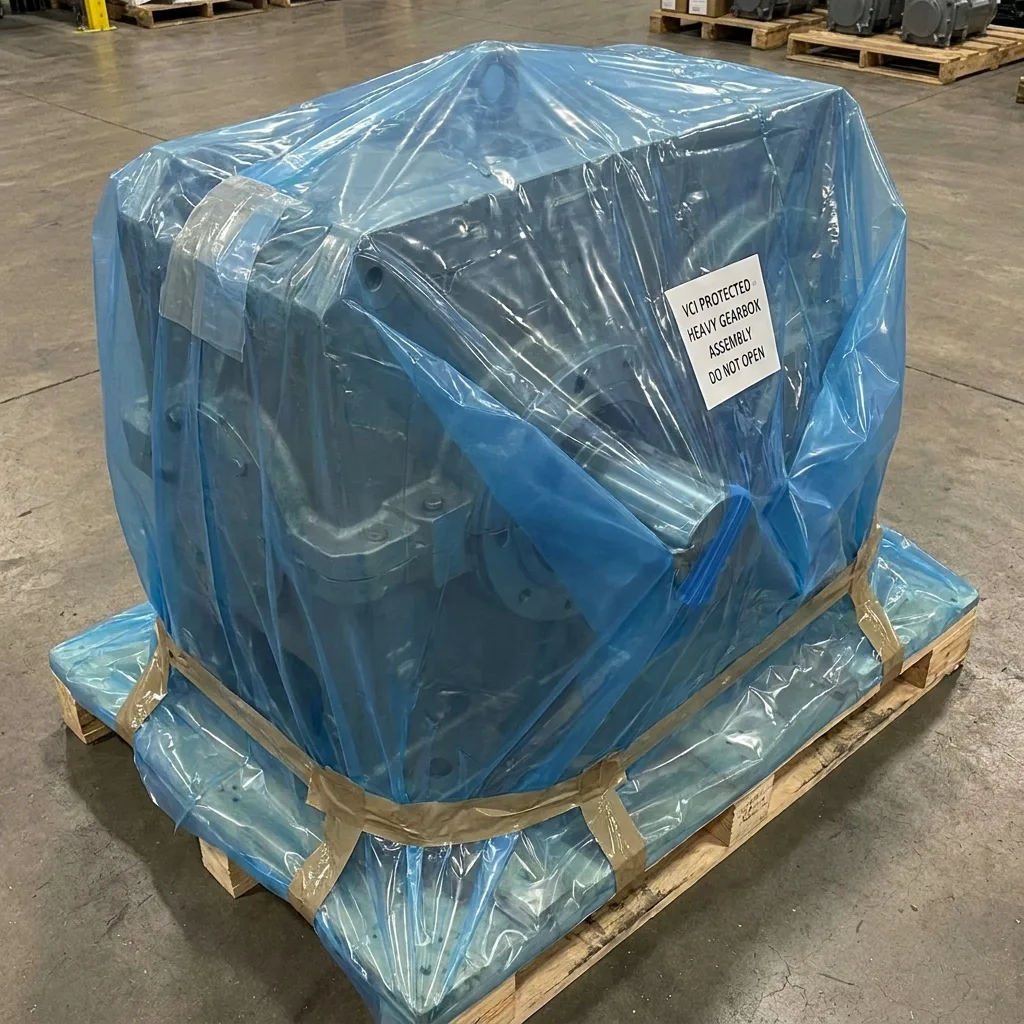
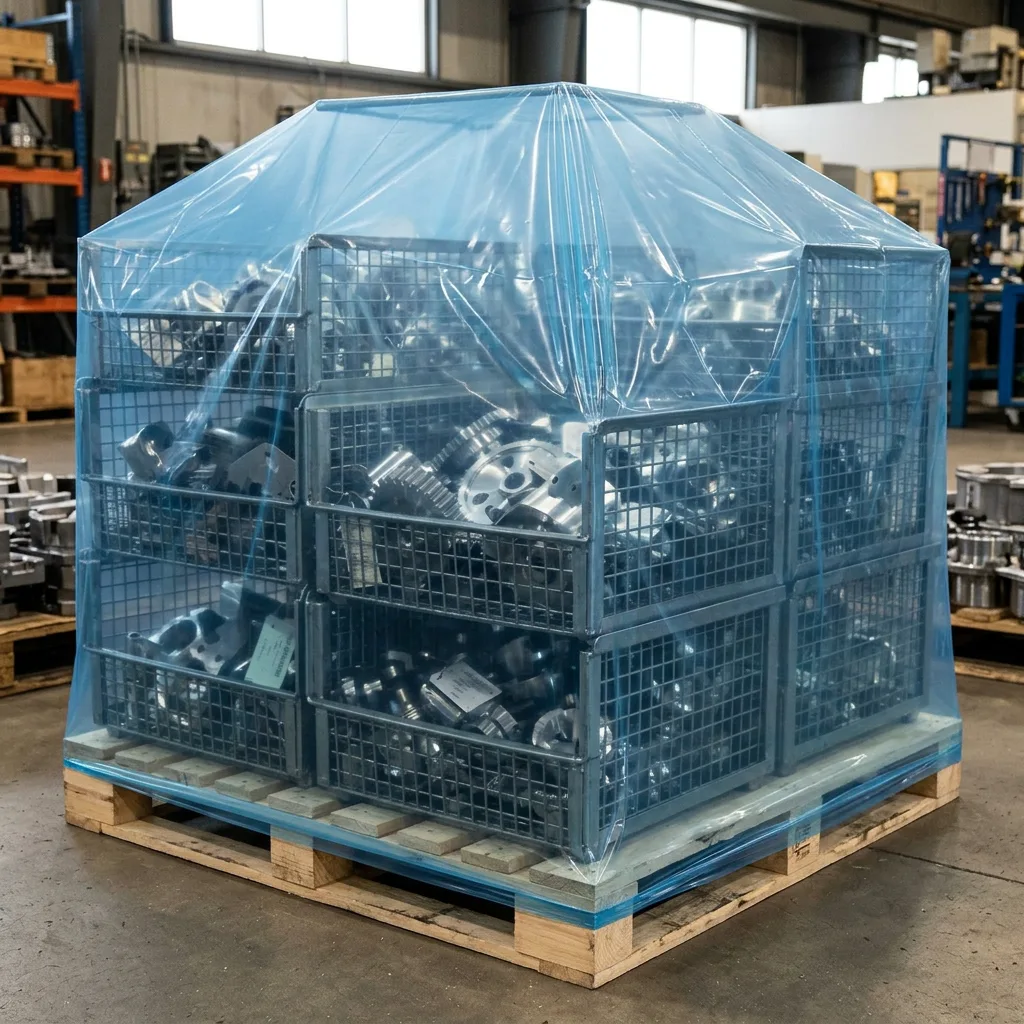
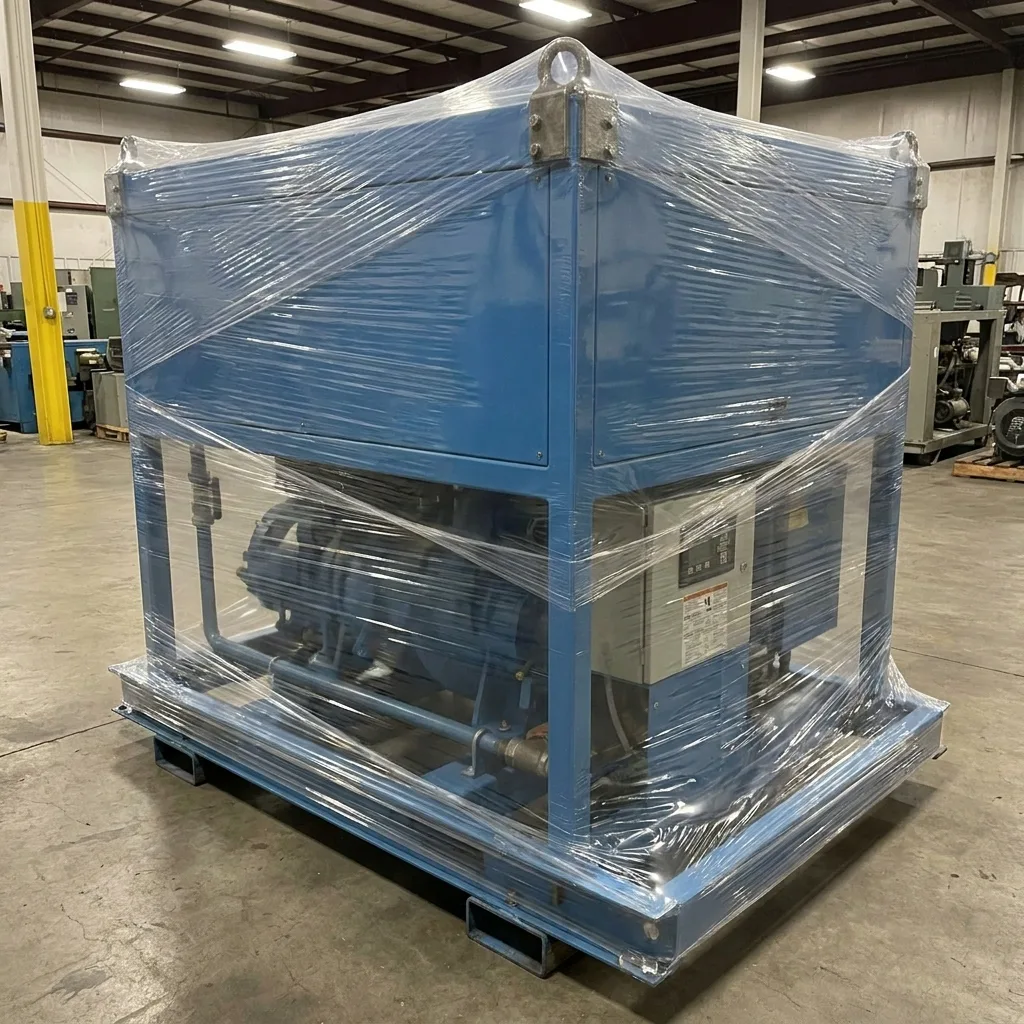
The most common failure is not the chemistry but the enclosure. VCI vapour that escapes protects nothing, so the cover seal and the VCI loading are designed together — on a screw compressor cover, a pallet cover or a machine cover alike.
Match the formulation to the metal
Inhibitors are metal-specific. A formulation for steel and cast iron does little for copper, brass or bronze, and an assembly with several metals needs a multi-metal formulation. Using the wrong one does nothing at all. Tell the supplier every metal present.
VCI formats
- VCI machine covers — VCI polyethylene film, VCI paper, or VCI combined with aluminium laminate, made to the machine or component.
- VCI pallet covers — a whole pallet of machined parts, castings, forgings or fasteners protected in one operation instead of wrapping each part.
- VCI bags, sheets and interleaving — for individual parts, layers in a crate and spares in long storage.
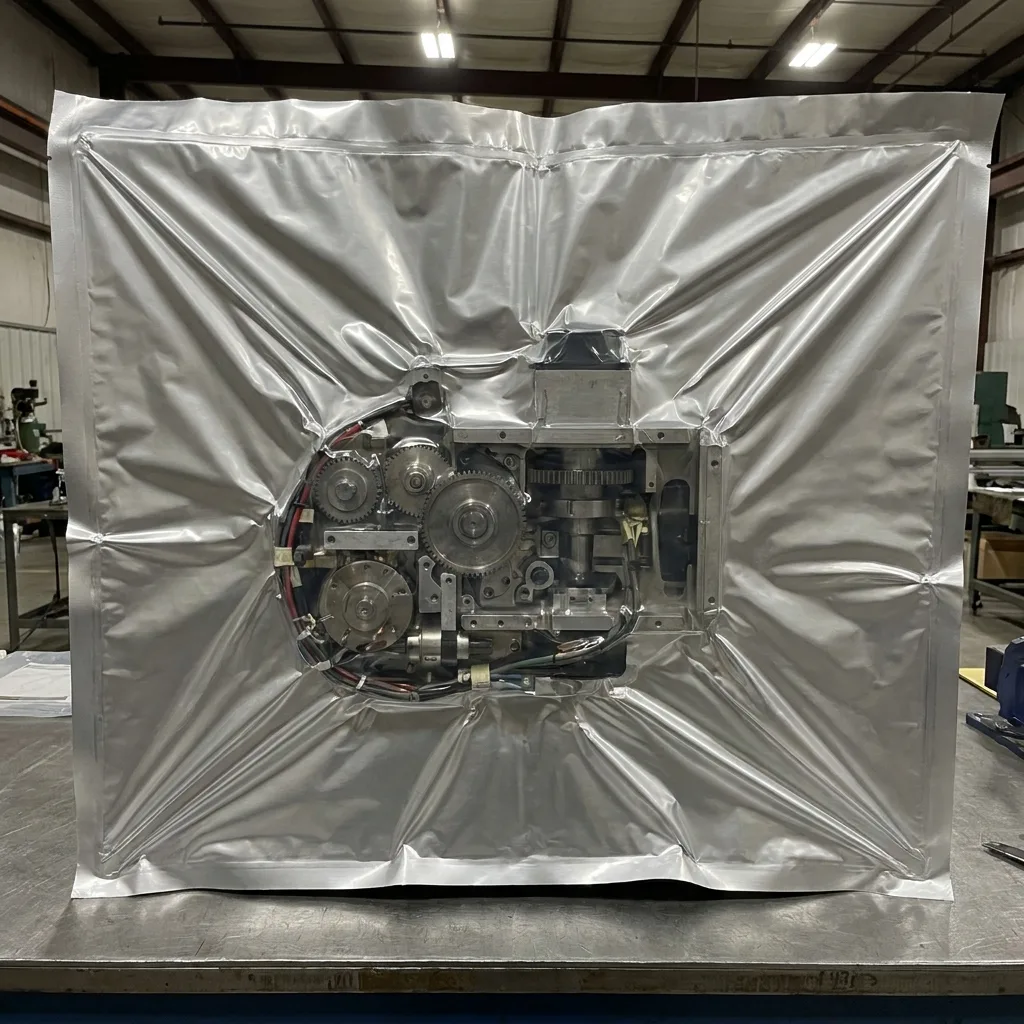
- VCI inner layer on a barrier cover — on an aluminium vacuum laminate cover, for long voyages.
VCI and barrier together
VCI film is a corrosion inhibitor, not a moisture barrier. On a short, dry route that is enough. On a long sea voyage, through humid ports or into months of site storage, combine VCI with a sealed aluminium barrier and desiccant: the barrier keeps moisture out, the desiccant dries the air inside, and the VCI protects the metal from whatever remains. The seaworthy export packing guide sets out the method.
Where VCI is used
Machined components, gearboxes, engine parts, bearings, tooling, dies and moulds, castings and forgings, fasteners, automotive parts, and spare parts in long storage.
How it is tested
Buyers who need evidence often specify a laboratory test of the VCI material's inhibiting ability, such as NACE TM0208 for ferrous metals. Ask for the test and the formulation that matches your metals at enquiry stage.
Send the parts or assembly, the metals, how they are packed now and the storage or transit period; the VCI type and the enclosure are specified together.
Frequently asked questions
How does VCI packaging work?
The film or paper is loaded with a volatile corrosion inhibitor that slowly vaporises into the enclosed space. The vapour reaches every metal surface inside and adsorbs onto it as a very thin layer that interferes with the electrochemical reactions of corrosion. As long as the enclosure stays closed, the protection is maintained; when the part is unwrapped, the layer dissipates.
Does VCI need to be cleaned off before use?
No. That is the main advantage over oil, grease and rust-preventive coatings. The VCI layer is extremely thin and dissipates once the part is removed from the enclosure, so machined parts, bearings and gear cases can be unwrapped and used without degreasing or solvent cleaning.
Does VCI work on copper, brass and aluminium?
Only with a formulation made for them. Inhibitors for ferrous metals do little for copper and its alloys, and multi-metal assemblies need a multi-metal formulation. Tell the supplier every metal in the part or assembly — steel, cast iron, copper, brass, aluminium, zinc-plated — and the VCI is specified to suit.
How long does VCI protection last?
It depends on how well the enclosure holds the vapour, the amount of VCI relative to the enclosed volume, the humidity and temperature, and how long the enclosure stays closed. Specify VCI against the actual storage or transit period, and for long periods combine it with a barrier cover and desiccant rather than relying on VCI film alone.