FIBC, liners and sacks
Baffle Bags vs Round FIBCs: How Square Bulk Bags Cut Freight Cost per Tonne
Why round bulk bags waste container and warehouse space, how baffle bags hold a square shape, and how to work out bags per container.
Key takeaways
- A circle in a square footprint uses only about 79 per cent of the floor area; a square bag recovers most of the rest.
- Square bags stand upright, stack without leaning and load into containers more predictably.
- Net baffles let product flow between the corner sections; fabric baffles have openings for the same reason.
- The baffle arrangement must match the product's density, or the bag will not hold its shape.
- Shape control can also be built into the liner, combined with an EVOH or conductive barrier.
The cost of a round bag
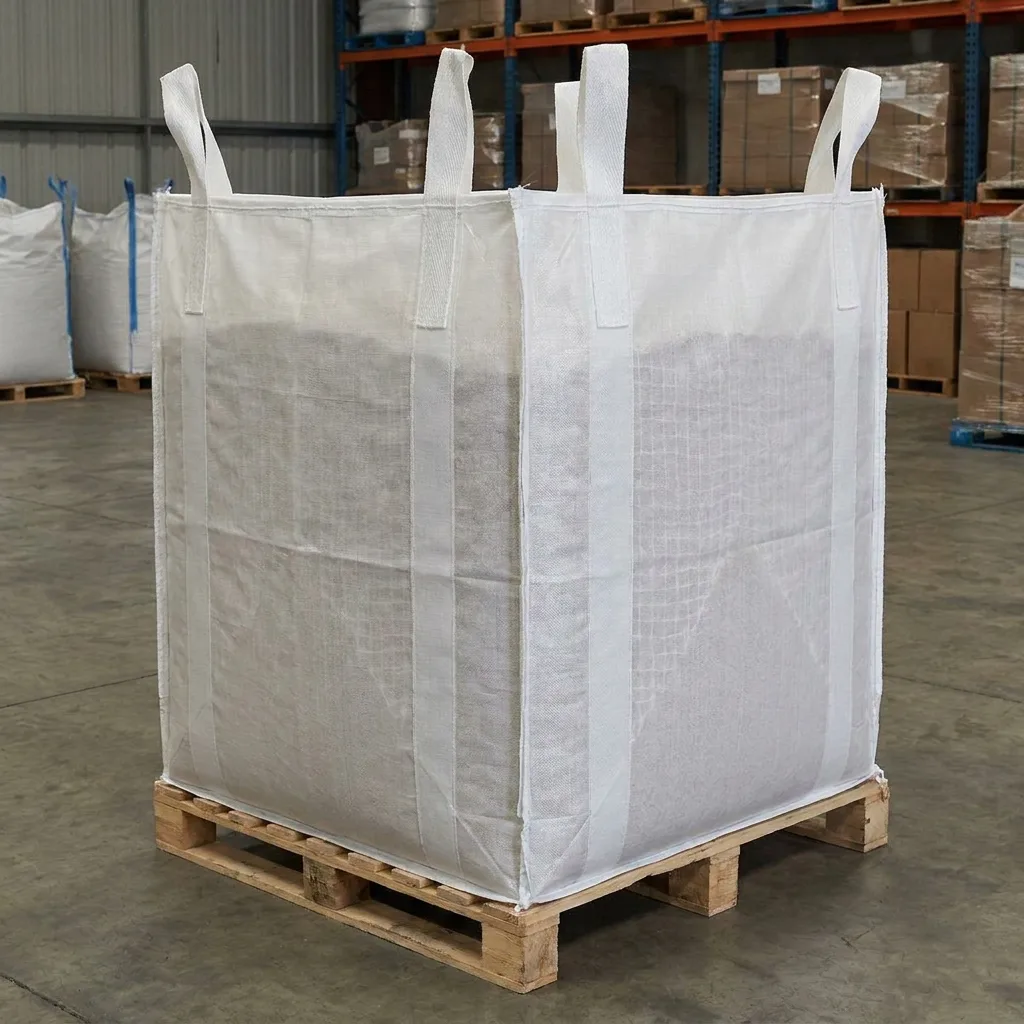
A standard FIBC is a square woven bag, but filled with a free-flowing product it bulges outward until it is closer to a cylinder. On a square pallet, in a rectangular warehouse bay and in a container, a cylinder wastes the corners.
The geometry is simple. A circle drawn inside a square covers π ÷ 4 of its area — about 79 per cent. The other 21 per cent of every bag's footprint is air you store and ship. Round bags also lean as they settle, so stacks are less stable and containers are harder to load tightly.
What a baffle bag does
A baffle bag has internal panels stitched across each of its four corners. As the bag fills, the baffles pull the sides inward and hold the bag square.
| Round FIBC | Baffle FIBC | |
|---|---|---|
| Filled shape | Bulges toward a cylinder | Holds a square profile |
| Use of square floor area | About 79 per cent | Most of the footprint |
| Stacking | Leans as it settles | Stands upright, stacks square |
| Container loading | Gaps between and around bags | Tighter, more predictable |
| Price per bag | Lower | Higher |
| Cost per tonne delivered | Higher where freight dominates | Lower where freight dominates |
Net baffles and fabric baffles
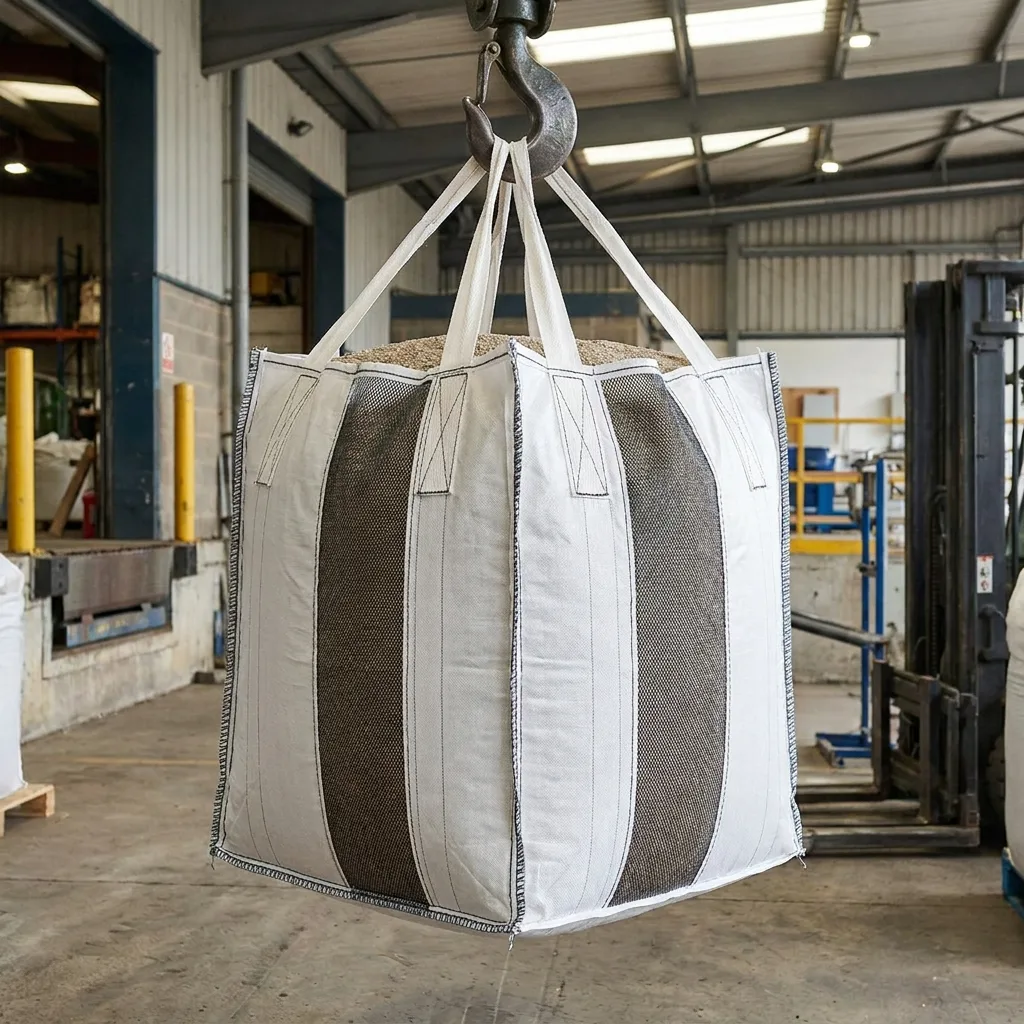
Baffles must let product flow from the centre of the bag into the corner sections, or the corners will not fill and the bag will not empty fully. Fabric baffles have openings cut in them for this; a net baffle jumbo bag uses net panels, which let product pass freely while still holding the shape.
Why density matters
A baffle arrangement designed for one density does not hold its shape with another. Too little restraint and the bag bulges anyway; too much and the corners do not fill. GI PackTech works out the baffle arrangement from the product's density and the container plan, so the shape gain is real for that load.
Shape control at liner level
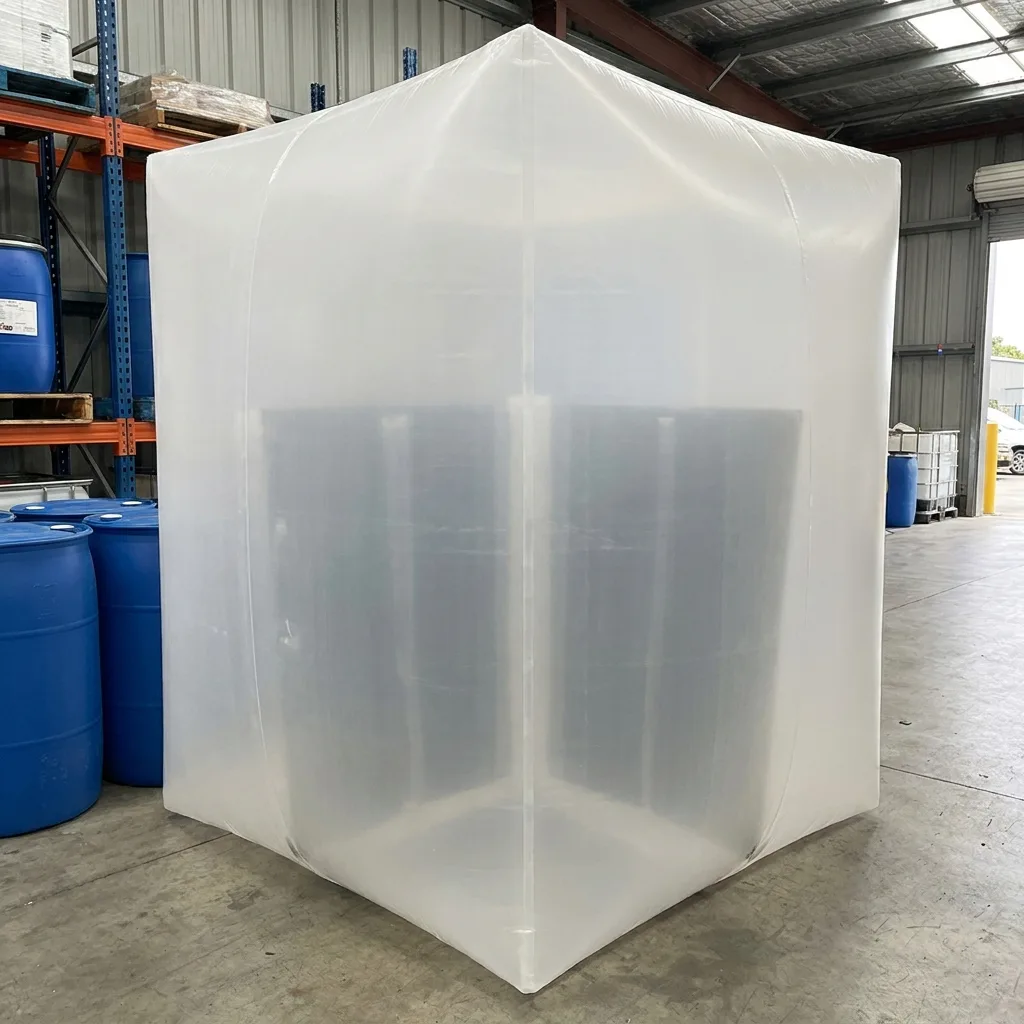
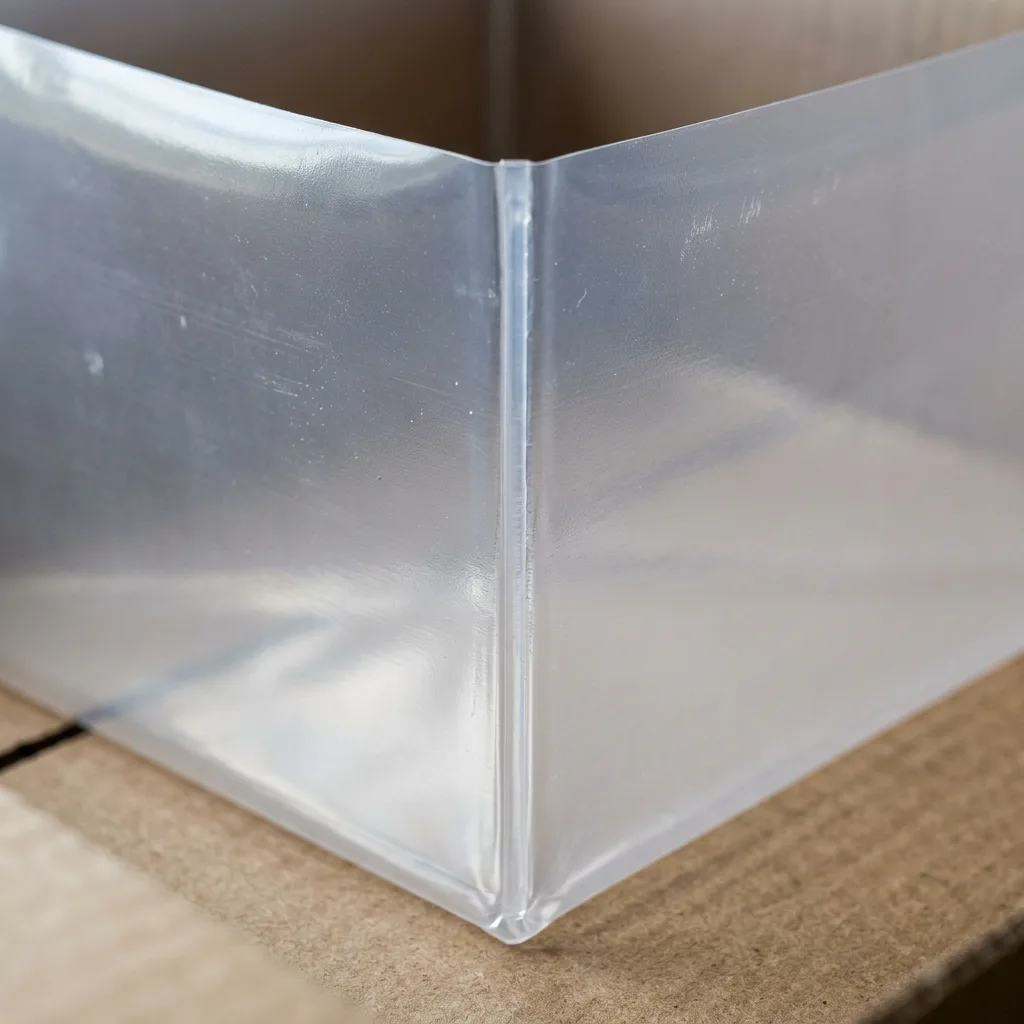
Where the product also needs a barrier or static control, the shape can be built into the liner instead. A baffle and gambo liner has internal baffles of its own, made in EVOH, multilayer or conductive film, and a box type liner is pre-formed to a square profile. Either way, the square shape comes with the barrier or static properties the product needs — see FIBC liner types.
Faster filling, same shape
Air trapped during filling also pushes bags out of shape and slows the fill cycle. Vent panels let the air escape, so the bag fills faster and holds the shape it was designed for — useful with fine powders on a busy filling line.
Working out the gain
The honest way to decide is to compare bags per container on your own load plan:
- Product bulk density and the target fill weight per bag
- Container type — 20 or 40 foot, standard or high cube
- Current bag dimensions and how many fit per container
- Whether bags are double-stacked
Send those, and the bags-per-container figure for round and baffle bags is worked out before and after, so the decision rests on freight cost per tonne rather than on the price of the bag. For single-product volumes, a container liner that ships the product loose may be cheaper again.
Frequently asked questions
What is a baffle bag?
A baffle bag is an FIBC with internal fabric panels or nets stitched across its four corners. As the bag fills, the baffles hold the sides in, so the bag keeps a square shape instead of bulging into a cylinder. Square bags stand better, stack straighter and use pallet, warehouse and container space more fully.
How much more fits in a container with baffle bags?
It depends on the product's density and the container plan, so it should be calculated for your load. The geometry explains the gain: a round bag in a square footprint fills only about 79 per cent of the floor area, and a baffle bag recovers most of the remaining corners. Send the load plan and GI PackTech works out bags per container before and after.
Are baffle bags worth the higher price?
Usually, wherever freight or storage space is the larger cost. A baffle bag costs more per piece than a round bag, but if it puts more product into each container and each warehouse bay, the cost per tonne delivered falls. The calculation is worth doing for every export route that ships full containers.