Industry guides
Asbestos Removal Enclosures and Hazardous Waste Containment: What Contractors Specify
How asbestos removal, demolition and hazardous waste contractors specify sealed containment enclosures, airlocks, waste transfer and spill bunds, built to the site's method statement.
Key takeaways
- On a licensed site the enclosure is what allows the work to start, so it is built to the method statement, not chosen from a catalogue.
- Airlocks, negative pressure connections, viewing panels and waste transfer points are specified per site.
- Material grade and construction follow the regulation the site works to and the contractor's documents.
- Nuclear and hazardous waste enclosures are built entirely to an issued engineering specification, with documentation and traceability.
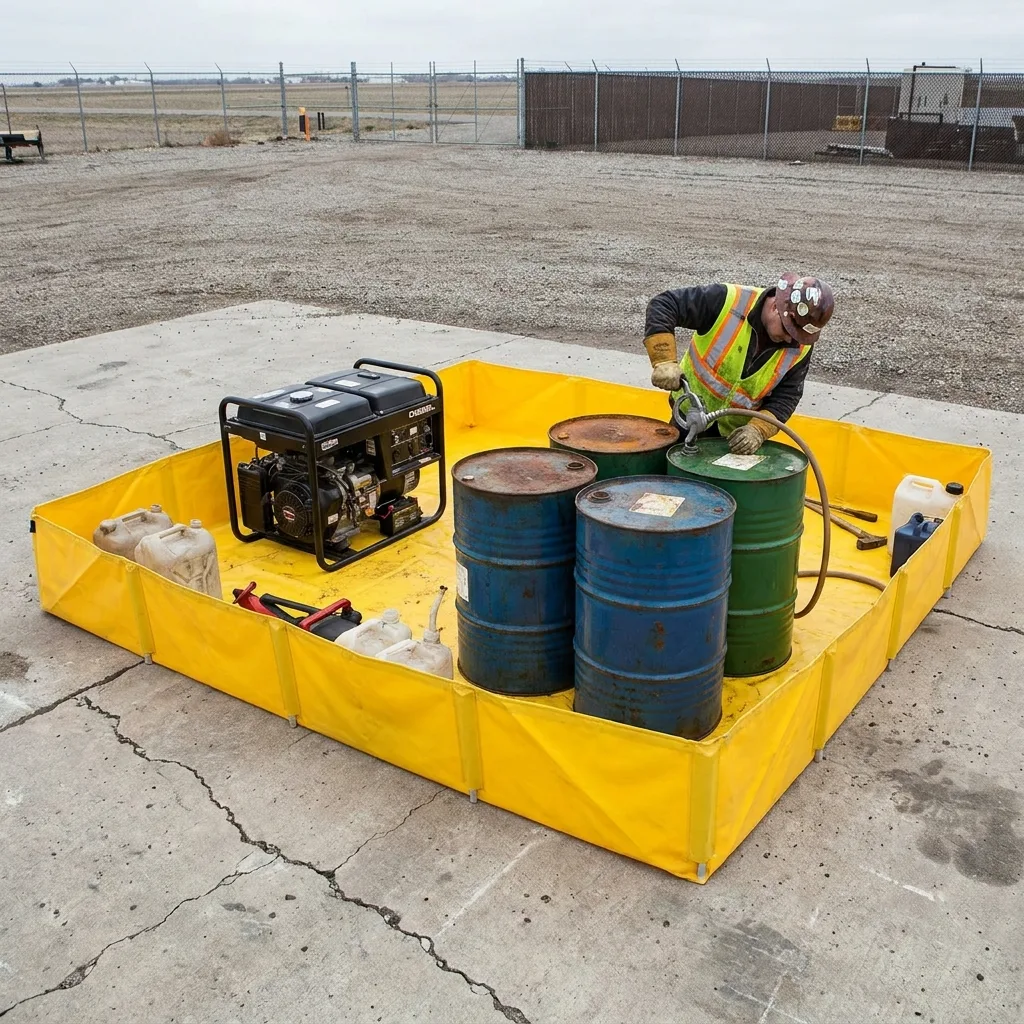
- Flexible spill bunds give secondary containment for drums, plant and refuelling on the same sites.
The enclosure is what lets the work start
On a licensed asbestos removal, demolition or remediation job, the containment enclosure is not a packaging decision. It is a condition of the work. Until a compliant enclosure is in place around the work area, nothing can be stripped, cut or removed — and no standard product fits a particular building, plant room or site.
So the enclosure is built to two documents: the site's dimensions and layout, and the contractor's method statement, which itself follows the regulation the work is carried out under.
What an asbestos containment chamber includes
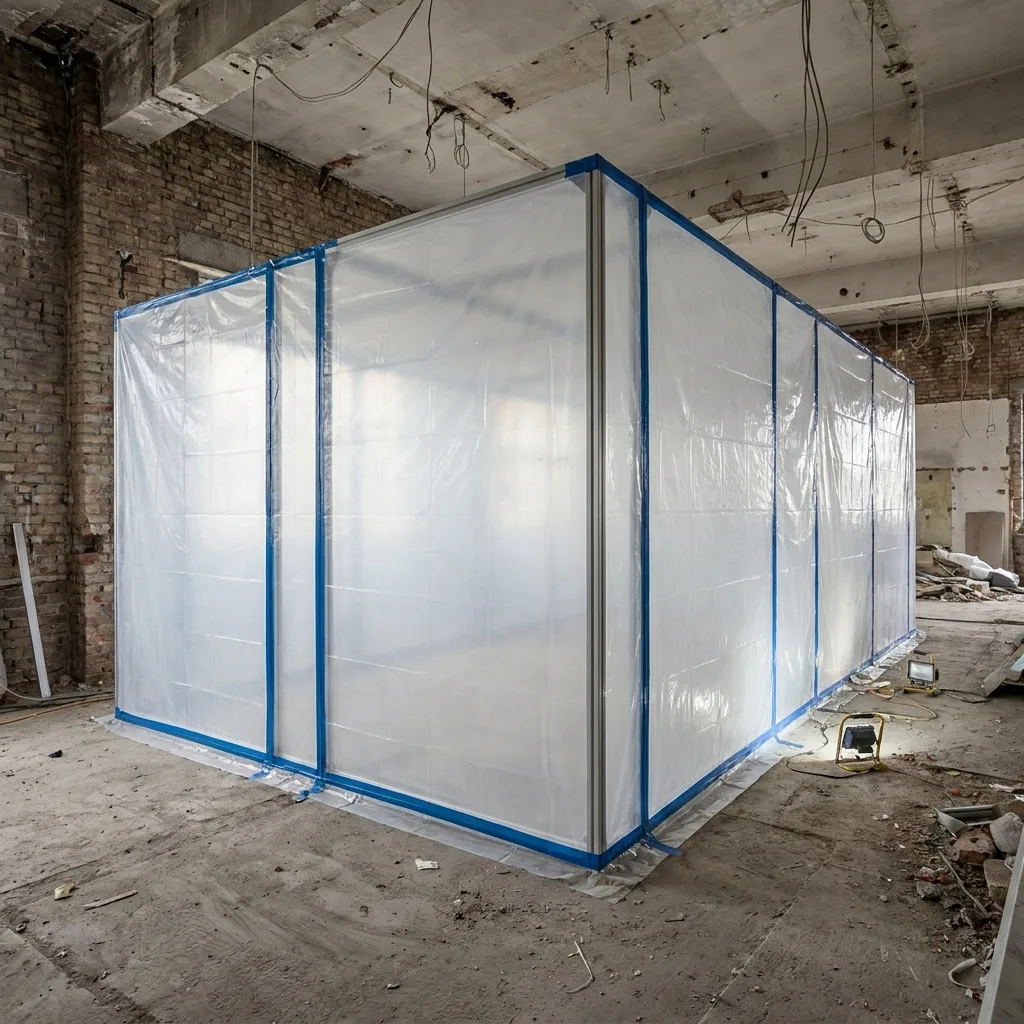
An asbestos demolition containment chamber is a sealed enclosure around the work area that holds fibres in. Depending on the method statement, it can include:
| Element | Purpose |
|---|---|
| Sealed walls, floor and ceiling | Hold fibres and debris inside the work area |
| Airlock entries | Let operatives pass in and out without breaking containment |
| Negative pressure connections | Points for the extraction units that keep air flowing into the enclosure, not out |
| Viewing panels | Let supervisors and analysts see the work without entering |
| Waste transfer arrangements | Move bagged waste out of the enclosure without contaminating the surroundings |
Each is positioned and sized to the site. GI PackTech reads the method statement, understands the regulation being worked to, and fabricates to it — engagement at that level is what most packaging suppliers will not offer.
The regulation sets the specification
Asbestos work is tightly regulated in every major market — for example by the Control of Asbestos Regulations and HSE guidance in the United Kingdom, OSHA's asbestos standard for construction in the United States, and Directive 2009/148/EC on protecting workers from asbestos in the European Union. Hazardous waste handling in India falls under the Hazardous and Other Wastes (Management and Transboundary Movement) Rules. The contractor's method statement translates the applicable rules into the enclosure's material grade, construction and arrangements, and the enclosure is built to that statement.
Nuclear and hazardous waste sites
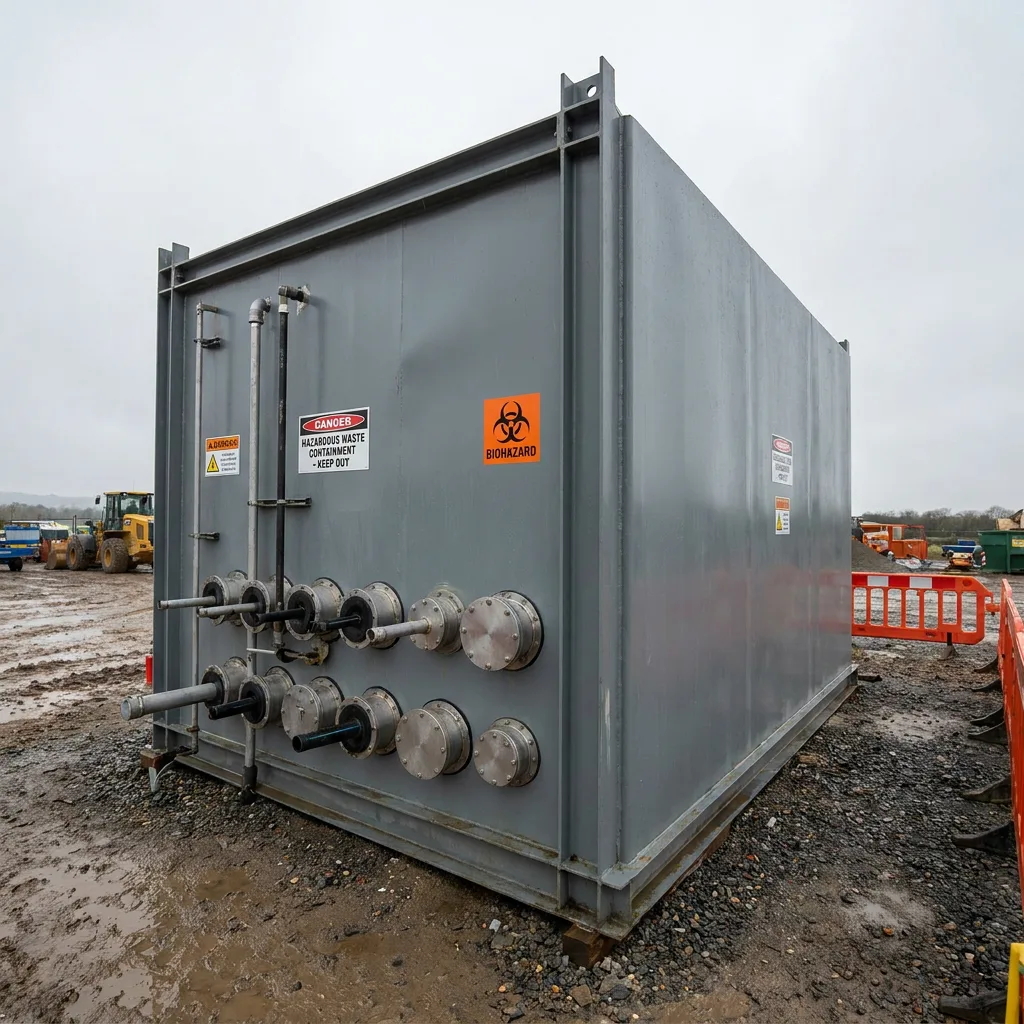
At the far end of the scale, nuclear and hazardous waste site enclosures are built entirely to the specification issued by the site. Material, construction, sealing method, penetration arrangements and testing are all defined by the site's engineering documents. Being able to work to an issued specification, with documentation and traceability, is itself the capability — it is the highest technical and regulatory barrier of anything GI PackTech does.
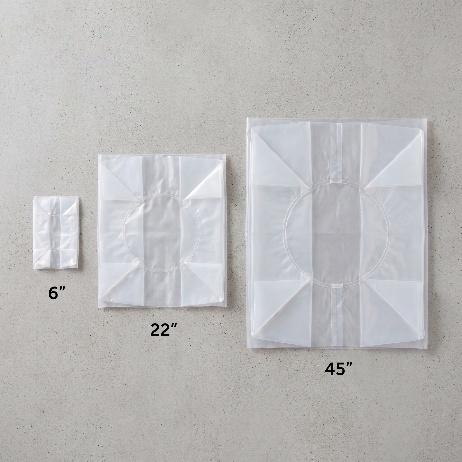
The same capability supplies round drum liners for nuclear waste containment, in the diameters and materials the site requires — anywhere from 6 to 100 inches.
Spills, water and fuel on remediation sites
Remediation and demolition sites also need:
- Secondary containment under generators, fuel, drums and plant — a flexible spill bund whose walls stand on their own, ready as soon as it is placed and folded flat for the next site.
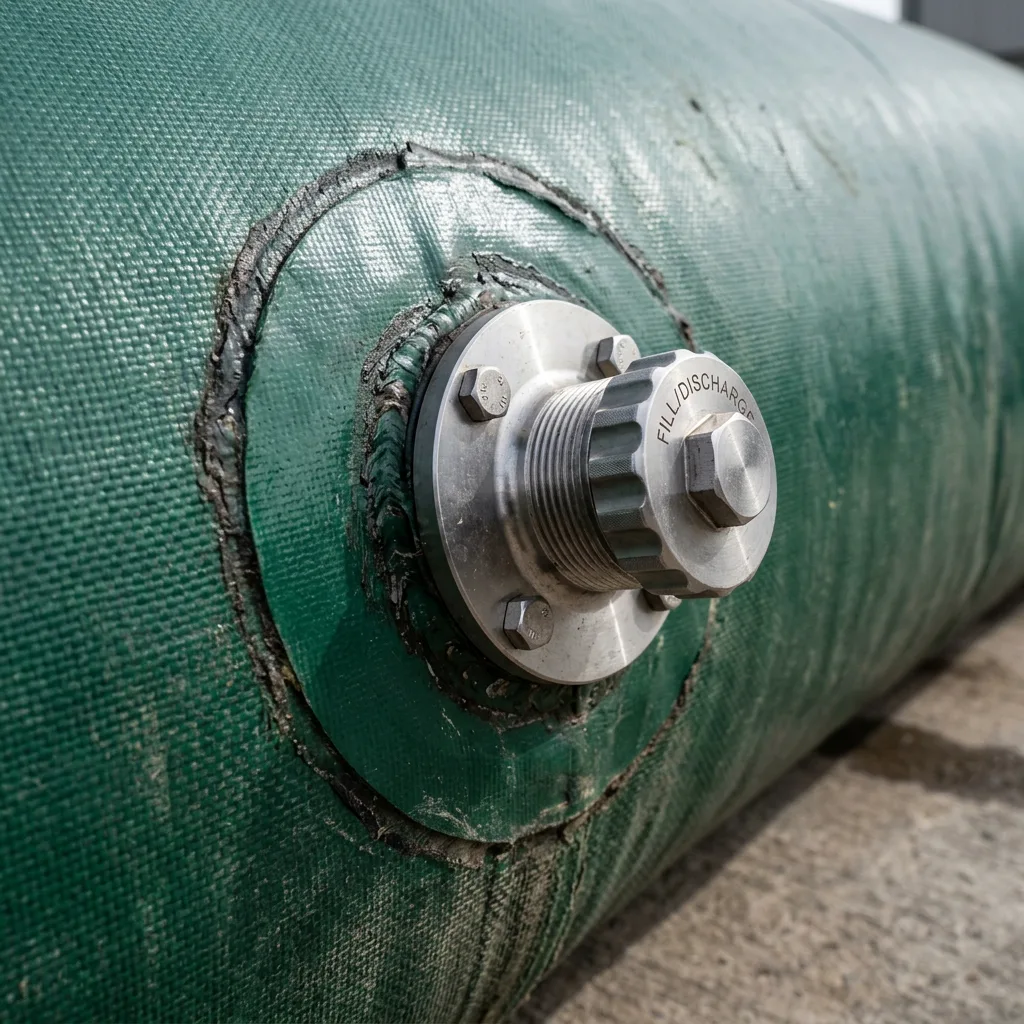
- Temporary water or process liquid storage — a collapsible bladder tank with its own support frame, for dust suppression, decontamination water or site supply.
What to send
- The method statement, or the site's issued specification
- Site drawings or dimensions of the area to be enclosed
- The regulation or standard the work is carried out under
- Required airlocks, penetrations, viewing panels and waste transfer arrangements
- Programme dates
The enclosure is fabricated to those documents, with the material grade and construction they require.
Frequently asked questions
What is an asbestos containment enclosure?
It is a sealed chamber built around an asbestos removal or demolition work area to hold fibres in and stop them escaping into the surrounding environment. It is usually kept under negative pressure, entered through an airlock, and made to the dimensions and layout of the specific site in the material grade the contractor's method statement and the governing regulation require.
Can you build a containment enclosure to our method statement?
Yes. GI PackTech builds asbestos and hazardous waste enclosures to the contractor's own method statement and the site's dimensions rather than offering a fixed product. That means reading the documents, understanding the regulation being worked to, and fabricating the chamber, airlocks, penetrations and waste transfer arrangements to match.
Do you supply nuclear waste containment?
GI PackTech builds containment enclosures for nuclear and other hazardous waste sites entirely to the specification the site issues — material, construction, sealing method, penetrations and testing defined by the site's engineering documents — and supplies round drum liners for nuclear waste containment in the diameters and materials required.