Barrier and moisture
How to Stop Hygroscopic Powders and Fertilisers Caking in Storage and Transit
Why powders and fertilisers cake, why heavier PE liners do not stop it, and how sealed aluminium barrier liners do.
Key takeaways
- Caking is moisture coming through the packaging, plus temperature cycling — not a fact of life.
- Every hygroscopic salt has a critical humidity above which it draws water from the air; humid ports and monsoons exceed it.
- A thicker PE liner delays caking but does not prevent it over months.
- Aluminium multilayer liners stop moisture almost completely, if the seals are made properly.
- Water-soluble and water-based fertilisers need a construction matched to them, not a general liner.
What caking actually is
Caking is not a property of the product. It is what happens when moisture reaches the product and the temperature moves.
- Moisture uptake. Hygroscopic materials — fertiliser salts, many chemicals, sugars, some food ingredients — draw water from the air once the relative humidity rises above their critical relative humidity. Below it, they stay dry; above it, they absorb.
- Surface dissolution. The absorbed water dissolves a thin film at each particle's surface.
- Bridging. When the temperature drops or the air dries, the dissolved material recrystallises and forms solid bridges between neighbouring particles.
- Cycling. Day and night temperature swings repeat the process, moving moisture around inside the bag and strengthening the bridges every cycle.
For many fertiliser salts, the critical humidity is below the humidity of a monsoon, a tropical port or a ship's hold. So a product that leaves the plant free-flowing can arrive as a solid block — and be sold at a discount, reprocessed or rejected.
Why polyethylene is not enough
Polyethylene is a reasonable moisture barrier compared with paper or woven fabric, but it is not a stop. Water vapour passes through it slowly, and over weeks the inside of the liner comes to match the humidity outside. Doubling the thickness roughly halves the rate — which delays caking but does not prevent it on a long storage or voyage.
That is the trap: a heavier PE liner seems to work in a dry month and fails in the monsoon.
The aluminium multilayer liner
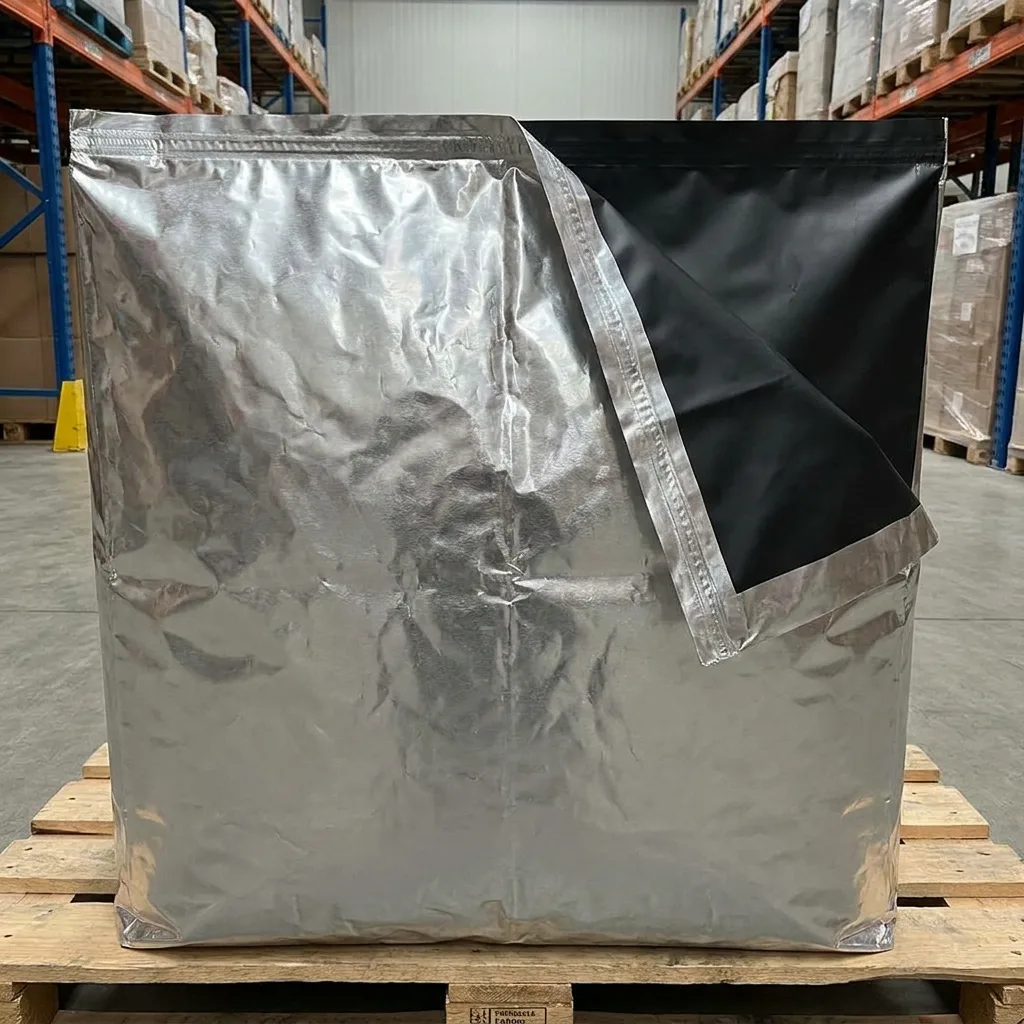
An aluminium laminate puts a layer of foil between polymer layers. Intact foil is effectively impermeable to water vapour, so a sealed aluminium liner holds the product at the humidity it was packed at for as long as the seals and the foil stay intact.
| Liner | Moisture barrier | Typical outcome over a humid storage period |
|---|---|---|
| Woven bag, no liner | None | Caking where humidity exceeds the critical point |
| Polyethylene liner | Slows moisture | Caking delayed, often still occurs |
| Thicker polyethylene liner | Slows moisture more | Caking delayed further |
| Sealed aluminium multilayer liner | Near-total | Product stays at its packed condition |
GI PackTech makes two constructions for this:
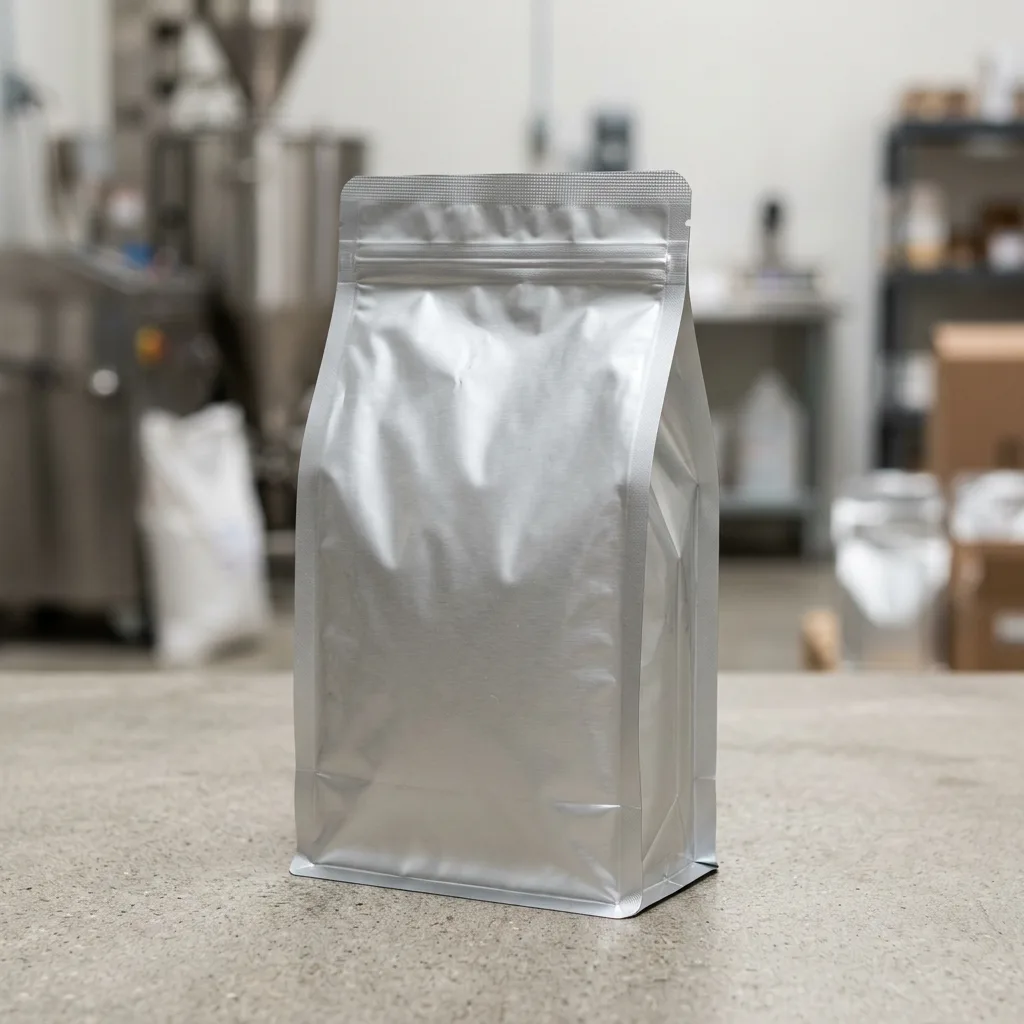
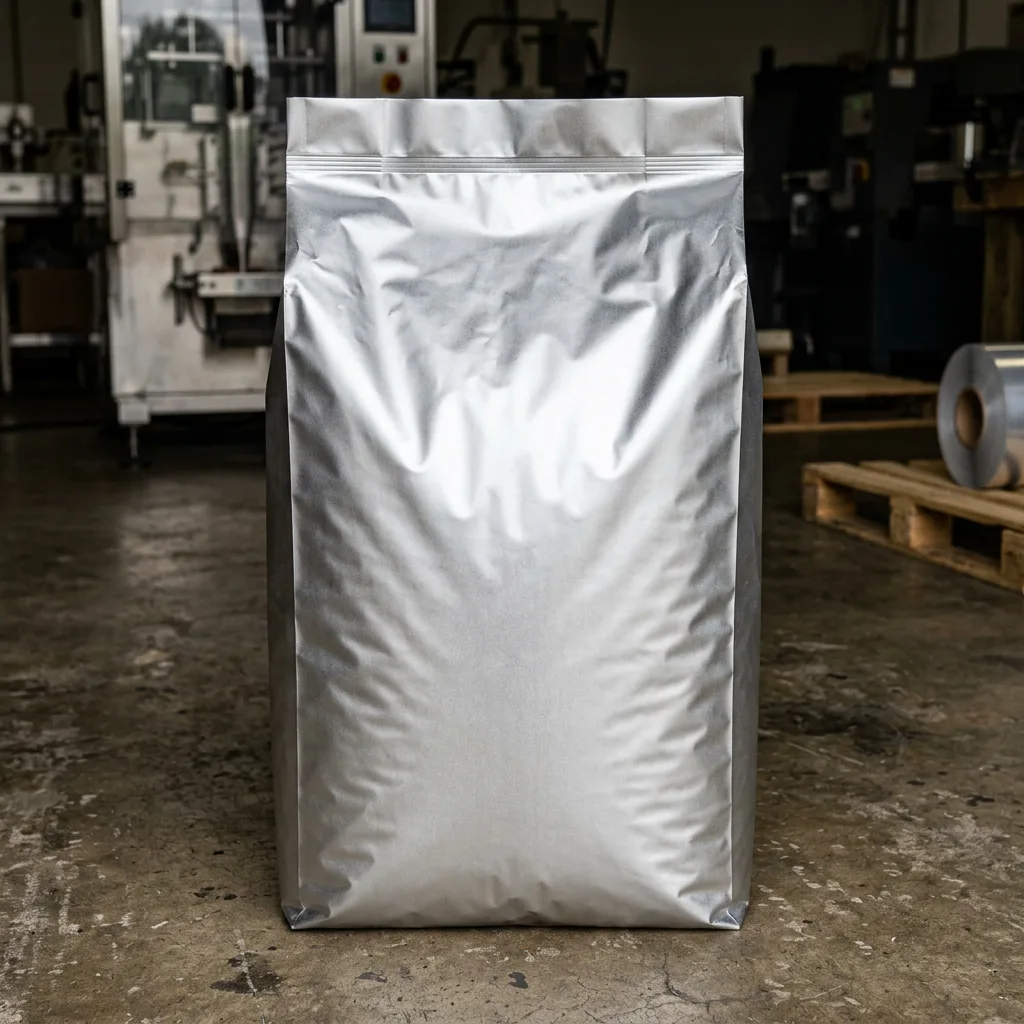
- The multilayer aluminium laminated liner for powders, for extremely hygroscopic and temperature-sensitive products in long storage, engineered for both powder and liquid duty.
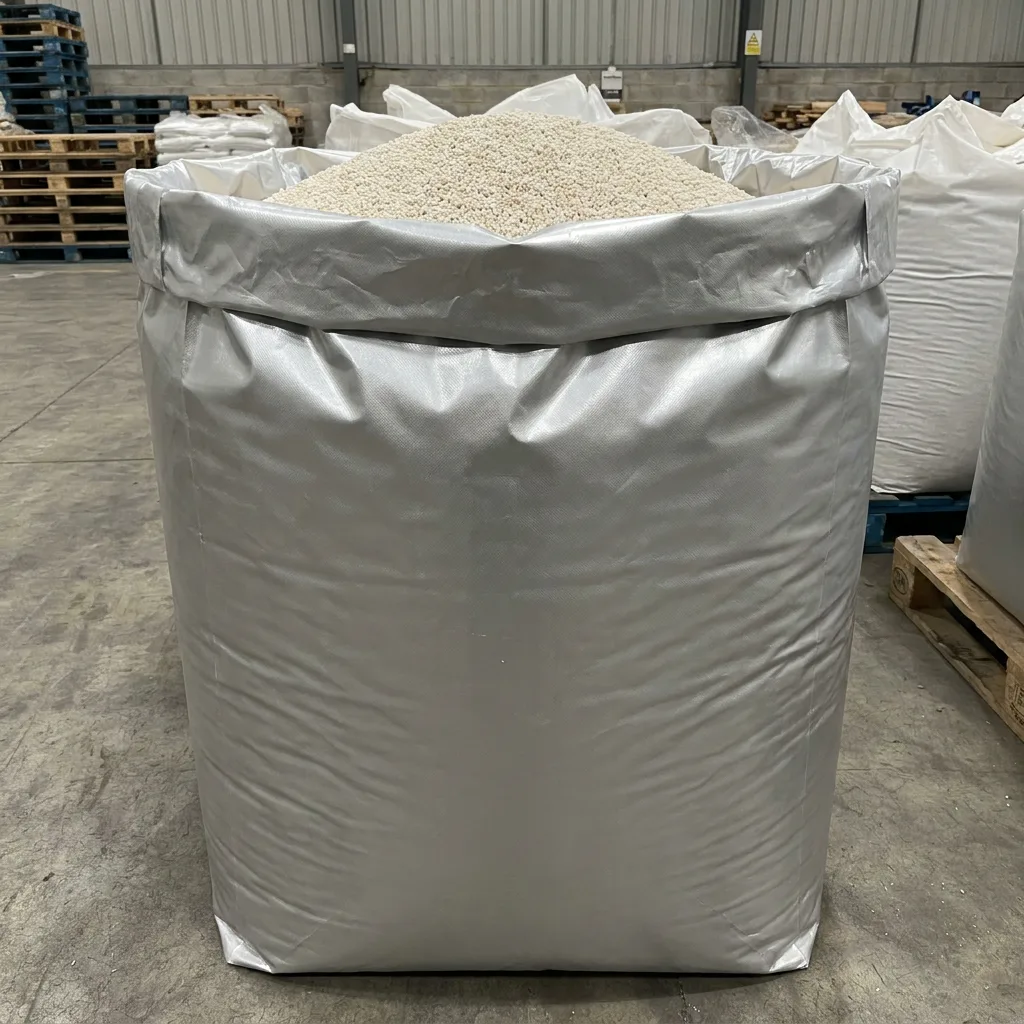
- The aluminium multilayer liner for water-based fertilisers, developed specifically for that product group, which attacks standard liner films and is very sensitive to moisture moving between product and air.
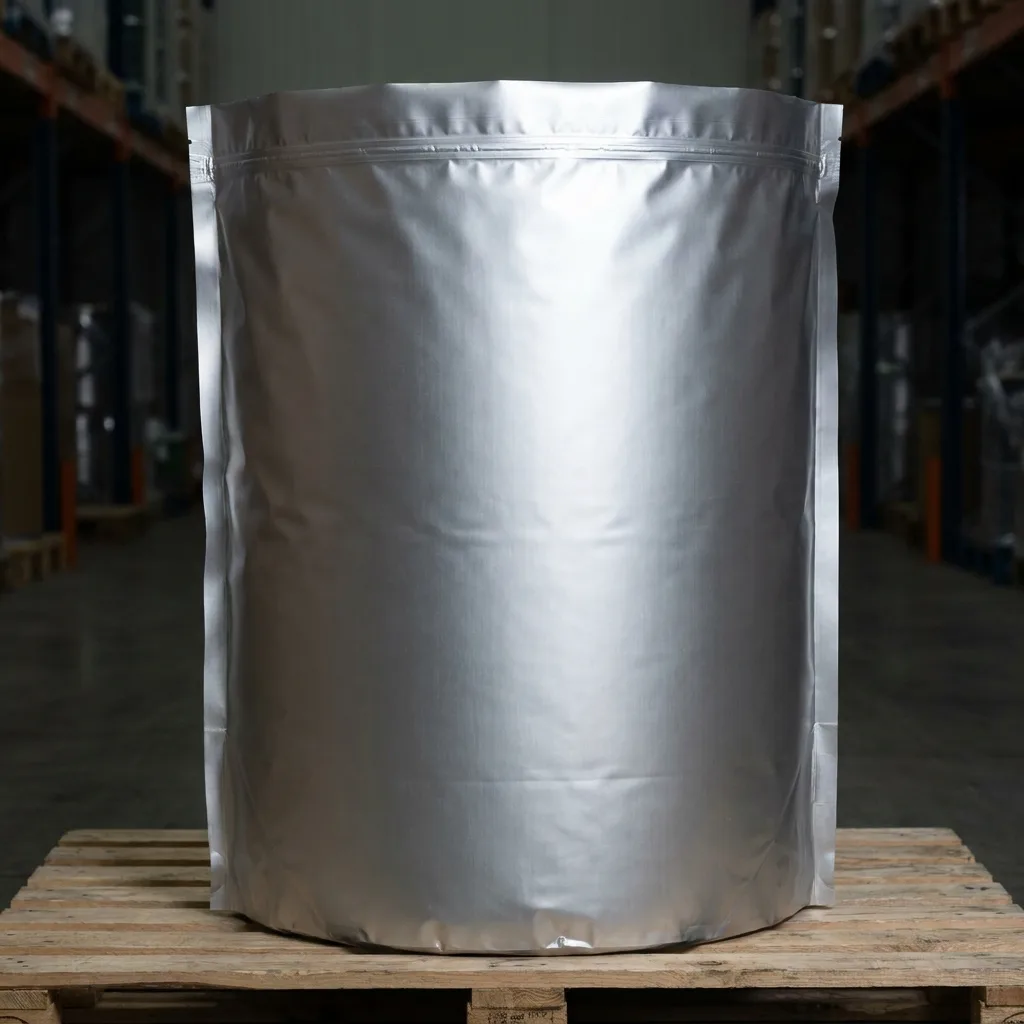
For drums, the same barrier comes as an aluminium barrier drum liner.
The seal is where moisture gets in
With the foil doing its job, the remaining paths are the heat seals and any pinholes or flex cracks from handling. A barrier liner is only as good as its weakest seal. That is why the seal specification — not the layer count — is the real measure of a barrier liner, and where GI PackTech's development work has gone.
Practical steps beyond the liner
- Pack dry and cool. A barrier holds the condition the product was packed in; it does not dry a wet product. Product packed warm will cycle moisture inside the liner as it cools.
- Seal promptly after filling, and seal the spout or neck properly — a loosely tied neck undoes the barrier.
- Store off the floor, out of direct sun and rain, and away from heat sources that drive temperature cycling.
- On sea routes, protect the load from container rain.
- If the product is also flammable, a conductive aluminium liner gives the barrier and static control in one.
What to send
- The product, its data sheet and, if known, its critical relative humidity
- Packing temperature and moisture content
- Storage period, route and climate — including monsoon storage
- Container: FIBC dimensions, drum dimensions or sack size
A side-by-side trial — one batch in the current liner, one in the barrier liner, checked at the same interval — is the clearest way to see the difference.
Frequently asked questions
Why does fertiliser cake in the bag?
Fertiliser salts are hygroscopic: above a certain relative humidity they draw moisture from the air. That moisture dissolves the particle surfaces slightly, and when the temperature falls or the air dries, the dissolved salt recrystallises and bridges neighbouring particles into a solid cake. Packaging that lets moisture through, plus daily temperature cycles, is enough to do it.
What packaging prevents caking?
A liner that stops moisture for the whole storage period. A sealed aluminium multilayer liner is close to a total moisture barrier, so the product inside stays at the humidity it was packed at. Polyethylene liners only slow moisture, so they delay caking rather than prevent it. Good seals matter as much as the foil, because that is where moisture gets in.
Will a thicker liner stop caking?
Not reliably. Doubling the thickness of a polyethylene liner roughly halves the rate at which moisture passes through it, which delays caking but does not stop it over months of humid storage. To stop it, add a barrier layer — aluminium foil — rather than more polyethylene.